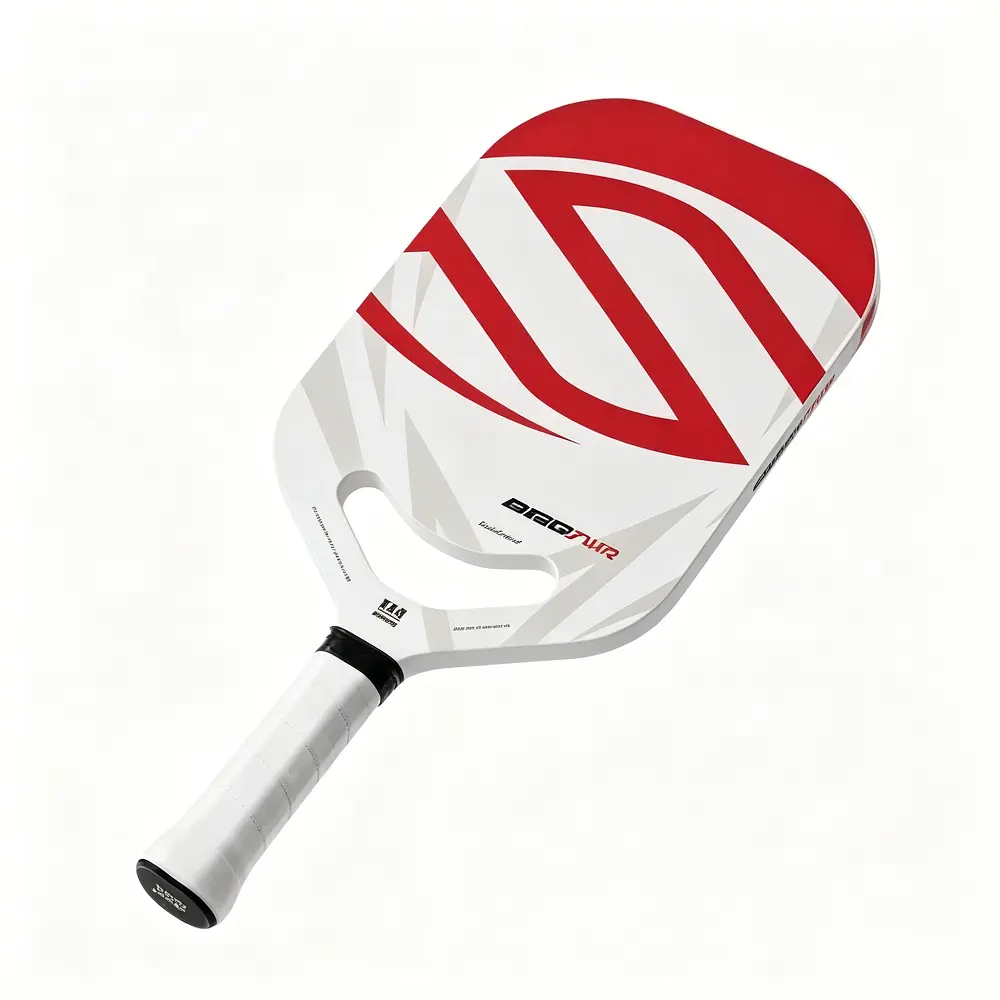
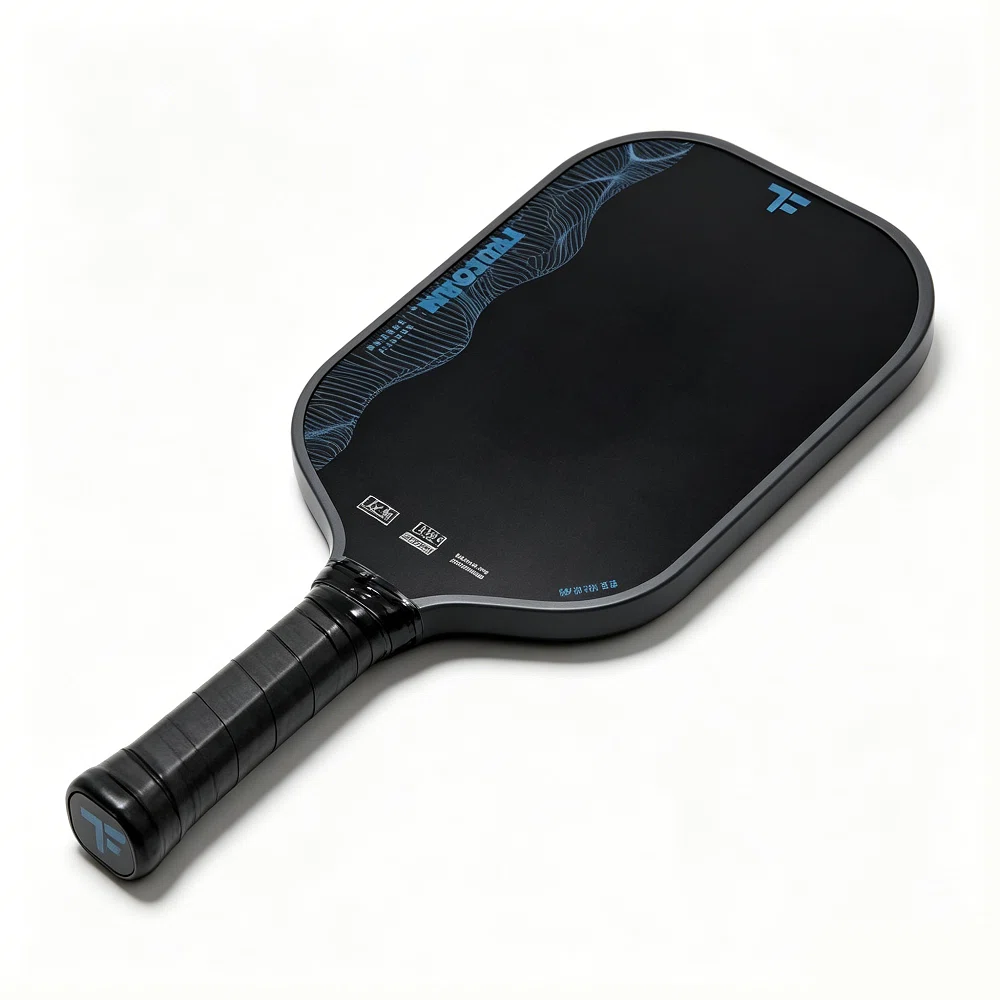
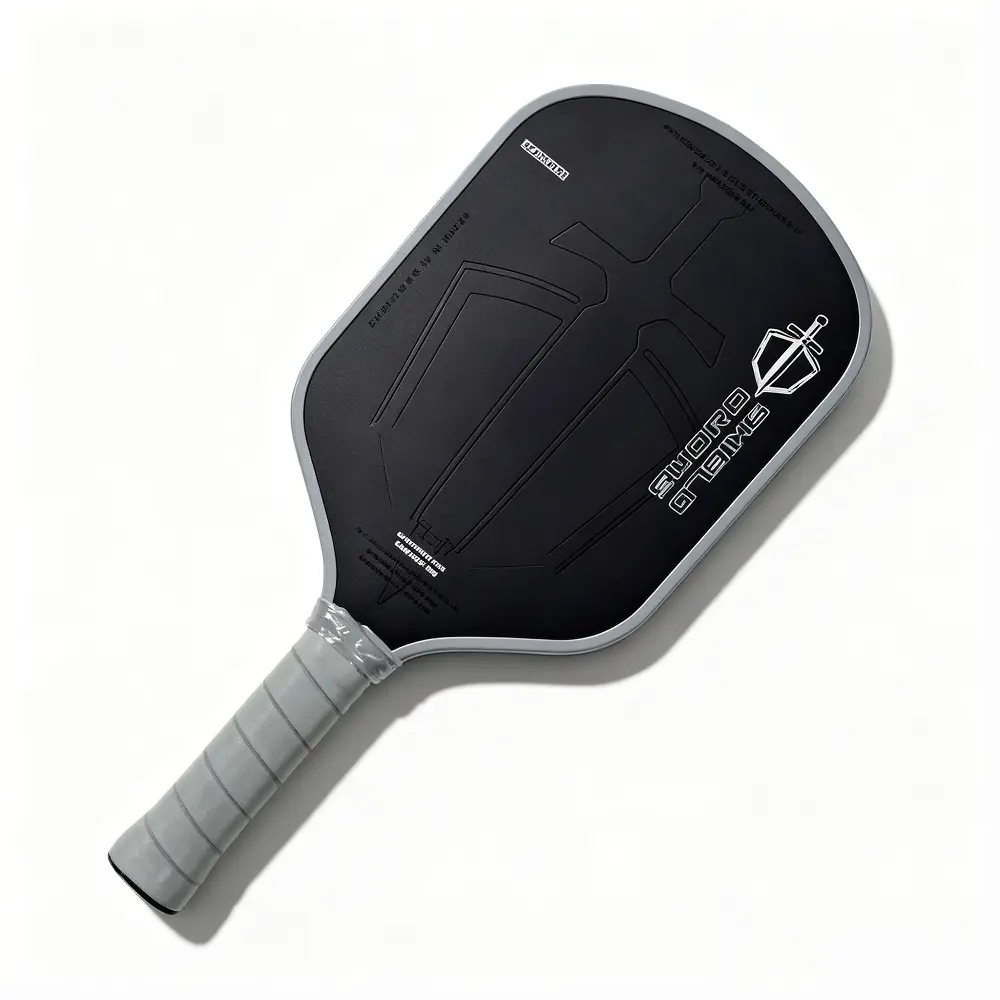
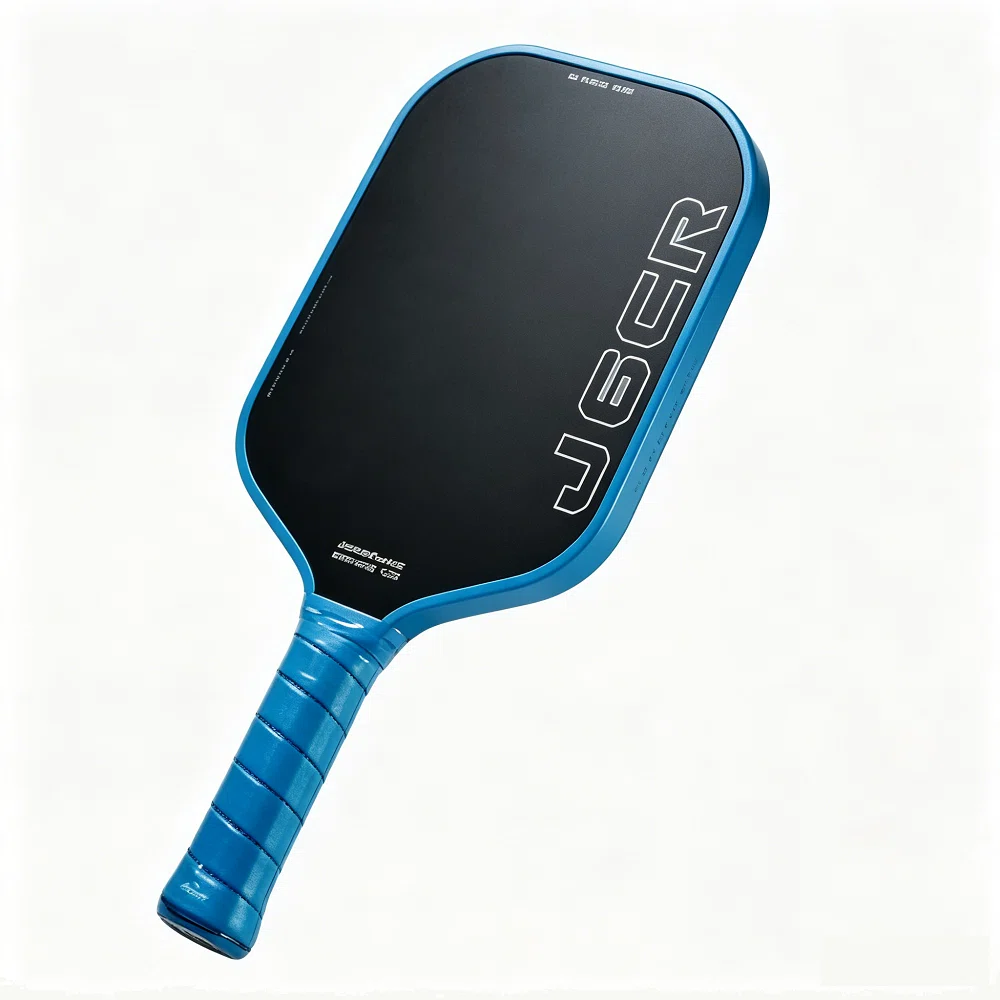
SUP-314 High-Performance Pickleball Paddle
Modern pickleball is no longer a casual backyard game. At the competitive level, players now demand faster swing speeds, cleaner tactile feedback, more reliable spin generation, and equipment that performs consistently from the first point to the last. For brands, distributors, clubs, and retailers, that shift creates a different challenge: sourcing a paddle that not only performs on court, but can be manufactured repeatably, customized efficiently, and delivered on a predictable schedule. The SUP-314 High-Performance Pickleball Paddle was developed for exactly that intersection of performance and production discipline.
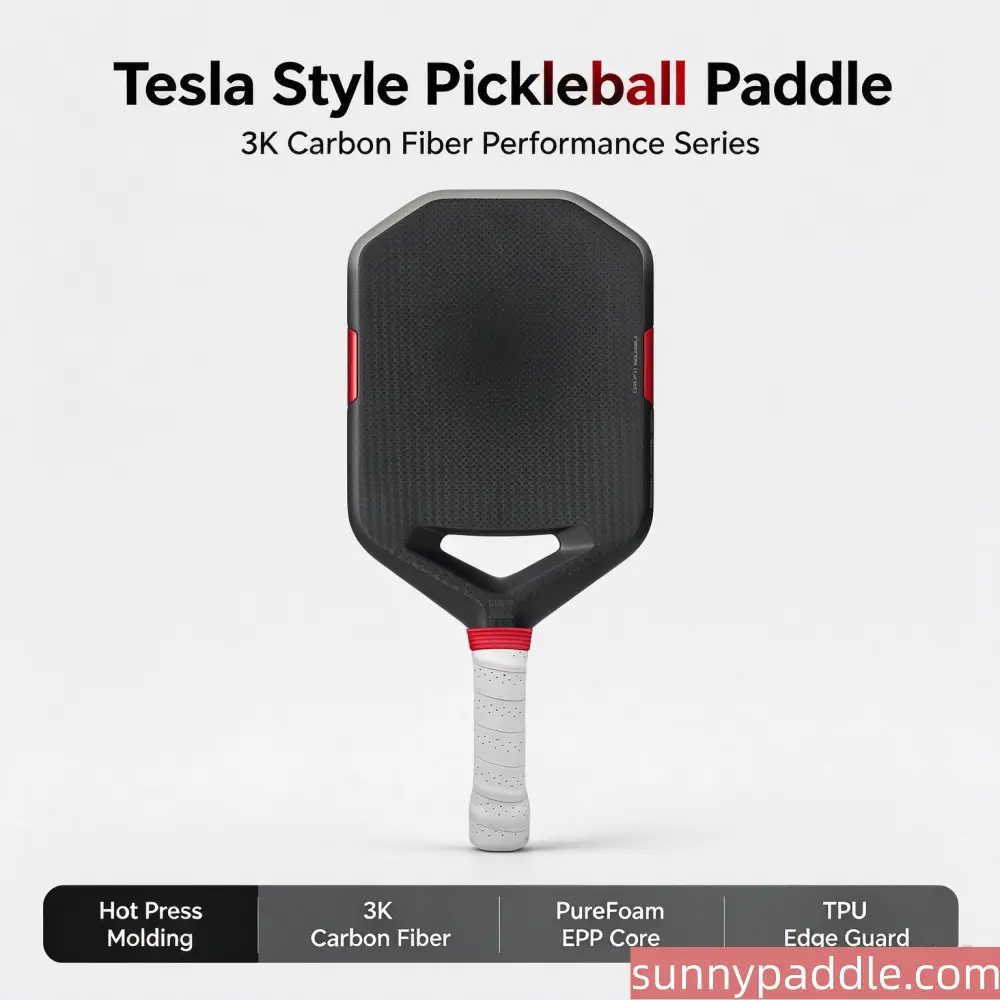
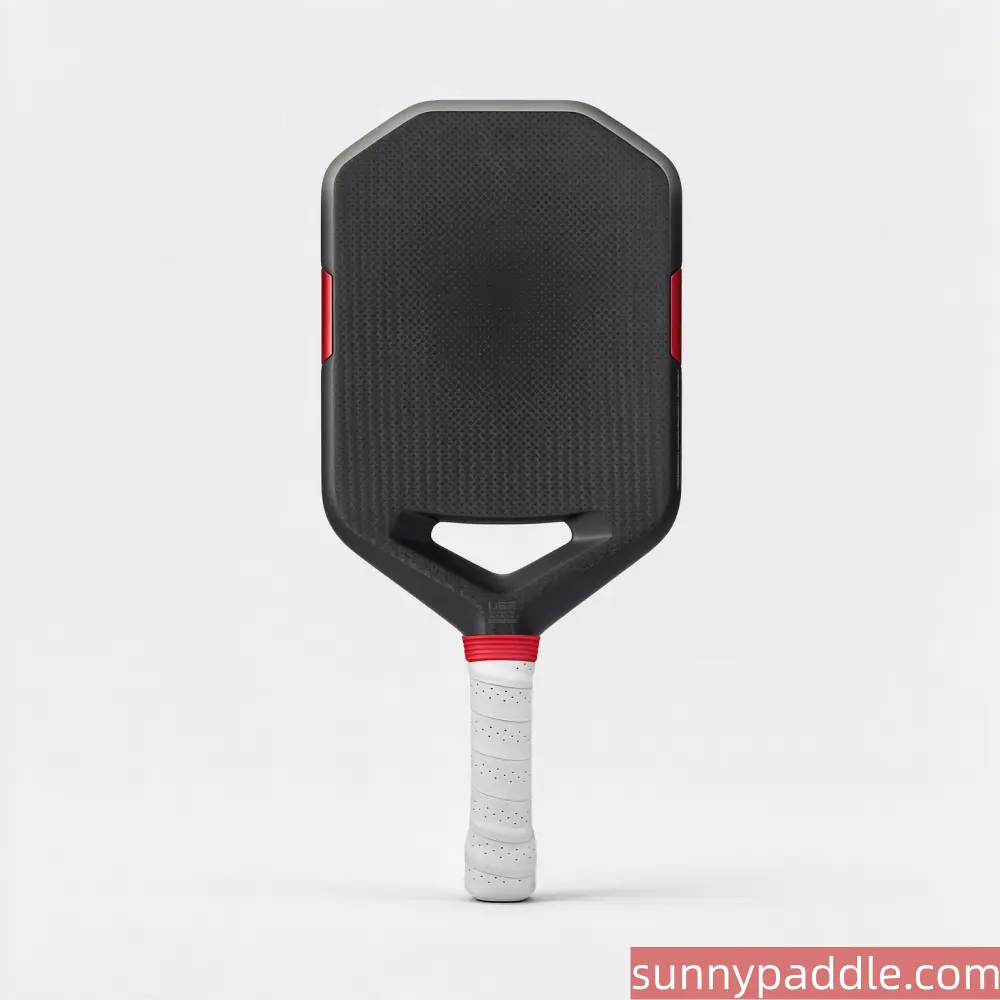
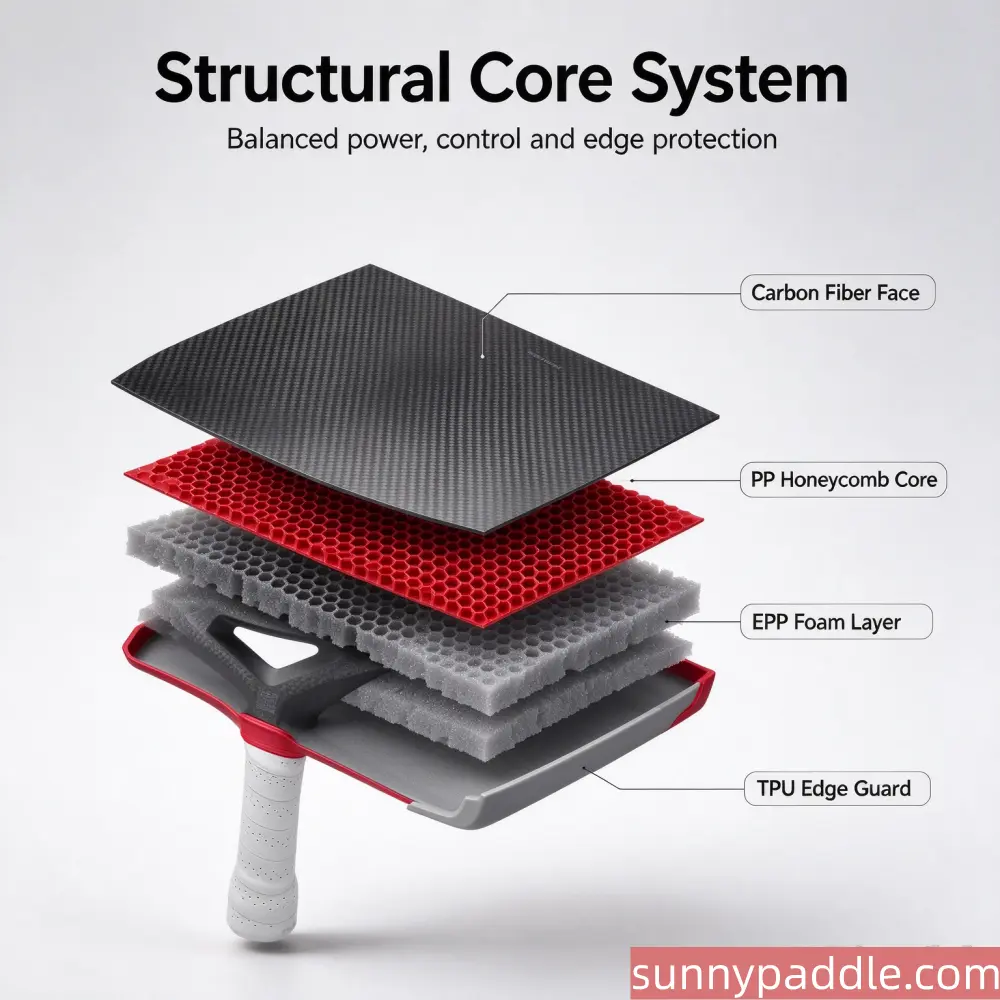
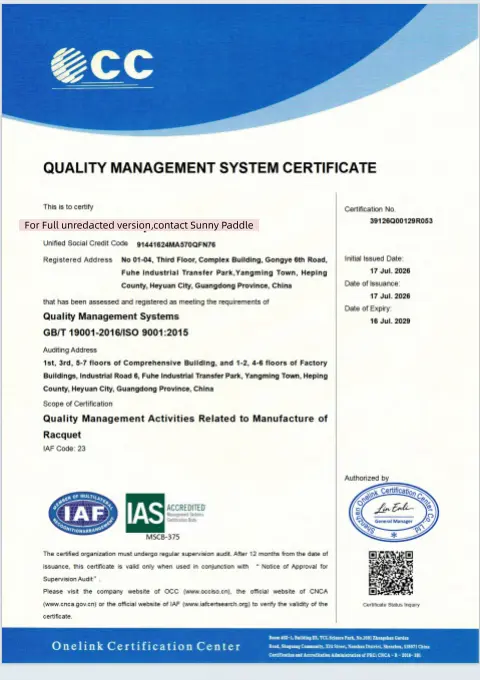
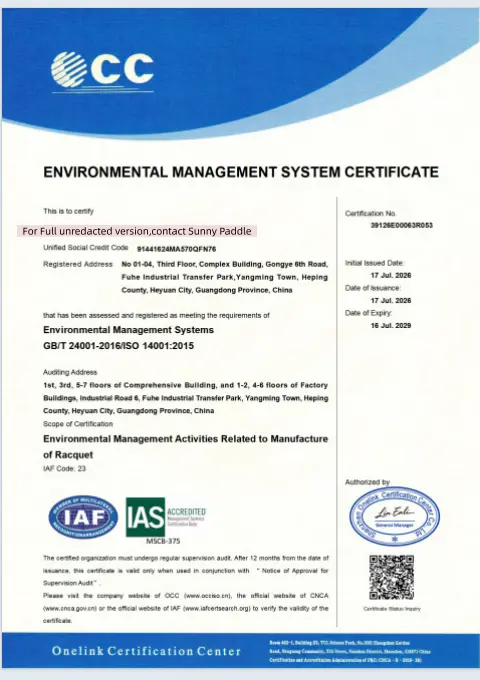
Built in our 10,000-square-meter ISO-certified manufacturing facility, the SUP-314 combines a hot-pressed 3K carbon fiber surface, a PureFoam EPP foam core with TPU reinforced structure, and a TPU edge guard system. It is available in 10 mm, 14 mm, and 16 mm thickness options, with a paddle weight range of 220–230 g, an overall dimension of 419 × 190 mm, and a 140 mm grip length. The design is suitable for beginner, intermediate, and professional players, and the platform supports white-label, OEM, and ODM programs. White-label orders start at 50 pcs with a 3-day sample lead time; OEM orders start at 100 pcs with a 5–7-day sample lead time; and ODM orders start at 200 pcs with 20-day production after sample approval.
This page explains how the SUP-314 is engineered, what each material choice contributes, how our factory controls quality, and how brand owners and distributors can build a customized paddle program around this platform. It is written for buyers who need more than marketing language: they need to understand what the product is, how it is made, and whether the factory behind it can deliver at scale.
Why Modern Pickleball Demands a Different Paddle Platform
The performance ceiling of a pickleball paddle is no longer defined by a single material or a single design trick. It is defined by how the face, core, edge structure, molding process, and surface treatment work together. A paddle can have a high-end carbon fiber face and still feel inconsistent if the bonding process is uneven. It can have a thick core and still lack feel if the foam structure is not controlled. It can look premium and still fail in the field if the edge guard separates or the surface texture wears prematurely.
The SUP-314 was designed around this systems-level view. The 3K carbon fiber surface is not simply selected for its visual appearance. It is hot-pressed onto the core structure to create a consistent bond and a predictable response across the hitting surface. The PureFoam EPP core is selected for its balance of lightweight support, shock absorption, and durability. The TPU reinforced structure and TPU edge guard are integrated to protect the perimeter, where paddles typically take the most abuse. And the UV printing process allows brand owners to apply custom graphics without compromising the surface finish.
For buyers, this matters because consistency is the hidden cost driver in paddle programs. A paddle that performs well in a sample but varies in weight, thickness, or surface feel in mass production creates returns, warranty claims, and brand damage. The SUP-314 platform is built around tight process control so that the paddle a buyer approves in sampling is the paddle that arrives in the carton.
3K Carbon Fiber Surface and Hot Press Molding
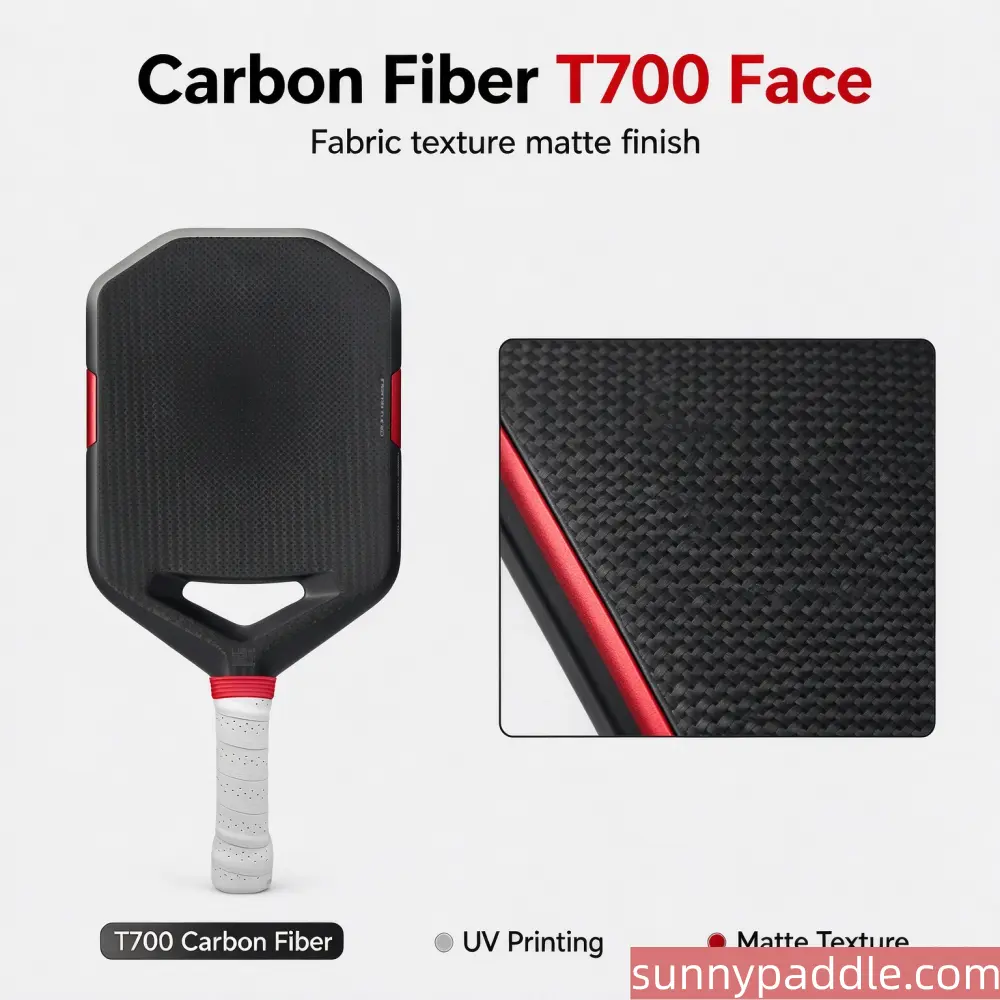
The surface of the SUP-314 is made from 3K carbon fiber. In paddle engineering, 3K refers to the fiber tow size and weave pattern, and it is widely used in performance racket sports because it offers a strong balance of stiffness, lightweight construction, and consistent feedback. A carbon fiber face can help transfer energy efficiently on drives and counters, while still providing enough touch for resets and dinks when paired with the right core and thickness.
What matters just as much as the material is how it is bonded. The SUP-314 uses a hot press molding process. Hot pressing applies controlled heat and pressure to bond the surface material, core, and reinforcing layers into a unified structure. Compared with lower-control molding methods, hot pressing helps reduce voids, uneven adhesion, and surface inconsistency. The result is a paddle face that feels uniform across the hitting zone and a structure that holds together under repeated impact.
The surface finish is also 3K carbon fiber, which gives the paddle a technical, performance-oriented appearance while maintaining the structural benefits of the material. The pattern craft uses UV printing, which allows for custom graphics, logos, and color treatments without the need for a separate surface laminate that could alter feel. For OEM and ODM buyers, this is an important detail: it means brand identity can be applied directly to the paddle surface while the underlying 3K carbon fiber performance layer remains intact.
Hot press molding also supports repeatability. In a factory setting, the ability to control temperature, pressure, and cycle time is what separates a consistent production run from a batch of paddles that vary from unit to unit. For distributors and brands ordering at volume, that repeatability is a core requirement, not a nice-to-have.
PureFoam EPP Core with TPU Reinforced Structure
The core of a pickleball paddle determines a large part of its feel, sound, shock absorption, and durability. The SUP-314 uses a PureFoam EPP foam core combined with a TPU reinforced structure. EPP, or expanded polypropylene, is a closed-cell foam material known for its lightweight nature, energy absorption, and resistance to repeated impact. In paddle construction, an EPP foam core can help reduce vibration while maintaining a stable response across the face.
The addition of a TPU reinforced structure is a deliberate design choice. TPU, or thermoplastic polyurethane, is an elastic and durable material that can absorb impact and resist abrasion. By integrating TPU reinforcement into the core structure, the paddle gains additional dimensional stability and edge protection. This is particularly important in pickleball, where the ball is struck repeatedly across the entire face, and where edge impacts are common during aggressive play.
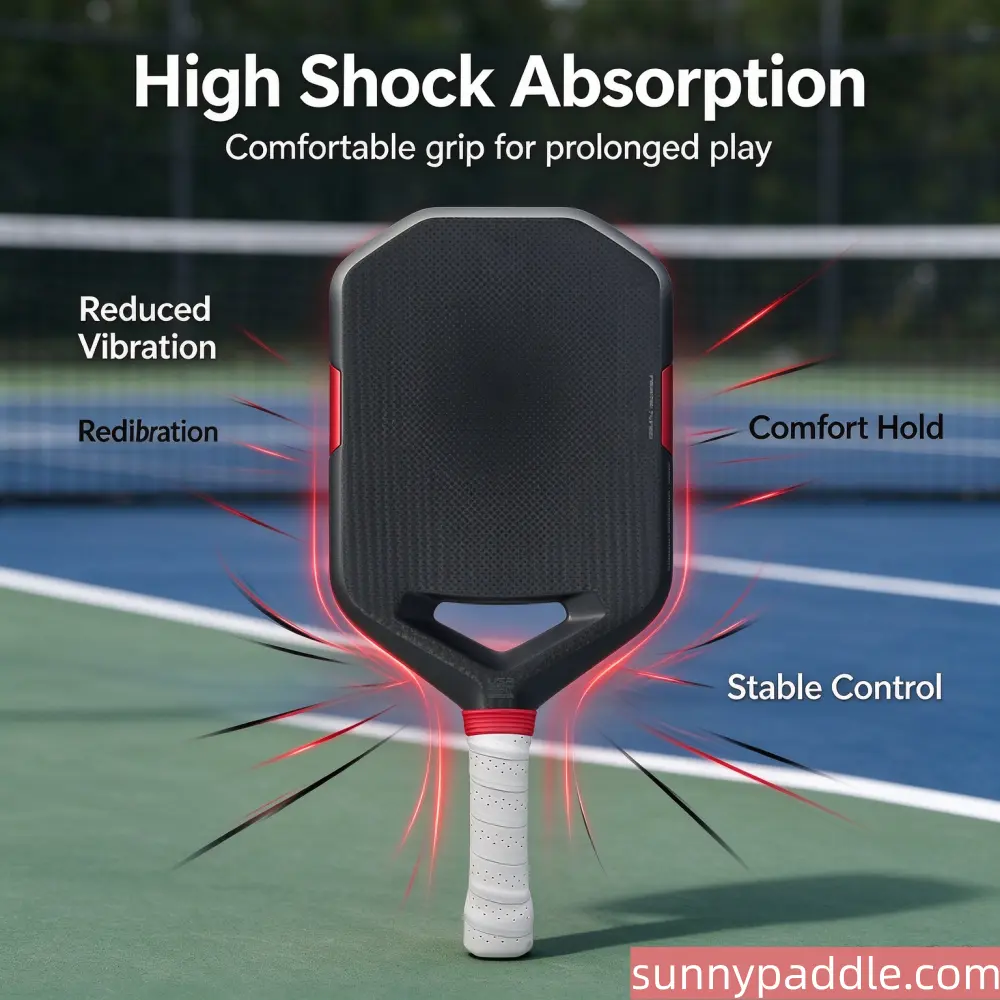
The combination of EPP foam and TPU reinforcement also contributes to what players describe as high shock absorption. A paddle with good shock absorption feels less harsh on off-center hits and reduces hand and arm fatigue during long sessions. For beginner and intermediate players, this can make the paddle more comfortable to learn with. For advanced players, it provides a more controlled platform for blocking, resetting, and defending against power shots.
Because the SUP-314 is available in 10 mm, 14 mm, and 16 mm thickness options, the core platform can be tuned to different performance profiles. Thinner cores generally favor faster hand speed and a more direct feel, while thicker cores generally favor control, damping, and a softer response. The ability to offer multiple thicknesses from the same platform gives brand owners flexibility in addressing different player segments without developing an entirely new product line.
Choosing the Right Thickness: 10 mm, 14 mm, and 16 mm
Thickness is one of the most important variables in paddle performance, and the SUP-314 platform offers three options to support different player profiles and market positioning.
The 10 mm option is the thinnest in the lineup. A thinner core typically produces a faster, more direct response, which can appeal to players who prioritize quick hands at the net, fast reaction volleys, and a crisp feel. For brands targeting aggressive players or a power-and-speed positioning, the 10 mm version can be a strong fit.
The 14 mm option sits in the middle and is often the most versatile choice. It offers a balance between speed and control, making it suitable for intermediate players who are developing their game and for advanced players who want a reliable all-court paddle. For many OEM and ODM programs, the 14 mm version is a practical starting point because it addresses a broad range of playing styles.
The 16 mm option is the thickest and generally favors control, shock absorption, and a softer feel. Players who struggle with vibration, who play a defensive or reset-heavy style, or who prefer a more forgiving sweet spot may gravitate toward the 16 mm version. For brands targeting beginner and intermediate segments, or for clubs looking for a comfortable, durable paddle for training programs, the 16 mm option can be particularly attractive.
Offering all three thicknesses from the same platform allows buyers to build a product family rather than a single SKU. A brand can position the 10 mm as the speed model, the 14 mm as the all-around model, and the 16 mm as the control model, all while benefiting from the same core materials, surface technology, and manufacturing process. This reduces development time and simplifies supply chain management.
Weight, Dimensions, and Grip: Designed for Real-World Playability
The SUP-314 has an overall dimension of 419 × 190 mm, a paddle weight range of 220–230 g, and a grip length of 140 mm. These dimensions are chosen to support a balance of reach, maneuverability, and control.
A weight range of 220–230 g is a competitive range that many players find comfortable for extended play. It is heavy enough to provide stability against hard-hit balls, but light enough to support quick hand speed at the net. For brands, a defined weight range is also a quality control tool: it allows the factory to sort and verify paddles against a target specification, reducing the risk of significant unit-to-unit variation.
The 419 × 190 mm face dimensions provide a generous hitting area while maintaining a shape that supports maneuverability. The 140 mm grip length is designed to accommodate a range of hand sizes and grip styles, and it gives players enough room to adjust their grip for different shots. For OEM and ODM programs, grip length can be a customization point, and the 140 mm standard provides a reliable baseline.
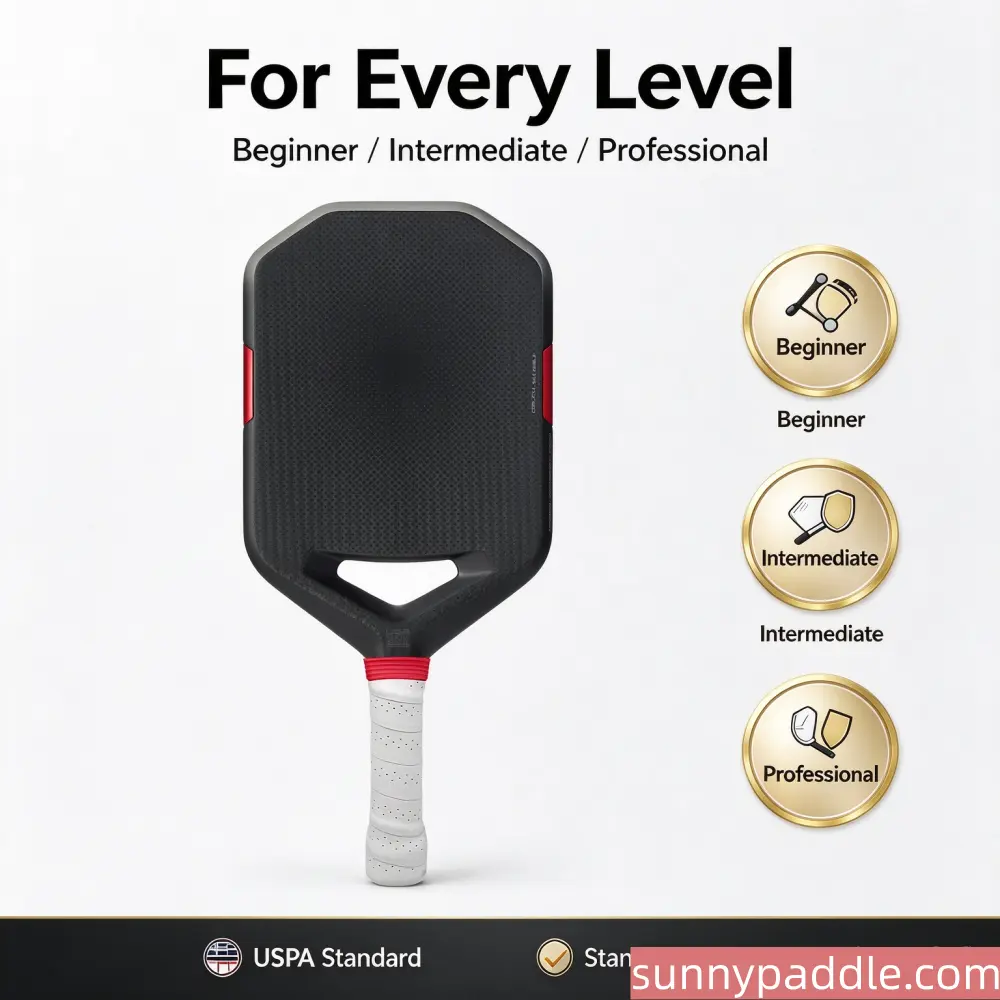
The paddle is suitable for beginner, intermediate, and professional players. That does not mean it is a compromise design. Rather, it means the platform is tunable: thickness selection, weight targeting, and surface graphics can be adjusted to address different segments, while the underlying construction remains consistent. This is the advantage of a platform-based approach for buyers who want to serve multiple markets without managing multiple unrelated products.
UV Printing and Custom Graphics for Brand Differentiation
For brand owners, the visual identity of a paddle is often as important as the technical specification. The SUP-314 uses UV printing for pattern craft, which allows for custom graphics, logos, and color treatments directly on the paddle surface. UV printing is a durable, high-resolution process that can reproduce detailed artwork and consistent brand colors.
Because the surface material is 3K carbon fiber, the printing process must be carefully controlled to maintain both appearance and performance. Our production team manages the surface preparation and printing parameters so that the graphic layer adheres properly and does not interfere with the feel of the paddle face. This is particularly important for OEM and ODM customers who need their brand identity to be clearly visible without compromising the performance characteristics that players expect.
UV printing also supports faster customization cycles. For white-label programs, existing designs can be adapted quickly. For OEM programs, customer artwork can be applied to the standard platform. For ODM programs, the design can be developed in collaboration with our team and then validated through sampling before mass production. This flexibility is one of the reasons the SUP-314 platform is suitable for both established brands and emerging pickleball labels.
TPU Edge Guard and Long-Term Durability
The edge guard is an often-overlooked component, but it plays a critical role in paddle durability. The SUP-314 uses a TPU edge guard, which is selected for its abrasion resistance, impact absorption, and flexibility. TPU edge guards help protect the perimeter of the paddle from court contact, drops, and the general wear and tear that occurs during regular play.
The TPU reinforced structure inside the paddle works together with the edge guard to improve dimensional stability and resistance to edge damage. For distributors and clubs, this can reduce the rate of warranty claims and returns. For brands, it supports a reputation for durability, which is especially important in a market where players are increasingly knowledgeable about equipment quality.
Durability is not only about surviving impacts. It is also about maintaining performance over time. A paddle that loses its surface feel, develops soft spots, or separates at the edge after a few months of play creates a poor customer experience. The SUP-314’s material selection and hot press construction are designed to support consistent performance across the product’s service life.
Factory Capabilities: Built in a 10,000-Square-Meter ISO-Certified Facility
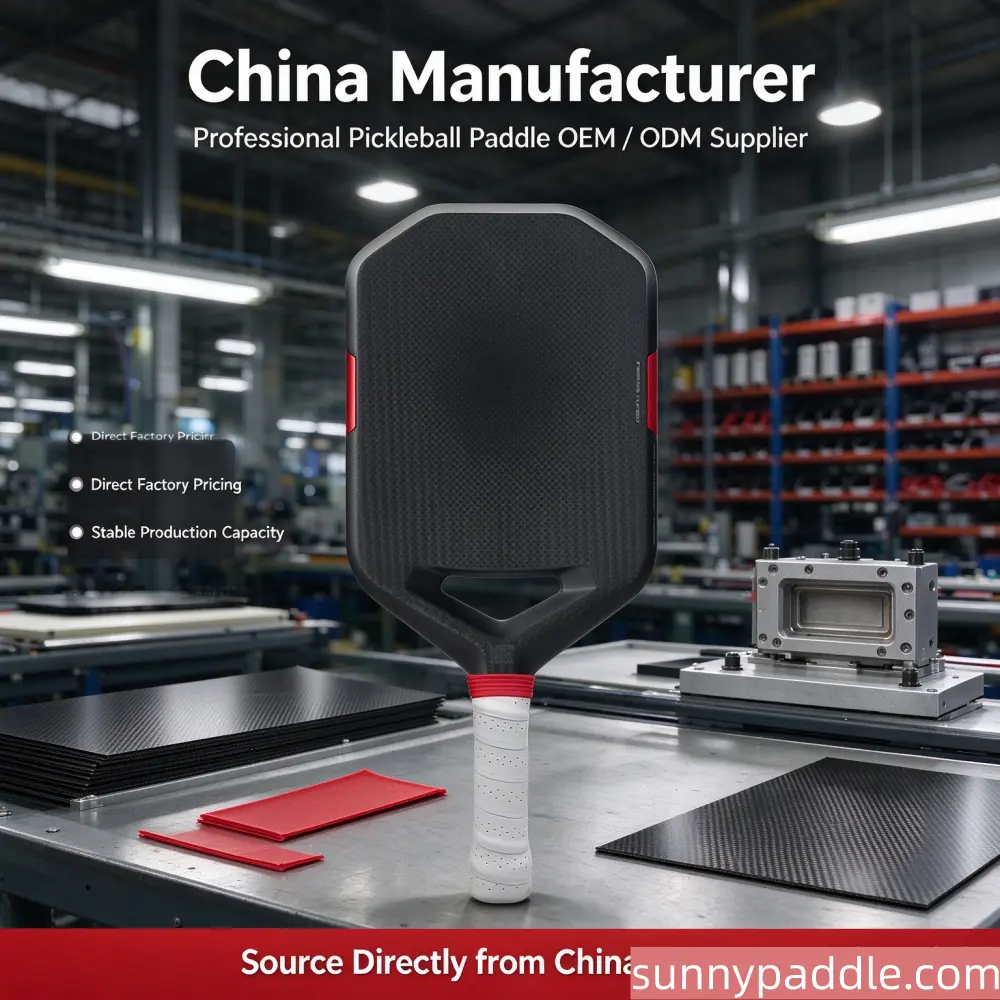
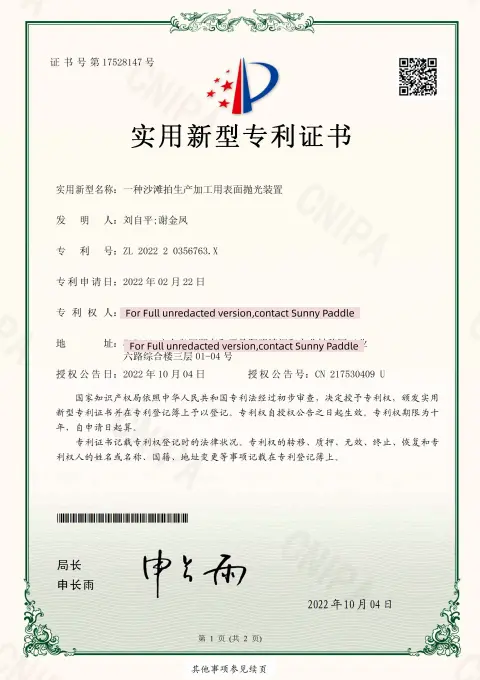
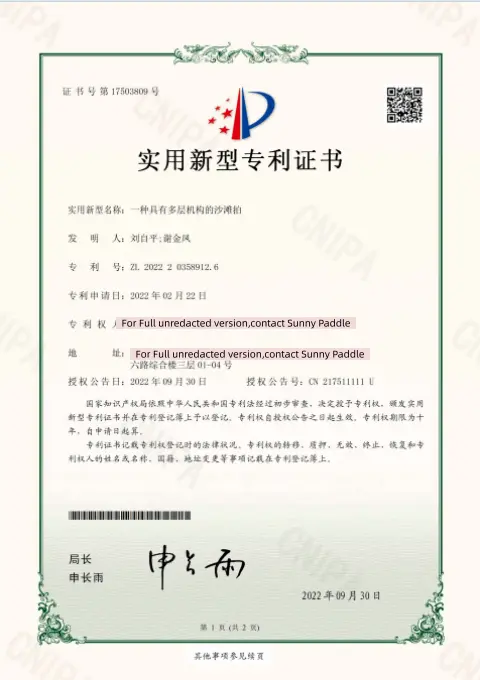
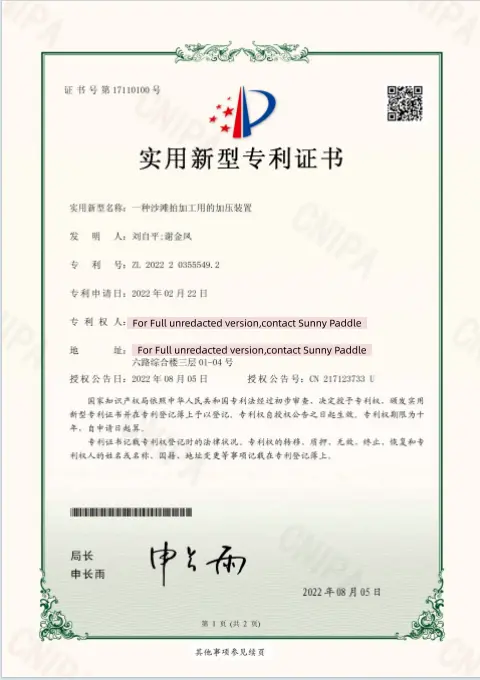
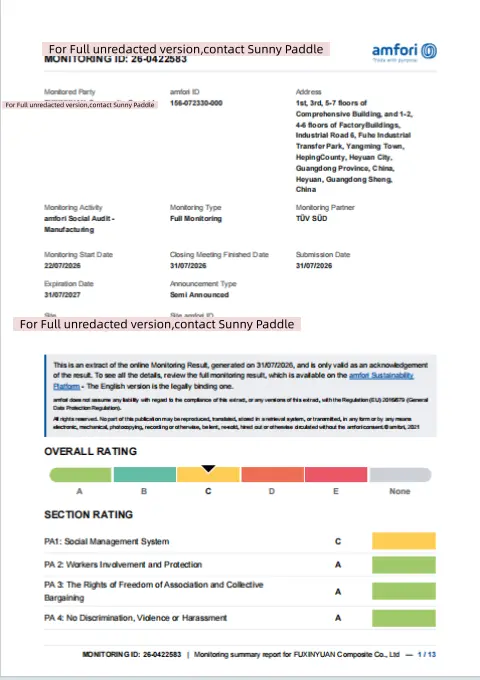
The SUP-314 is manufactured in our 10,000-square-meter ISO-certified production facility. Our factory is set up for composite paddle manufacturing, including hot press molding, surface preparation, UV printing, edge guard assembly, weight and dimension verification, and final quality inspection.
For B2B buyers, factory capability is not just about floor space. It is about process control, production capacity, and the ability to manage customization without disrupting delivery schedules. Our facility is organized to support white-label, OEM, and ODM programs, with dedicated processes for sample development, material verification, in-process inspection, and final QC.
We work with brands, distributors, clubs, and retailers in multiple markets, and we understand the documentation and consistency requirements that come with export-oriented production. Our team can support product specification alignment, packaging requirements, and shipment coordination. For buyers who need a manufacturing partner rather than a trading company, the SUP-314 platform is backed by a factory that understands the full production cycle.
Quality Control: From Incoming Materials to Final Inspection
Quality control is the backbone of a reliable paddle program. Our QC process for the SUP-314 covers multiple stages.
Incoming material inspection verifies the 3K carbon fiber surface material, PureFoam EPP core, TPU reinforcement, TPU edge guard, grip materials, and packaging components against approved specifications. This step is important because material variation at the source can create performance variation downstream.
In-process inspection covers hot press parameters, surface preparation, UV printing quality, edge guard assembly, and grip installation. Our production team monitors key process variables to maintain consistency across the production run.
Dimensional and weight verification checks the paddle against the approved specification, including overall dimensions, thickness, weight range, and grip length. For buyers who need tight weight tolerances, this step can be customized to match the target market requirements.
Final inspection before packing reviews surface appearance, printing quality, edge guard fit, grip condition, and packaging integrity. Paddles that do not meet the approved standard are separated before shipment.
This multi-stage QC approach is designed to reduce defects, improve batch consistency, and give buyers confidence in the product they receive. For OEM and ODM programs, we can also align QC criteria with customer-specific requirements and provide inspection documentation as needed.
White-Label, OEM, and ODM: A Flexible Production Model
The SUP-314 platform supports three production models: white-label, OEM, and ODM. Each model is designed for different levels of customization and order volume, so buyers can choose the path that matches their brand strategy and market stage.
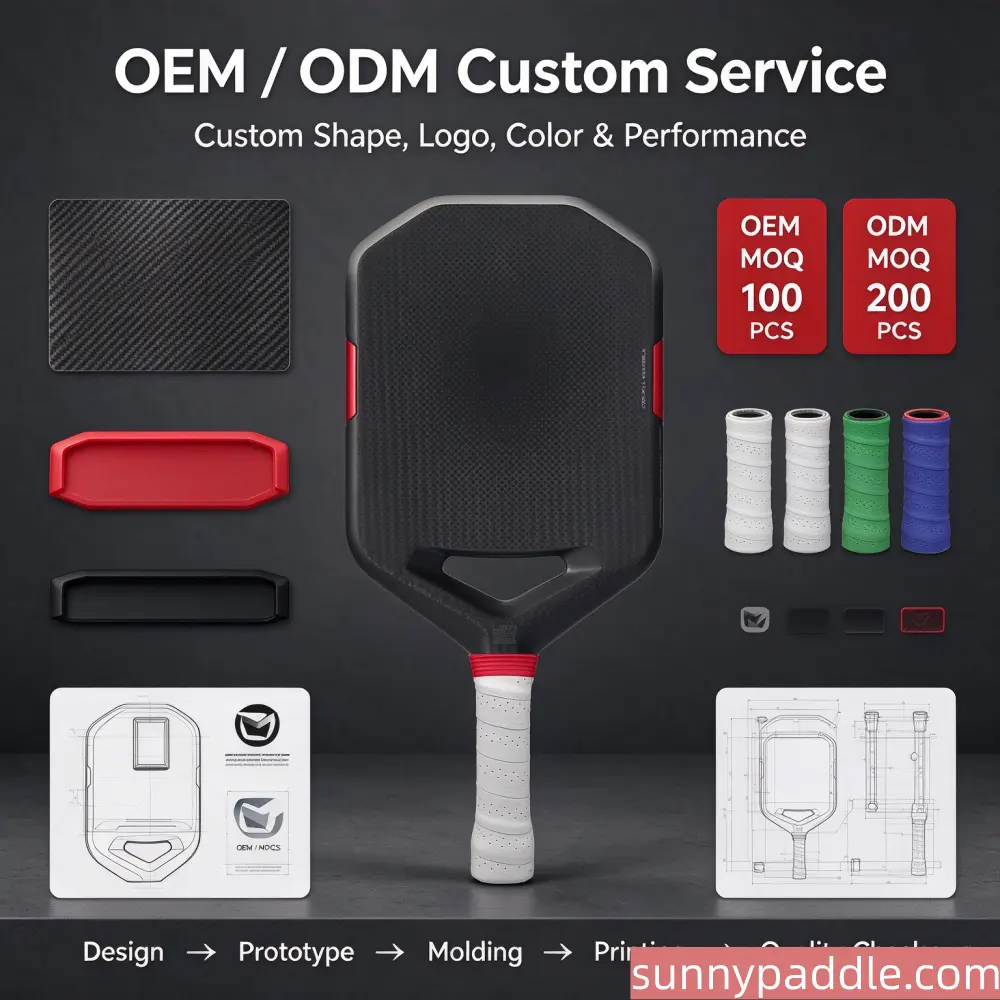
White-label is the fastest path to market. It is suitable for buyers who want to launch quickly with a standard paddle platform and minimal customization. The white-label MOQ is 50 pcs, and the white-label sample lead time is 3 days. This makes it a practical option for distributors, clubs, and online sellers who need to test the market or replenish stock quickly.
OEM is suitable for buyers who have their own brand identity and want to apply custom graphics, logos, or packaging to the SUP-314 platform. The OEM MOQ is 100 pcs, and the OEM sample lead time is 5–7 days, which allows buyers to review the customized sample before committing to production. OEM programs can include UV printing customization, packaging design, and specification alignment within the platform’s capabilities.
ODM is suitable for buyers who want to develop a more differentiated product based on the SUP-314 platform. The ODM MOQ is 200 pcs, and the ODM production lead time is 20 days after sample approval. This model is appropriate for brands that need a more tailored configuration, including thickness selection, weight targeting, graphic development, and packaging customization.
For all three models, the process starts with a clear specification discussion. We review the target market, performance requirements, customization needs, order quantity, and delivery schedule. From there, we provide a quotation and sampling plan. Once the sample is approved, production is scheduled and QC is carried out before shipment. With MOQs of 50 pcs for white-label, 100 pcs for OEM, and 200 pcs for ODM, buyers can scale from market testing to full production without changing manufacturing partners.
Certifications, Compliance, and USAPA-Related Specifications
The SUP-314 is manufactured in an ISO-certified facility, and the platform is designed to meet USAPA-related specifications. Buyers who require USAPA compliance for tournament or retail purposes should request the relevant test report and confirm the current certification status before launch. We recommend that product pages and marketing materials use precise language such as “USAPA-compliant specifications; test report available upon request” rather than making an unconditional compliance claim without documentation.
For export markets, compliance is not only about the paddle itself. It also includes packaging materials, labeling, and market-specific requirements. Our team can support buyers in aligning product documentation and packaging with their target market requirements. For brands selling through online marketplaces, we can also discuss packaging formats that support fulfillment and retail presentation.
Packaging and Logistics for Export-Oriented Buyers
Packaging is part of the product experience, and it is also part of the supply chain. The SUP-314 can be packed in retail-ready packaging, neutral packaging, or customized packaging based on the buyer’s requirements. For online sellers, packaging can be designed to support marketplace fulfillment needs, including protective packaging that reduces damage during transit.
Our team can work with buyers on carton specifications, units per carton, and shipping coordination. For buyers managing multi-market distribution, we can discuss labeling and packaging variations that support different regions. The goal is to make the transition from factory to warehouse as smooth as possible, so that the product arrives in sellable condition.
Building a Paddle Program Around the SUP-314 Platform
The SUP-314 is more than a single paddle model. It is a platform that can support a range of product strategies. A brand can use the 10 mm version for a speed-focused model, the 14 mm version for an all-around model, and the 16 mm version for a control-focused model. The same platform can be paired with different UV-printed graphics, packaging designs, and branding elements to create distinct SKUs for different markets or distribution channels.
For distributors, the platform offers a way to build a coherent product line with consistent quality and manageable supply chain complexity. For clubs and training programs, the 16 mm option can provide a comfortable, durable paddle for learners and intermediate players, while the 14 mm option can serve advanced players. For online sellers, the platform supports fast white-label launches and scalable OEM customization.
The key advantage is flexibility without fragmentation. Buyers do not need to manage multiple unrelated products or suppliers to address different segments. They can work with one factory, one platform, and one quality standard, while still offering meaningful variation to their customers.
Start Your SUP-314 Program
If you are a brand owner, distributor, club operator, or retailer looking for a high-performance pickleball paddle platform with factory-direct customization, the SUP-314 is designed for your program. With a 3K carbon fiber surface, PureFoam EPP core with TPU reinforced structure, TPU edge guard, 10/14/16 mm thickness options, 220–230 g weight range, and UV printing customization, the platform offers a strong balance of performance, durability, and production flexibility.
Our team can support white-label sampling in 3 days, OEM sampling in 5–7 days, and ODM production in 20 days after sample approval. White-label orders start at 50 pcs, OEM orders at 100 pcs, and ODM orders at 200 pcs. We can discuss your target specifications, customization requirements, packaging needs, and delivery schedule, and provide a quotation based on your program.
To move forward, request a sample, share your specification requirements, or ask for an OEM/ODM quotation. We will review your needs and recommend the most practical configuration for your market.
- Request a Sample
- Get OEM/ODM Quote
- Download Product Catalog