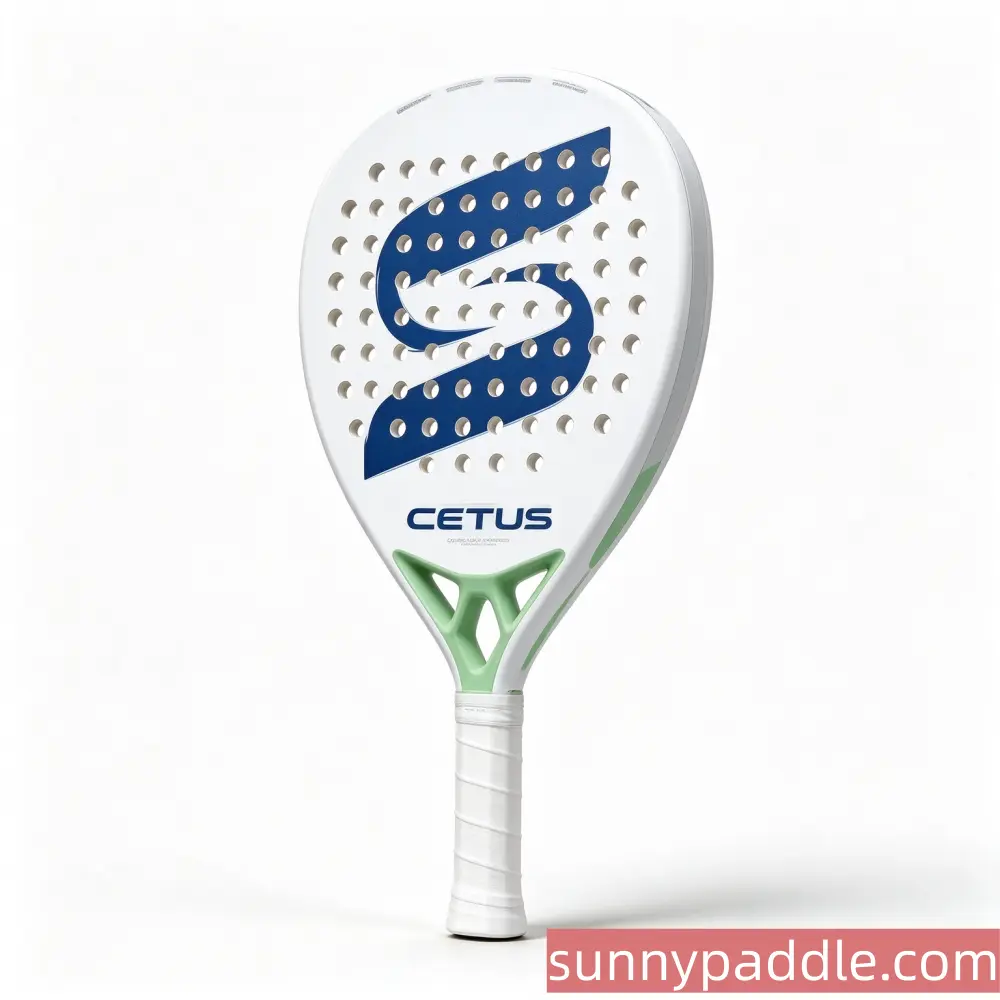
Finding a reliable Padel Racket Manufacturer is one of the most consequential decisions for any brand entering the racket sports market. The padel industry continues to expand across Europe, the Middle East, and the Americas, and the demand for high-quality custom padel rackets has never been stronger. Whether you are launching a new brand, expanding an existing product line, or looking for a long-term OEM partner, understanding what separates a competent supplier from an exceptional one will determine your success in this competitive space.
At Sunny Paddle, we have spent years working with brands, distributors, and retailers to develop padel rackets that meet the demands of players at every level. This guide draws on that experience to help you evaluate potential manufacturing partners with confidence.
Many factories can produce a padel racket. Far fewer can consistently deliver the combination of material integrity, manufacturing precision, compliance documentation, and communication transparency that a serious brand requires. The difference between an acceptable supplier and an excellent one usually comes down to several core capabilities.
The foundation of any performance padel racket is its carbon fiber construction. Factories that manufacture their own composite materials in-house have a significant advantage over those that purchase prepreg from third parties. Vertical integration in carbon fiber layup and molding allows for tighter quality control from the earliest stages of production.
A capable manufacturer will be able to explain the differences between 3K, 12K, and 18K carbon fiber weaves, and how each affects the feel, durability, and power profile of the finished racket. They should also be able to discuss core materials, whether EVA foam in different densities or alternative core technologies, and how these interact with the carbon face to create specific playing characteristics.
Padel racket manufacturing involves multiple complex steps: carbon fiber cutting, layup, resin application, hot or cold pressing, drilling, surface finishing, grip installation, and final assembly. Each step introduces potential variability. An excellent manufacturer has documented procedures for every stage and uses in-process inspection to catch deviations before they become defects.
When evaluating a potential Padel Racket Manufacturer, ask about their pressing methodology. Cold pressing and hot pressing each have trade-offs in terms of production speed, energy consumption, and the structural properties of the finished product. A manufacturer should be able to explain why they use a particular approach and how it benefits the rackets they produce.
Understanding the distinction between OEM and ODM services is essential when selecting a partner. OEM (Original Equipment Manufacturing) typically means the factory produces rackets to your specifications and applies your branding. ODM (Original Design Manufacturing) involves the factory contributing significant design work, often adapting existing molds and construction methods to create a product that carries your brand identity.
The best manufacturers offer both models and can advise on which approach makes sense given your stage of development, budget, and timeline. For new brands with limited technical knowledge, ODM support can accelerate time to market considerably. For established brands with clear product specifications, OEM production ensures that your exact requirements are met.
Quality is not a single checkpoint at the end of the production line. It is a system that runs through every phase of manufacturing. When assessing a padel racket supplier, look beyond finished product inspection and examine their quality management infrastructure.
ISO 9001 certification is a baseline indicator that a factory has implemented a documented quality management system. However, not all certificates are equal. Verify that the certificate is current, that the scope covers composite racket production, and that the issuing body is accredited. A genuine ISO 9001 system means the manufacturer has procedures for document control, supplier management, corrective actions, and continuous improvement.
Reputable manufacturers maintain relationships with independent testing laboratories such as SGS or Intertek. They can provide recent test reports for mechanical properties, material composition, and compliance with regional regulations. These reports should be specific to the actual production model, not generic declarations for raw materials.
If you plan to sell padel rackets in the European Union, REACH compliance is mandatory. REACH regulates chemical substances in products, and padel rackets can contain restricted substances in paints, adhesives, grips, and protective components. A capable manufacturer will understand which components carry the highest compliance risk and can provide relevant test evidence.
For markets with additional requirements, such as those covered by RoHS for electronic components or specific packaging regulations, the manufacturer should be able to document compliance or explain why a particular regulation does not apply to a given product configuration.
During the supplier evaluation process, you will encounter many claims about capabilities and credentials. Some will be accurate. Others will be overstated or unverifiable. Here are practical steps to separate substance from marketing.
Never accept photocopies or screenshots as final proof. Ask for original or certified copies of ISO certificates, test reports, and compliance declarations. Check that the company name on the documents matches the legal entity you are contracting with. A test report issued to a material supplier does not automatically cover the finished racket produced by a different factory.
If possible, visit the factory in person. Observe the production floor, talk to technicians, and examine the state of equipment and facilities. If travel is not feasible, request a live video tour. A manufacturer with nothing to hide will welcome this level of scrutiny.
Speak with other brands or distributors that have worked with the manufacturer. Ask about their experience with quality consistency, communication, lead times, and how the factory handles problems when they arise. Every manufacturer encounters issues; what matters is how they respond.
Before placing a large order, request samples. Pay attention to how the manufacturer handles the sampling process. Do they ask detailed questions about your requirements? Do they provide specifications for the sample, including weight, balance point, and material composition? A professional sampling process is a strong indicator of overall operational discipline.
The most successful brand-factory relationships are built on clear communication, mutual respect, and aligned incentives. Treating your Padel Racket Manufacturer as a transactional vendor may work for a single order, but it rarely produces the consistent quality and preferential treatment that a long-term partnership can deliver.
Before production begins, freeze the product specifications. This includes material composition, weight tolerance, balance point, surface finish, color references, grip type, packaging, and any branding elements. Approve a golden sample that represents the agreed standard, and include provisions in your agreement that any deviation requires written approval.
This documentation protects both parties. It gives the factory a clear target to meet, and it gives you a reference point for resolving any quality disputes that may arise later.
Supply chains are dynamic, and material availability can change. A trustworthy manufacturer will inform you in advance if a component supplier changes, if a resin formulation is updated, or if any substitution is necessary. Undisclosed substitutions are a serious breach of trust and can compromise both product performance and compliance.
As your brand grows, your order volumes will increase. Discuss scaling capability with your manufacturer early in the relationship. Can they handle a three-fold increase in monthly production without compromising quality or lead times? What are their capacity constraints during peak seasons?
Lead times are another critical factor. Standard production lead times for custom padel rackets typically range from several weeks to a few months, depending on order volume and customization complexity. Build buffer into your planning and maintain open communication about delivery schedules.
Sunny Paddle combines deep composite manufacturing expertise with a genuine commitment to partnership. We work with brands of all sizes, from startups launching their first padel racket line to established companies seeking a more reliable OEM supplier.
Our approach is built on several core strengths:
When you work with Sunny Paddle, you are not just placing orders with a factory. You are engaging a manufacturing partner that is invested in the success of your brand.
Minimum order quantities vary by manufacturer and product complexity. For fully custom OEM production, MOQs often range from several hundred to over a thousand units. ODM projects with existing molds may have lower minimums. Discuss your volume requirements early in the supplier evaluation process.
Development timelines depend on whether you are adapting an existing design or creating something entirely new. A straightforward OEM project using established molds can move from specification to production samples in a few weeks. Full ODM development with new mold creation typically takes longer. Your manufacturer should provide a detailed project timeline with milestones.
At minimum, look for ISO 9001 certification for quality management. For European market access, the manufacturer should understand and support REACH compliance. Depending on your target markets, additional certifications or test reports may be relevant. The key is to verify that certifications are current and applicable to the actual production facility and product scope.
Yes, and you should. A factory visit or live virtual tour is one of the most valuable steps in supplier evaluation. It allows you to assess production capabilities, quality control practices, and working conditions firsthand. Reputable manufacturers welcome this level of diligence.
Selecting the right Padel Racket Manufacturer is a strategic decision that affects every aspect of your brandâs performance in the market. By focusing on material expertise, manufacturing precision, compliance documentation, and transparent communication, you can identify a supplier that will support your growth rather than constrain it.
Sunny Paddle is ready to discuss your padel racket manufacturing needs. Whether you are exploring OEM production for the first time or seeking a more capable partner for your existing product line, we invite you to reach out and learn more about how we can help bring your vision to the court.
Visit https://sunnypaddle.com to start the conversation.