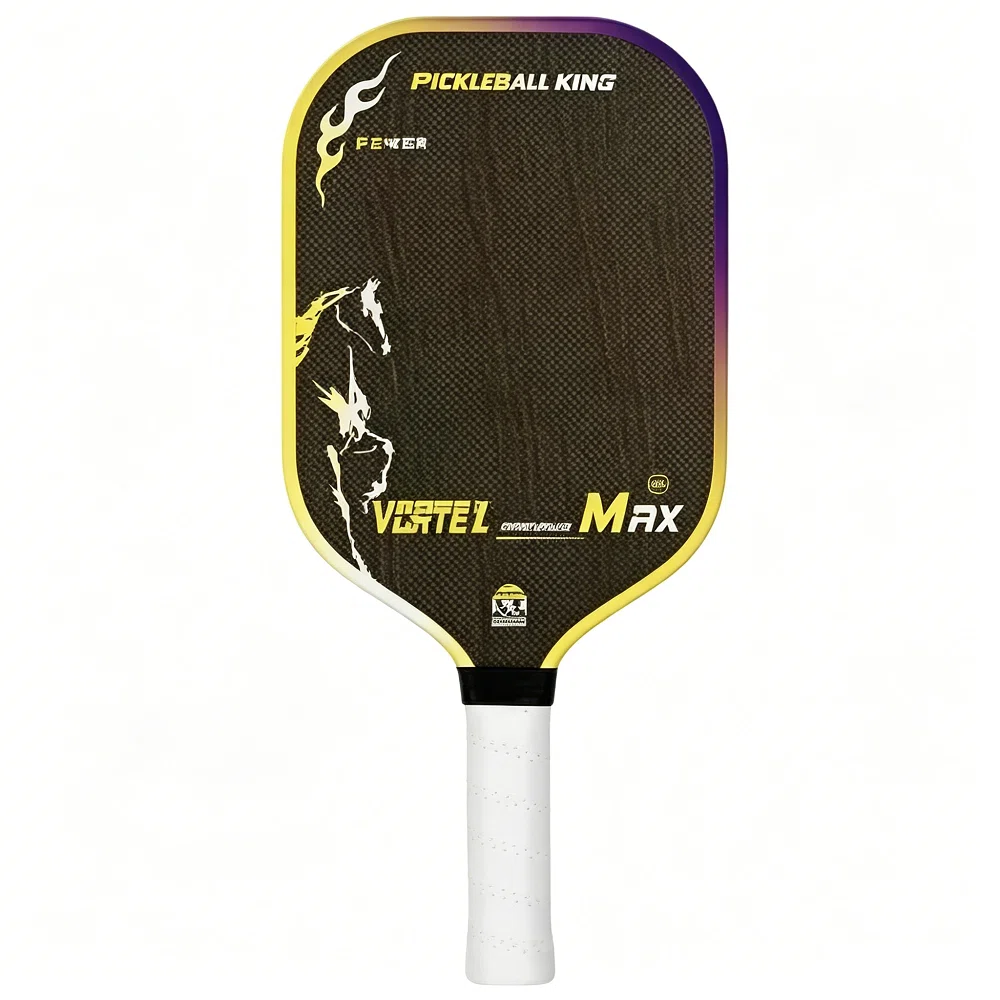
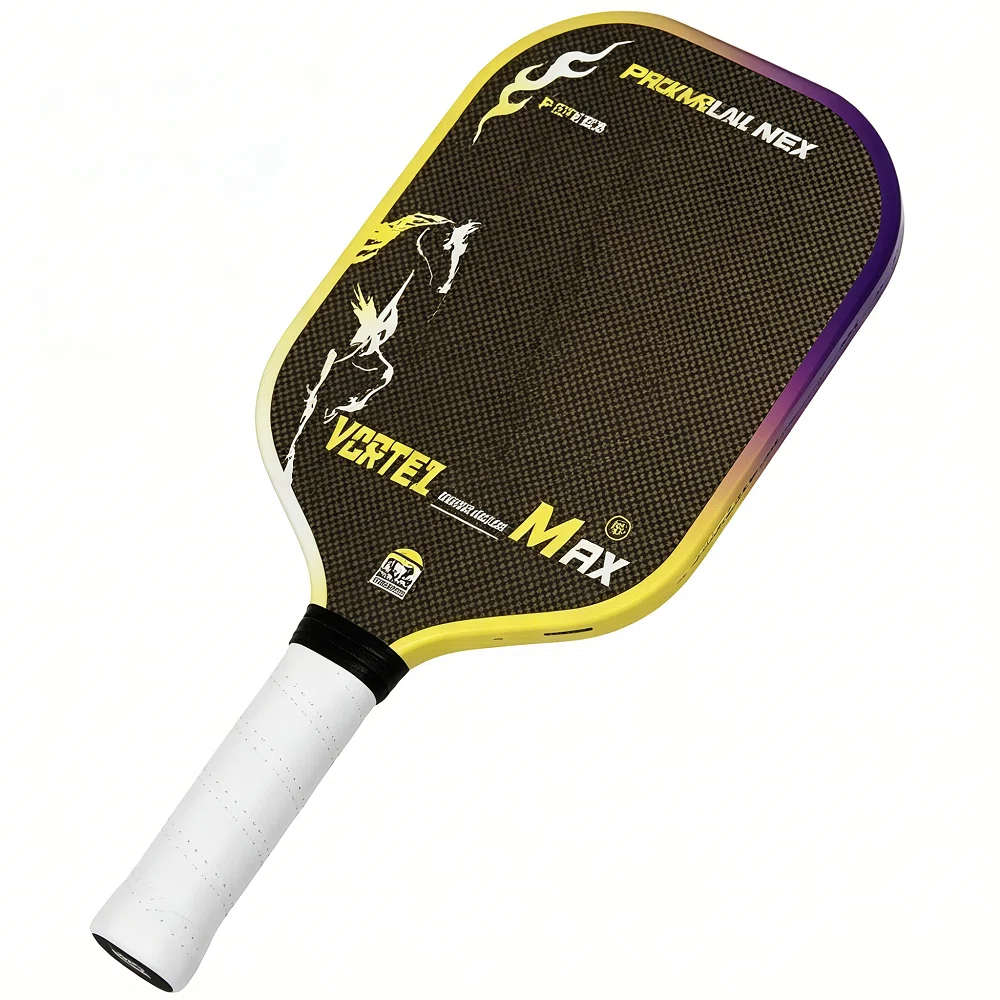
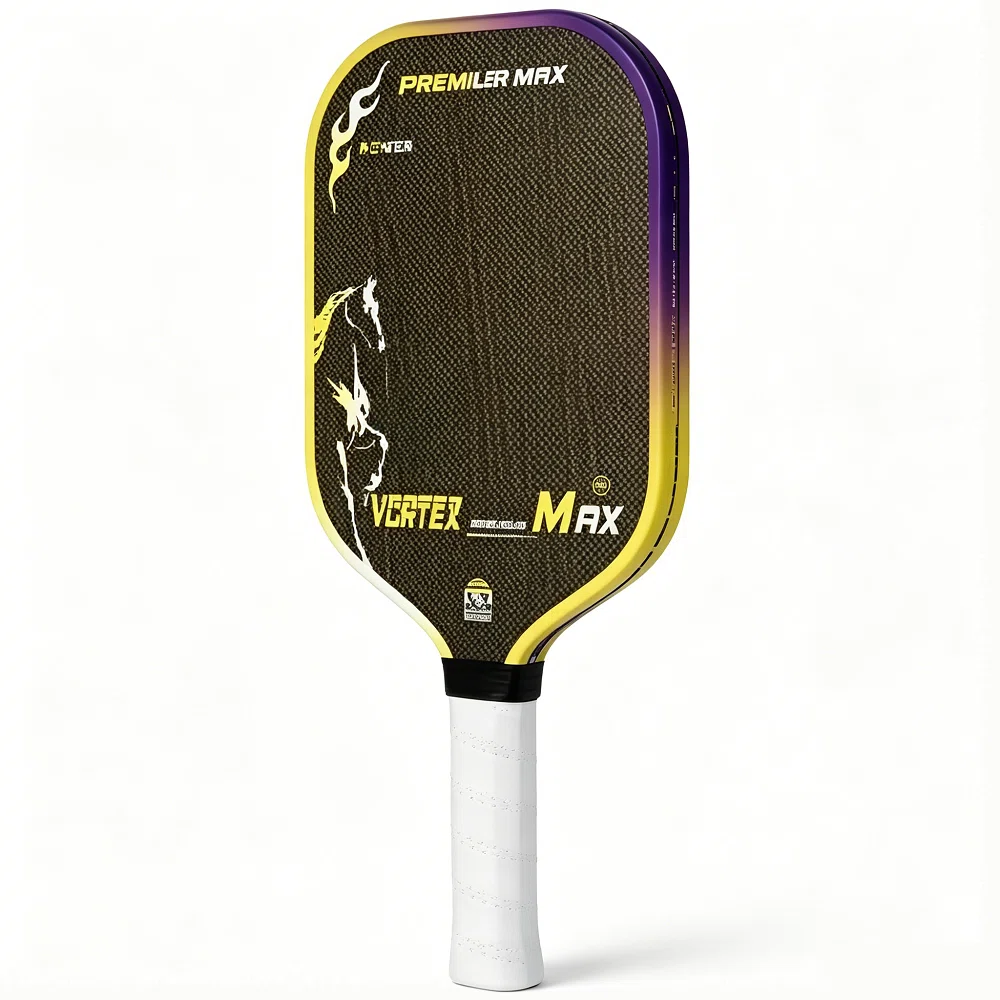
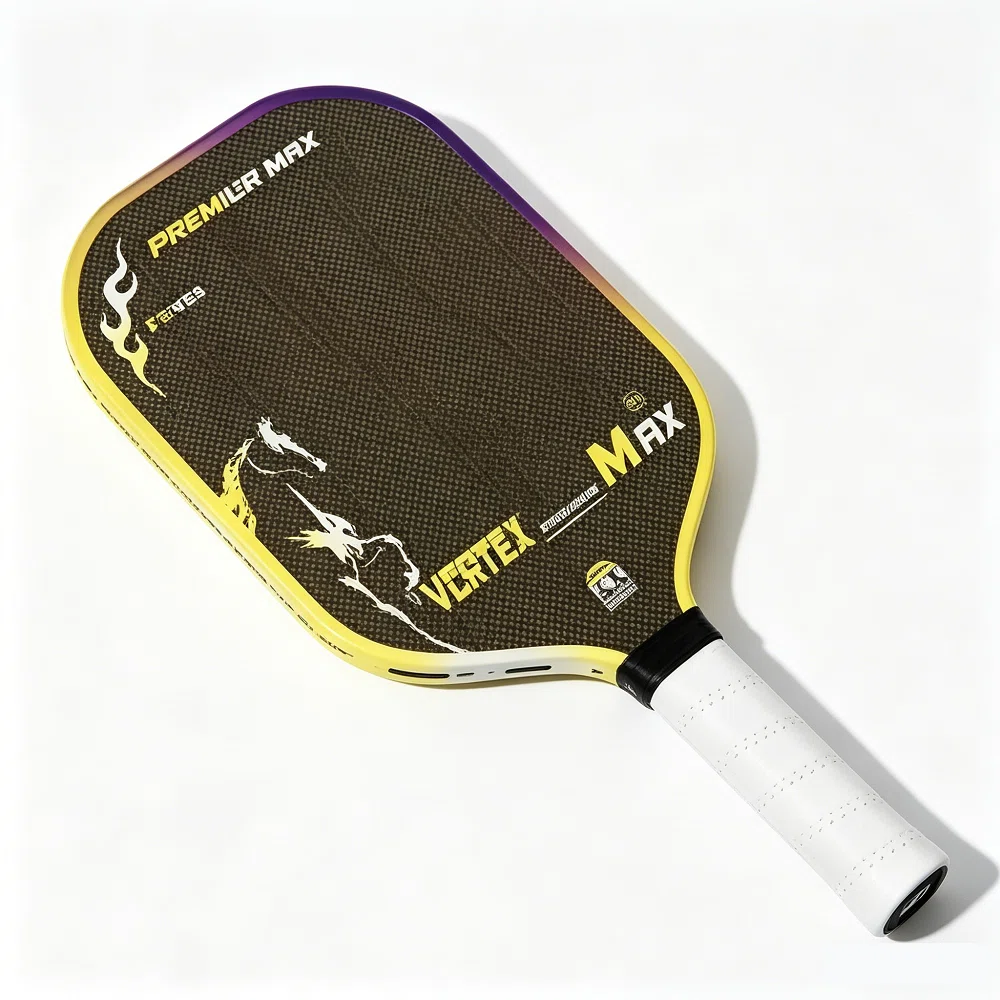
Titanium Wire Pickleball Paddle — SUP-711 Carbon Fiber Paddle with EPP Foam Core
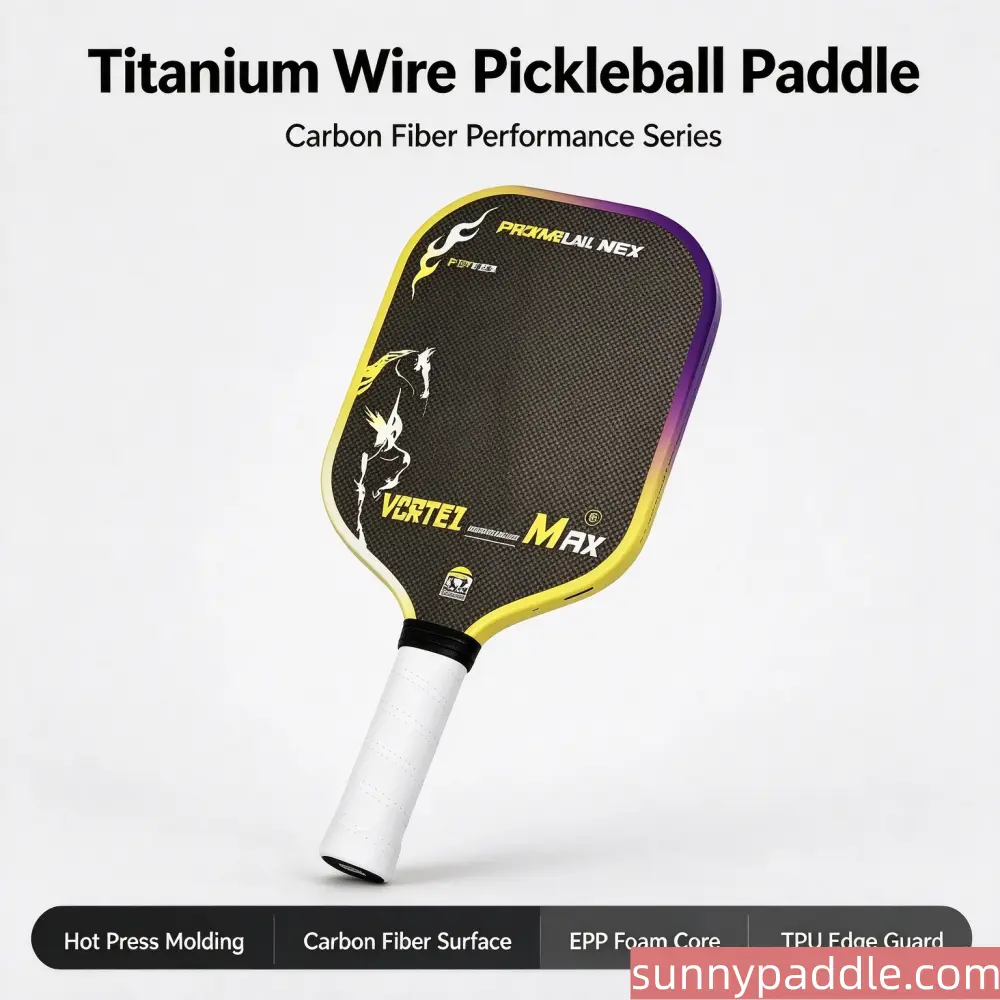
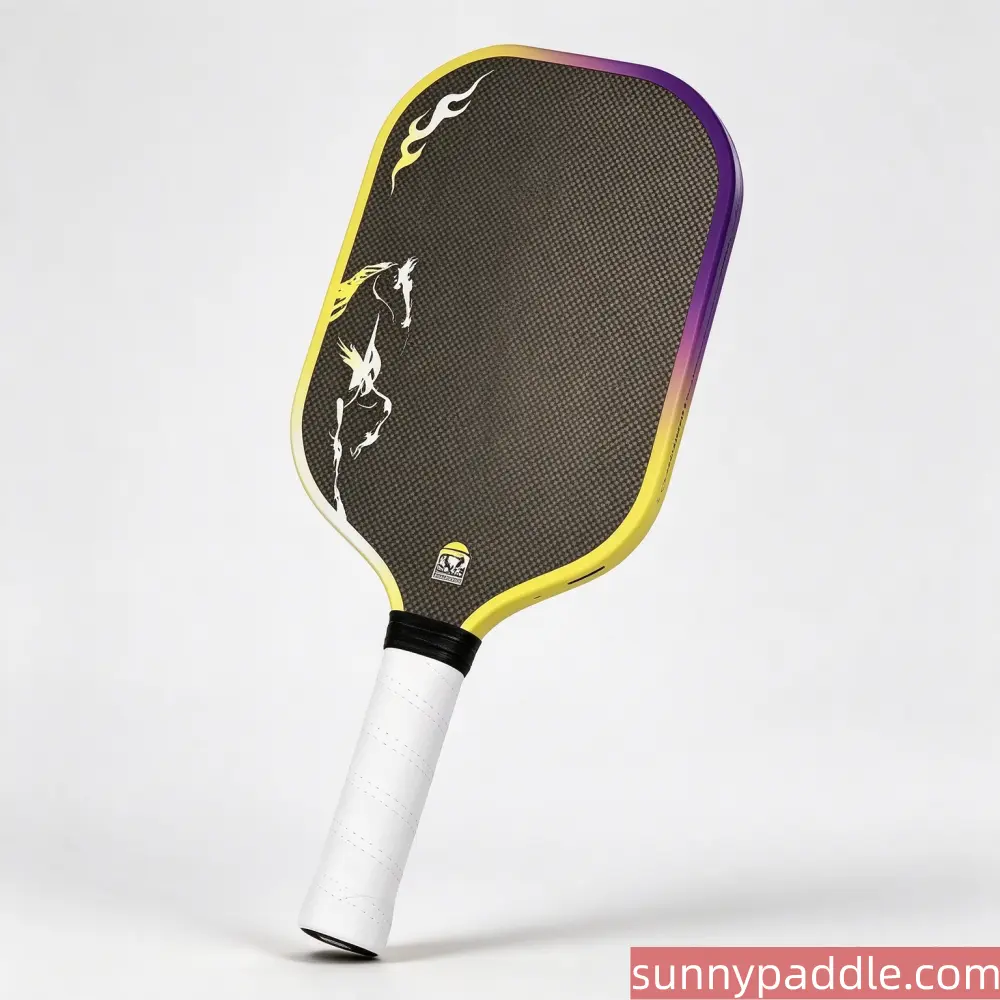
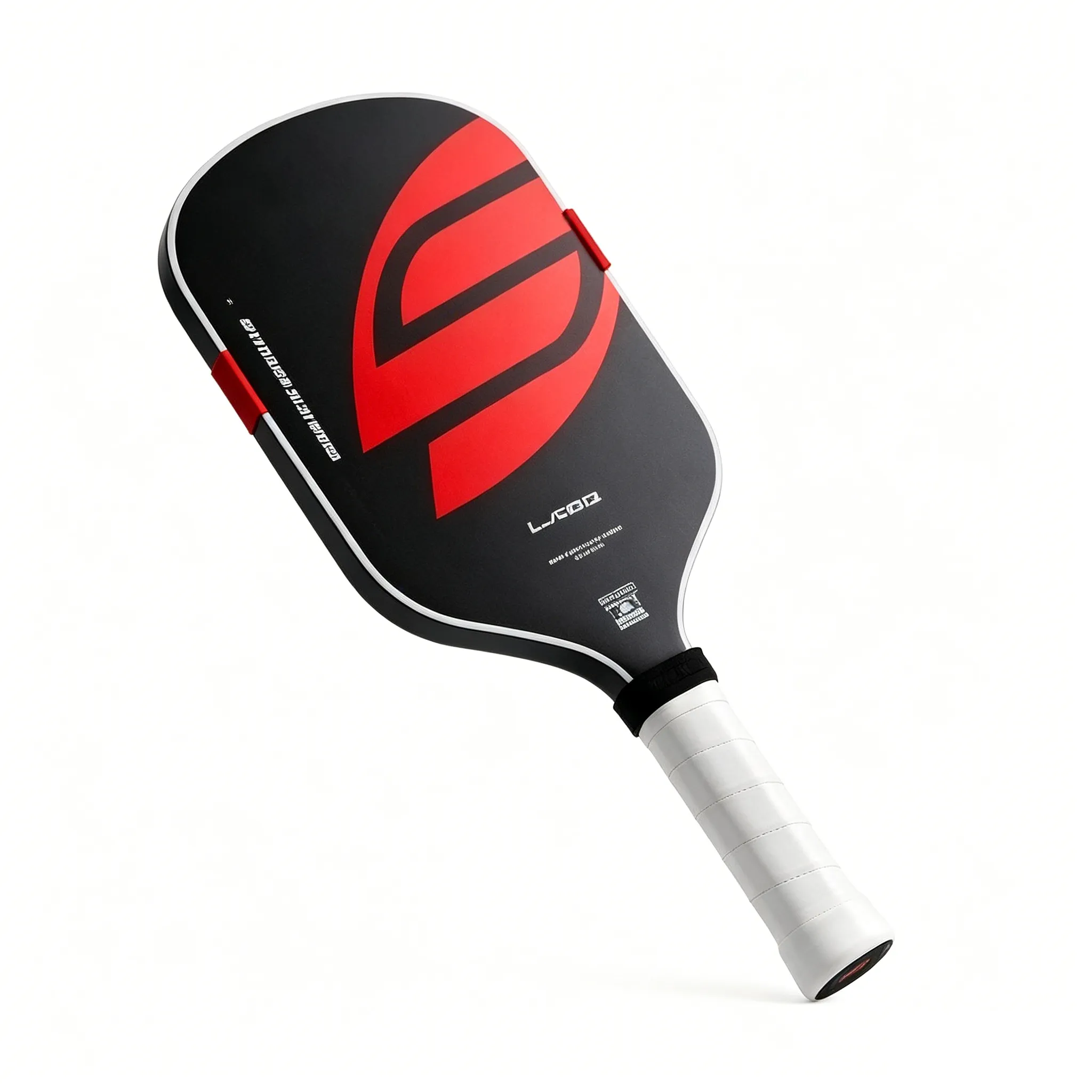
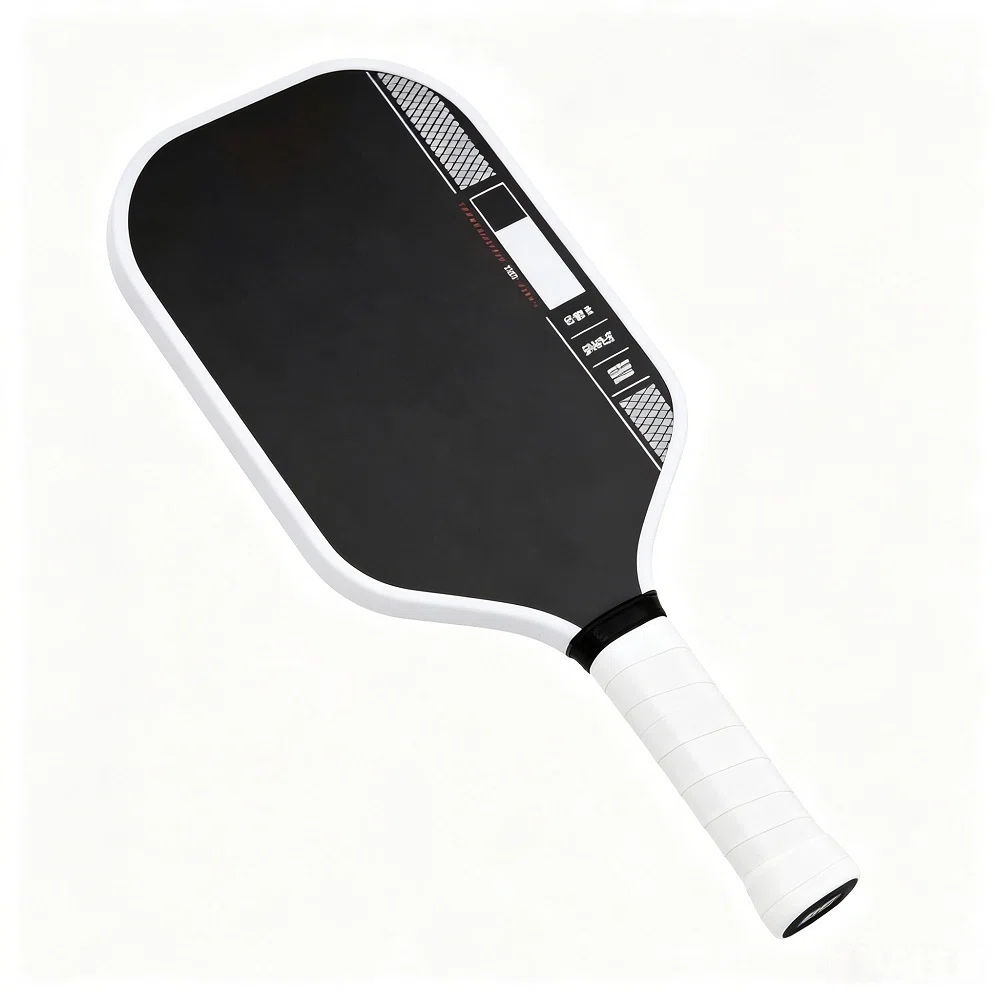
The SUP-711 is a titanium wire pickleball paddle built for players and brands that want more than a standard carbon fiber paddle. It combines a carbon fiber face, a titanium wire surface finish, an EPP foam core and a TPU edge guard in one hot press molded structure. The result is a paddle with a distinct metal-textured look, a stable and controlled feel, and high shock absorption that holds up through long training sessions and competitive play.
SUP-711 is designed and manufactured in our own factory in China, which means the same paddle you see on this page can be produced as a retail-ready product, a private label paddle, or a fully customized OEM and ODM project. Whether you are a distributor looking for a dependable carbon fiber pickleball paddle to add to your catalog, a club buying in volume, or a new brand building its first paddle line, this model is a practical starting point.
The paddle is available in 14mm and 16mm thicknesses, weighs between 225g and 235g, measures 420mm by 190mm, and uses a 145mm grip. It is produced to USAPA standard requirements and is suitable for beginner, intermediate and professional players. Below we explain the materials, how the titanium wire surface compares with other paddle surfaces, what the hot press molding process actually does, and how our China factory supports customization from sample to shipment.
Key Features at a Glance
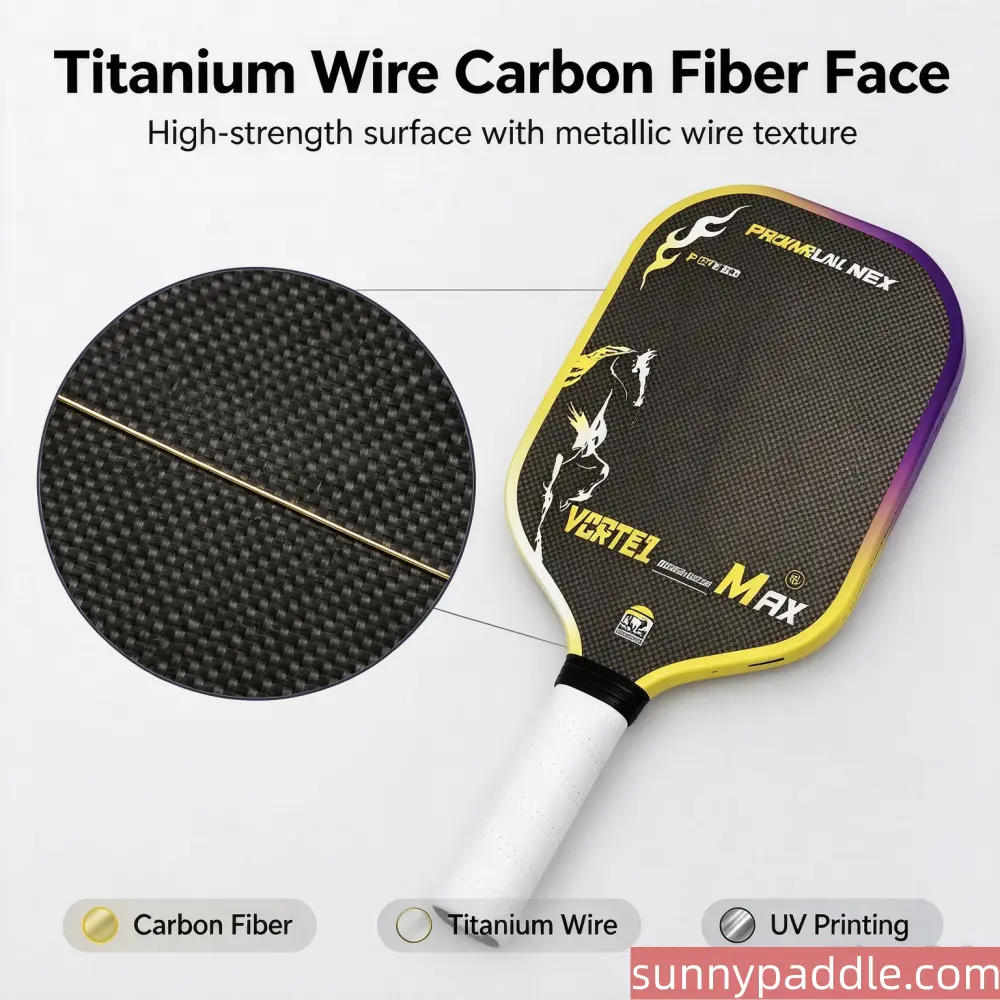
Titanium Wire Surface Finish
The titanium wire finish gives the paddle a brushed metallic texture that reads clearly on shelf and in product photography. Beyond appearance, the wire surface layer adds a durable outer texture over the carbon fiber face, which helps resist everyday scuffing from ball contact, court surfaces and bag storage. It is also a surface that takes UV printed graphics well, so brand patterns, logos and color designs stay sharp rather than sinking into the texture. For a titanium wire pickleball paddle, this combination of metal-look finish and printability is one of the main reasons buyers choose it over a plain matte carbon face.
Carbon Fiber Face
The face material is carbon fiber, chosen for its balance of low weight, high stiffness and consistent response. A stiffer face transfers more of the player's input into the ball, which helps with drive power and directional control. Carbon fiber also holds its shape well over time, so the face does not soften or deform quickly under repeated hitting. This is the material most often associated with performance-tier carbon fiber pickleball paddles, and it gives the SUP-711 a feedback profile that sits between a soft fiberglass face and a very hard aluminum face.
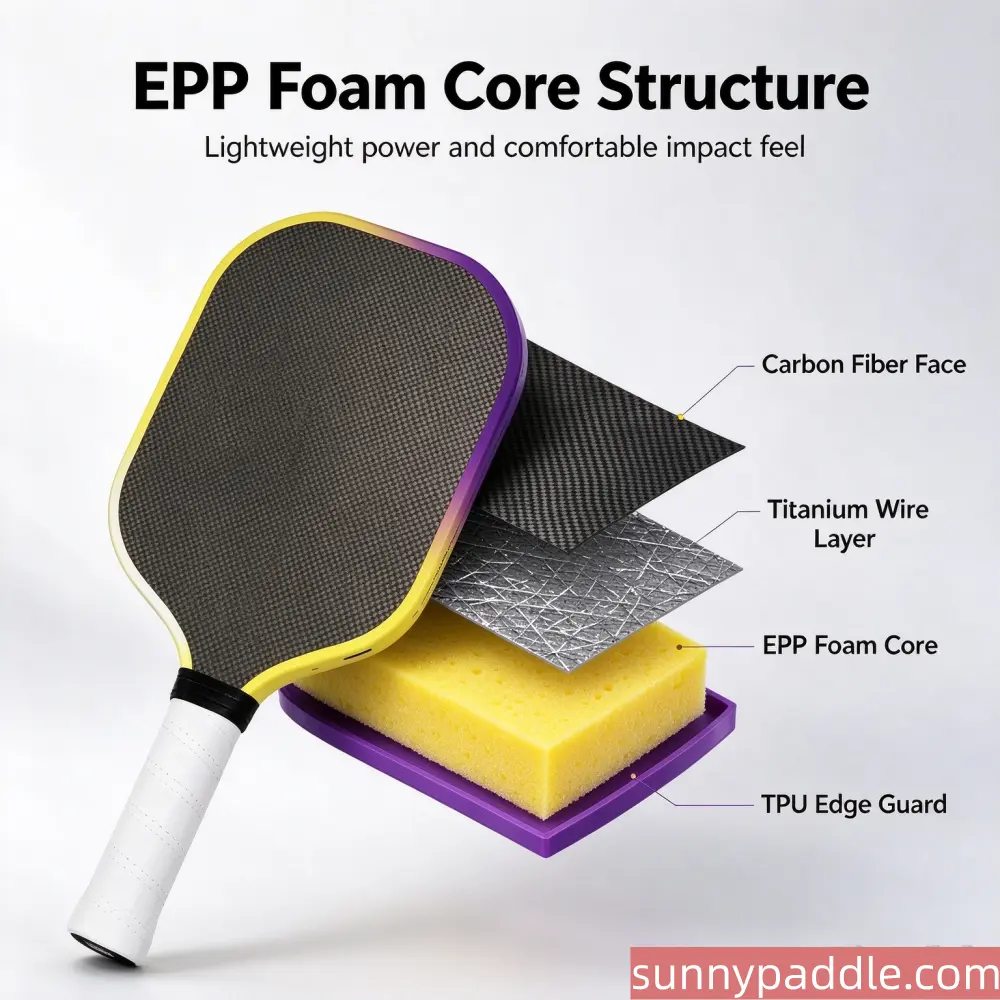
EPP Foam Core
The core is EPP foam, an expanded polypropylene material known for energy return, light weight and strong shock absorption. Compared with a honeycomb core, an EPP foam core pickleball paddle tends to feel more damped and forgiving, with less vibration traveling into the hand and forearm. That matters for players who practice for hours, for older players managing joint discomfort, and for coaches who feed balls all day. The foam core also gives the paddle a more uniform response across the face, so off-center hits are less punishing.
Hot Press Molding
Hot press molding bonds the face, core and edge structure under controlled heat and pressure in a single cycle. Compared with cold assembly methods, hot pressing produces a tighter, more consistent bond between layers, which reduces the risk of delamination and improves batch-to-batch consistency. For a hot press molding pickleball paddle, this consistency is what allows a factory to reproduce the same feel across thousands of units, which is exactly what brand owners and distributors need when they reorder.
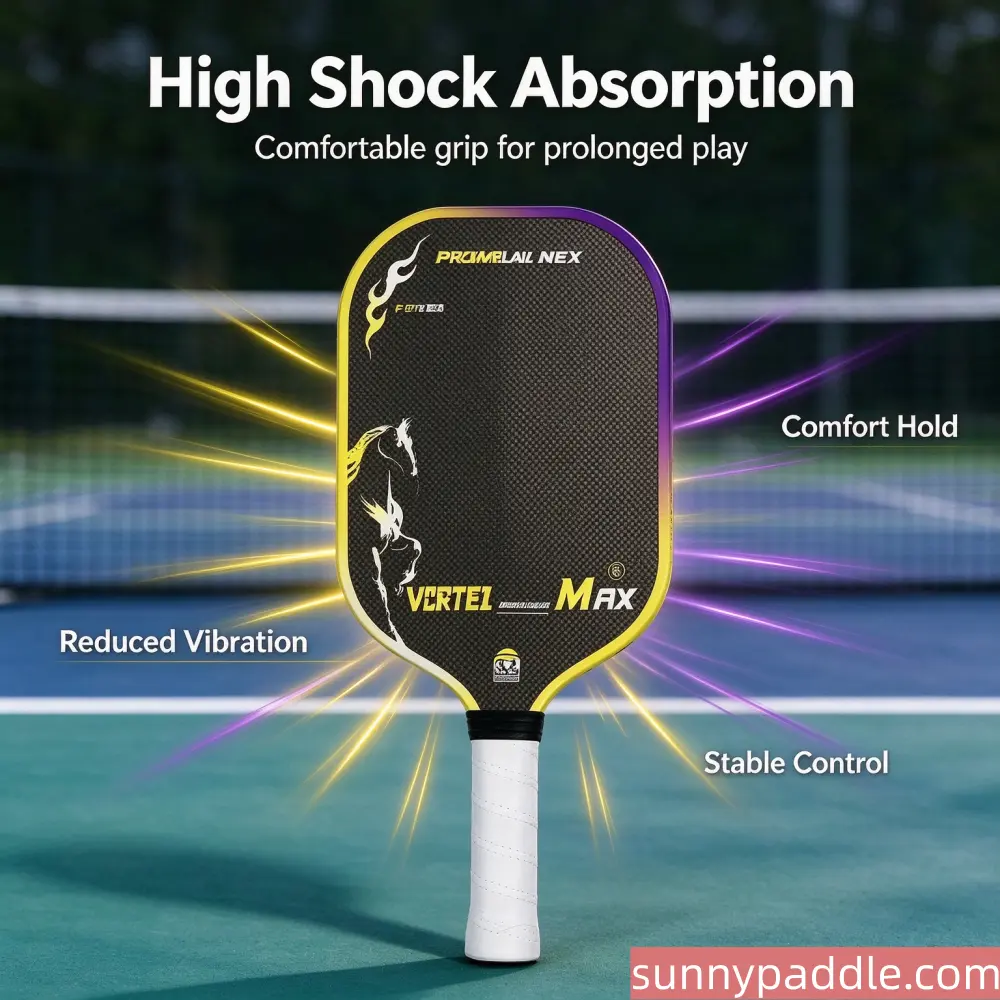
High Shock Absorption
High shock absorption comes from the combination of the EPP foam core, the hot pressed layered structure and the TPU edge guard. Vibration from ball impact is distributed and damped rather than concentrated at the grip. Players typically notice this as a quieter, softer feel on contact and less fatigue after long sessions. It also helps players who are returning to the sport or playing several times a week.
TPU Edge Guard
The edge guard is made from TPU, a flexible thermoplastic polyurethane that absorbs impact and protects the exposed edge of the paddle. TPU resists cracking better than rigid plastic edge guards and holds color well, so it can be matched to the paddle design or used as a brand accent. Because edge damage is one of the most common causes of early paddle replacement, a well-fitted TPU edge guard directly extends usable product life.
Materials and Construction in Detail
How the Carbon Fiber Face Is Used
The carbon fiber face is the primary hitting surface. In the SUP-711, the face is selected for stiffness and weight consistency rather than for a raw weave look, because the titanium wire finish sits on top of it. This matters for buyers who want the performance characteristics of carbon fiber without the standard visible twill pattern. The face is bonded to the core during hot pressing, which keeps the layers aligned and prevents the soft spots that can appear when a face is glued in a separate step.
Carbon fiber's main advantage is its strength-to-weight ratio. It allows a large face area, 420mm by 190mm in this model, without pushing the total weight above the 225g to 235g range. That weight window is a deliberate choice: it is heavy enough to feel solid on blocking and driving, and light enough for quick hand speed at the kitchen line.
What the Titanium Wire Surface Actually Is
It is important to be precise here, because the term is often misunderstood. The SUP-711 is not a solid titanium paddle. Solid titanium would be extremely heavy and expensive, and it is not a practical material for a regulation pickleball paddle. Instead, titanium wire refers to a surface finish: a titanium-based wire texture applied over the carbon fiber face to create a durable, metallic, visually distinctive outer layer.
This finish serves three purposes. First, it improves surface durability against abrasion and scuffing. Second, it creates a premium visual and tactile identity that separates the paddle from standard matte or raw carbon models. Third, it provides a stable base for UV printing, so patterns and brand graphics sit cleanly on the surface. The trade-off is that this finish adds processing steps, requires tighter weight control, and costs more to produce than a plain face, which is why titanium wire paddles generally sit in the mid-to-high tier of a product line.
EPP Foam Core Behavior
EPP foam is a closed-cell material, which means it resists water absorption and maintains its structure in humid conditions, an important point for buyers in coastal or tropical markets. It is also resilient: it recovers its shape after impact rather than compressing permanently. In play, this translates into a consistent, slightly damped response with good energy return. The 14mm and 16mm thickness options let the same construction deliver two different feels without changing the face material.
Hot Press Molding and the UV Printed Pattern
The molding process and the graphics process are separate but linked. The paddle body is formed by hot pressing, then the UV printed pattern is applied to the finished surface and cured with ultraviolet light. UV printing is chosen because it produces sharp, high-resolution graphics that bond quickly and resist fading, and because it supports short production runs. That last point is important for custom projects: a brand can order a smaller first batch with its own artwork instead of committing to thousands of units before testing the market.
Titanium Wire Surface vs Other Pickleball Paddle Materials
Buyers often ask how a titanium wire paddle compares with carbon fiber, fiberglass, aluminum, wood or a solid titanium face. The honest answer is that no single material wins on every measure. What matters is which combination of feel, durability, appearance and cost fits the market you are selling into. The table below compares the main surface and face options, including the advantages and the real limitations of each.
| Material / Finish |
Advantages |
Limitations |
Typical Use |
| Titanium wire surface over carbon fiber (SUP-711) |
Distinct metallic look, good abrasion resistance, strong base for UV printed graphics, clear and stable feedback, premium shelf presence |
Higher processing cost, more demanding weight control during production, longer sampling cycle than plain faces |
Mid-to-high tier retail, private label lines, OEM and ODM projects |
| Carbon fiber (plain) |
Light weight, high stiffness, strong power transfer, good control, holds shape over time |
Higher material cost than fiberglass, can feel firm or harsh when paired with a thin rigid core |
Performance and advanced player paddles |
| Fiberglass |
Lower cost, more flexible face, softer and more forgiving feel, good shock absorption |
Lower stiffness means less power transfer, surface wears and scuffs faster, feedback is less precise |
Entry-level and recreational paddles |
| Aluminum |
Durable, dimensionally stable, low material cost, easy to mass produce |
Heavier, firm and unforgiving feel, weaker vibration damping, limited design flexibility |
Public facility and institutional paddles |
| Wood |
Very low cost, traditional construction, simple manufacturing |
Heavy, low performance ceiling, inconsistent response, not suitable for competitive play |
Entry-level and casual play |
| Solid titanium face |
Extremely durable, unique metal feel |
Very heavy, very expensive, difficult to keep within regulation weight and performance ranges, rare in practical products |
Novelty and limited specialty products |
Why the Comparison Matters
A titanium wire pickleball paddle is often judged on appearance alone, but the real value is in how the surface works together with the core and the molding process. A titanium wire finish on a weak core would still feel dead. On the SUP-711, the finish sits on a carbon fiber face over an EPP foam core, so the surface adds durability and identity while the structure underneath delivers the response.
The clearest limitation of titanium wire as a finish is cost and process control. Applying a consistent wire texture across a production run requires more careful handling than spraying or printing directly onto a plain carbon face, and it makes weight balancing more sensitive. That is why some suppliers avoid it. For buyers, the practical question is whether the visual differentiation and abrasion resistance justify the extra cost per unit, and in most mid-to-high tier product lines they do, because a paddle that looks different on a crowded shelf sells more easily than one that looks identical to ten competitors.
Where the SUP-711 Fits
Compared with a fiberglass paddle, the SUP-711 is firmer, more precise and more durable, at a higher price. Compared with a plain carbon fiber paddle, it offers the same structural advantages plus a distinctive surface and better scuff resistance. Compared with aluminum and wood, it is lighter, more damped and far better suited to competitive play. Its closest competitor is a plain carbon fiber paddle with a similar core, and the deciding factors there are usually appearance, print quality and the manufacturer's ability to customize.
Performance Advantages
Power and Control Balance
The carbon fiber face provides the stiffness needed for drives and put-away shots, while the EPP foam core moderates the response so the paddle does not feel uncontrollable at the net. In practice, this means players can hit with pace from the baseline and still reset soft balls in the transition zone. The 16mm version leans toward control and comfort, while the 14mm version gives a faster, more direct response for players who attack early.
High Shock Absorption and Long-Session Comfort
Shock absorption is one of the most underrated performance factors in paddle selection. A paddle that transmits vibration into the hand and wrist is tiring to use, and fatigue shows up as late reactions and inconsistent contact. The EPP foam core and TPU edge guard work together to damp impact, which is why this paddle is comfortable for long drilling sessions, coaching, and multi-match tournament days.
Stable and Predictable Feedback
Hot press molding keeps the face, core and edge aligned, so the paddle responds the same way across the hitting surface. Players describe this as predictability: the ball comes off the paddle the same way each time, which makes it easier to learn touch and to trust the paddle in tight rallies. For a brand selling to developing players, this consistency reduces returns and complaints.
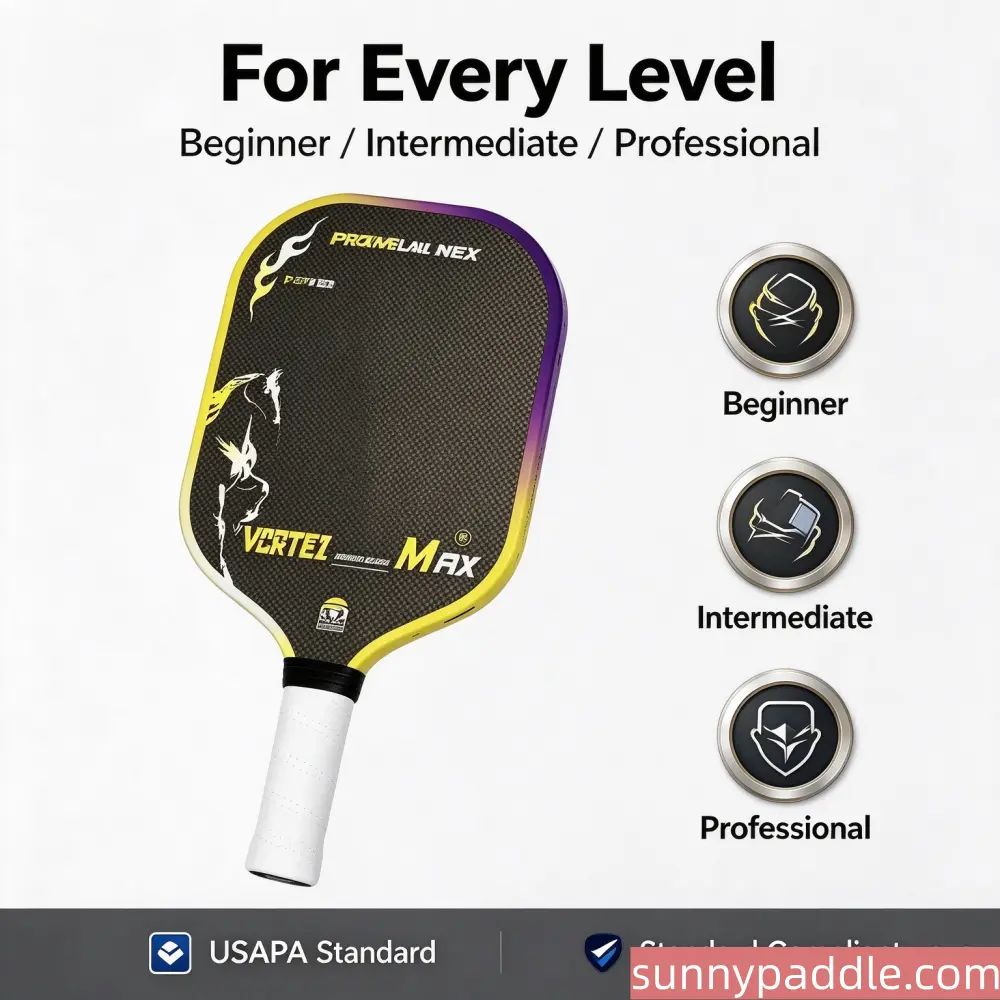
One Construction, Multiple Player Levels
Because the same build is offered in 14mm and 16mm, the SUP-711 serves a wide range of players. Beginners benefit from the damped, forgiving response and the large 420mm by 190mm face. Intermediate players get enough power for attacking without losing control. Advanced and professional players get a stable, repeatable platform that responds well to deliberate shot-making. This range makes the model easier to stock: one SKU family can cover multiple customer segments.
USAPA Compliance and Quality Control
The SUP-711 is produced to USAPA standard requirements, and the paddle is intended to be compliant with USAPA equipment specifications. Buyers should note that USAPA maintains its own approval list and processes, and that compliance status should always be confirmed against the official listing or by contacting us directly before a tournament-focused launch. We are happy to provide the relevant documentation and test information for your market.
Quality control runs through the whole production cycle rather than being a final inspection only. Incoming materials are checked for face thickness, foam density and edge guard dimensions. In-process checks monitor hot press temperature, pressure and cycle time, because these variables directly affect bond strength and paddle flatness. After molding, each batch is checked for weight distribution within the 225g to 235g range, face flatness, edge guard fit and surface finish consistency.
Before packing, finished paddles go through visual inspection, weight spot checks, grip adhesion checks and UV print adhesion tests. Packaging is checked for print accuracy, label and barcode placement, and carton strength for export shipping. For private label orders, we also check that the correct artwork, logo placement and packaging configuration match the approved sample, so the delivered goods match what the buyer signed off on.
China Factory Direct: Manufacturing Capability Behind the SUP-711
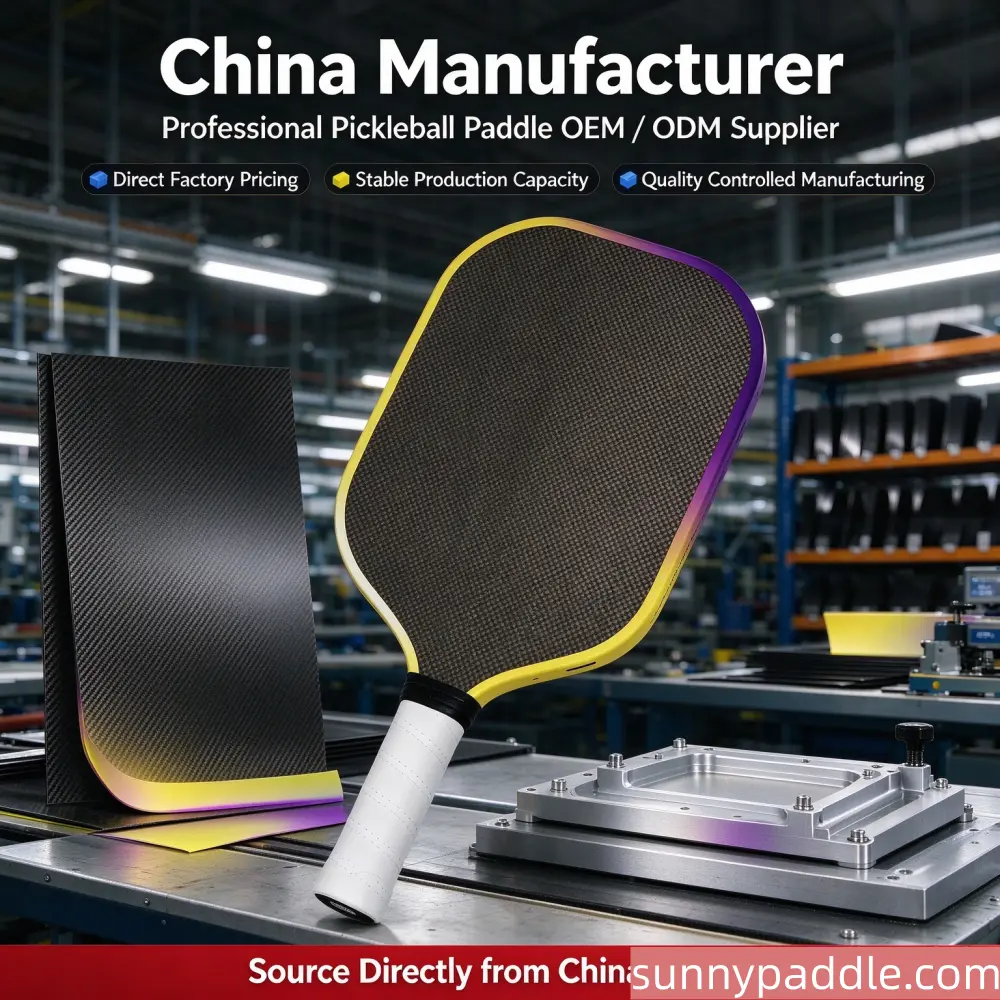
SunnyPaddle is a China-based pickleball paddle manufacturer serving distributors, clubs, retailers and brand owners worldwide. Producing in China is not simply a cost decision. It gives buyers access to a mature supply chain for carbon fiber, EPP foam, TPU and UV printing equipment, plus experienced production teams who understand how these materials behave together. For pickleball paddles in particular, this combination of material supply and process know-how is what makes consistent quality at scale possible.
In-House Production Capabilities
Our factory handles the core production steps for the SUP-711 in-house: material preparation, hot press molding, UV printing, edge guard assembly, grip installation, quality inspection and packing. Keeping these steps under one roof shortens lead times and makes it easier to control quality, because a problem at one station is caught before the product moves to the next. It also means custom requests do not have to be coordinated across multiple outside suppliers, which is a common source of delay and inconsistency in private label paddle projects.
Supply Chain and Production Flexibility
China's pickleball supply chain is deep, which gives buyers more options for face materials, core densities, grip types and packaging styles than most other manufacturing regions. For the SUP-711, this flexibility shows up in practical ways: different grip colors and materials, different edge guard colors, different packaging formats for retail versus club sales, and different thickness options from the same construction. It also makes it easier to run a smaller trial order before committing to a larger production batch.
Export Experience and Communication
Working with a China factory is as much about communication as it is about production. We work with international buyers regularly and structure projects around clear milestones: specification confirmation, quotation, sampling, sample approval, deposit, production, inspection and shipment. Every stage has a defined output, so buyers know what to expect next and when. English-language communication, documented specifications and photo or video updates during production reduce the uncertainty that buyers often associate with overseas sourcing.
Factory Information
To help buyers evaluate us properly, we publish verifiable factory details rather than vague claims. Please contact our sales team for current information on the following, and we will provide documentation where available:
- Factory location and total production area: [to be confirmed]
- Number of hot press and UV printing lines: [to be confirmed]
- Monthly production capacity for pickleball paddles: [to be confirmed]
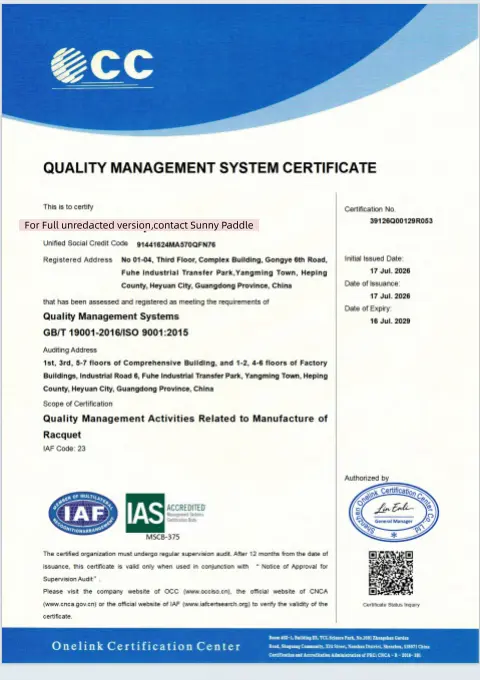
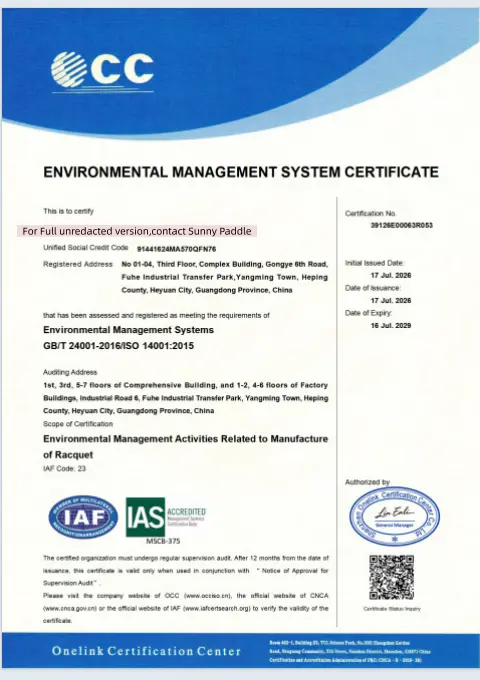
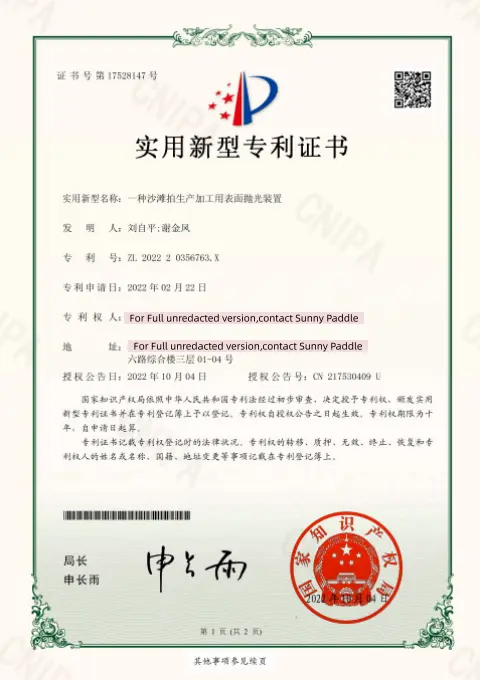
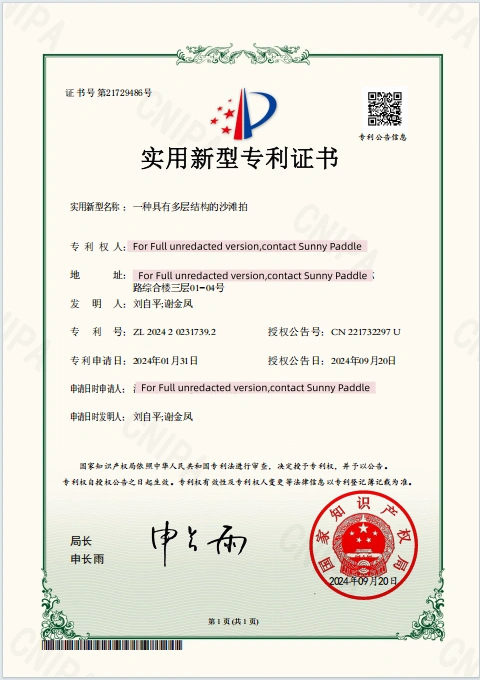
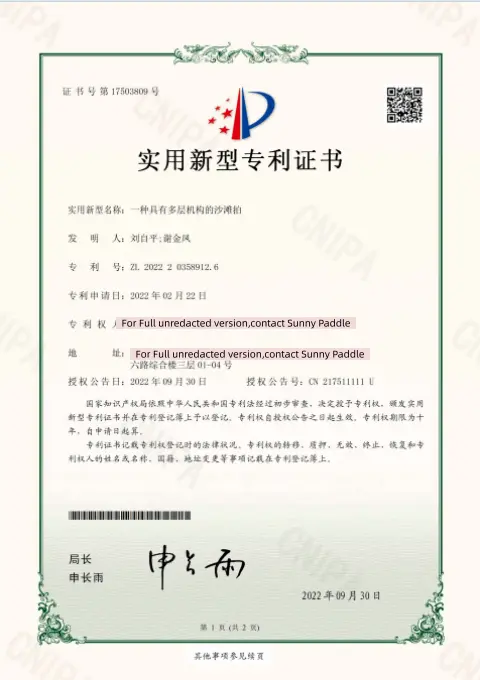
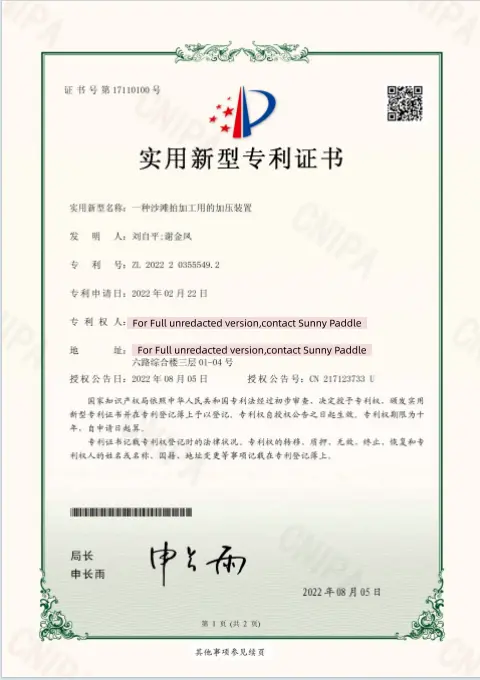
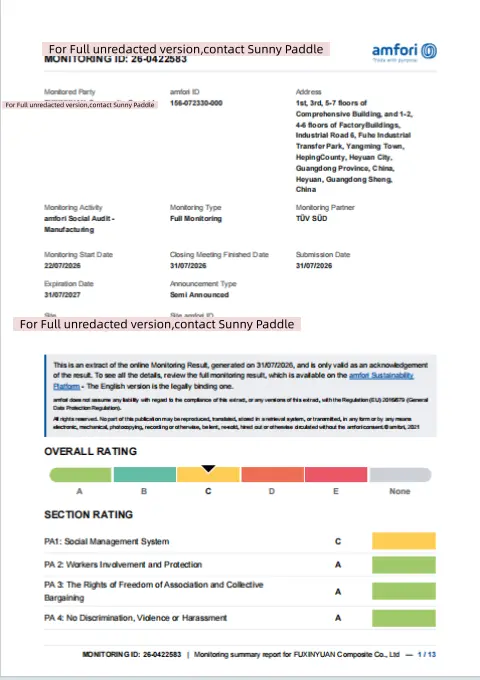
- Quality management and product certifications: [to be confirmed]
- Main export markets and reference customers: [to be confirmed]
OEM and ODM Customization: Capabilities and Process
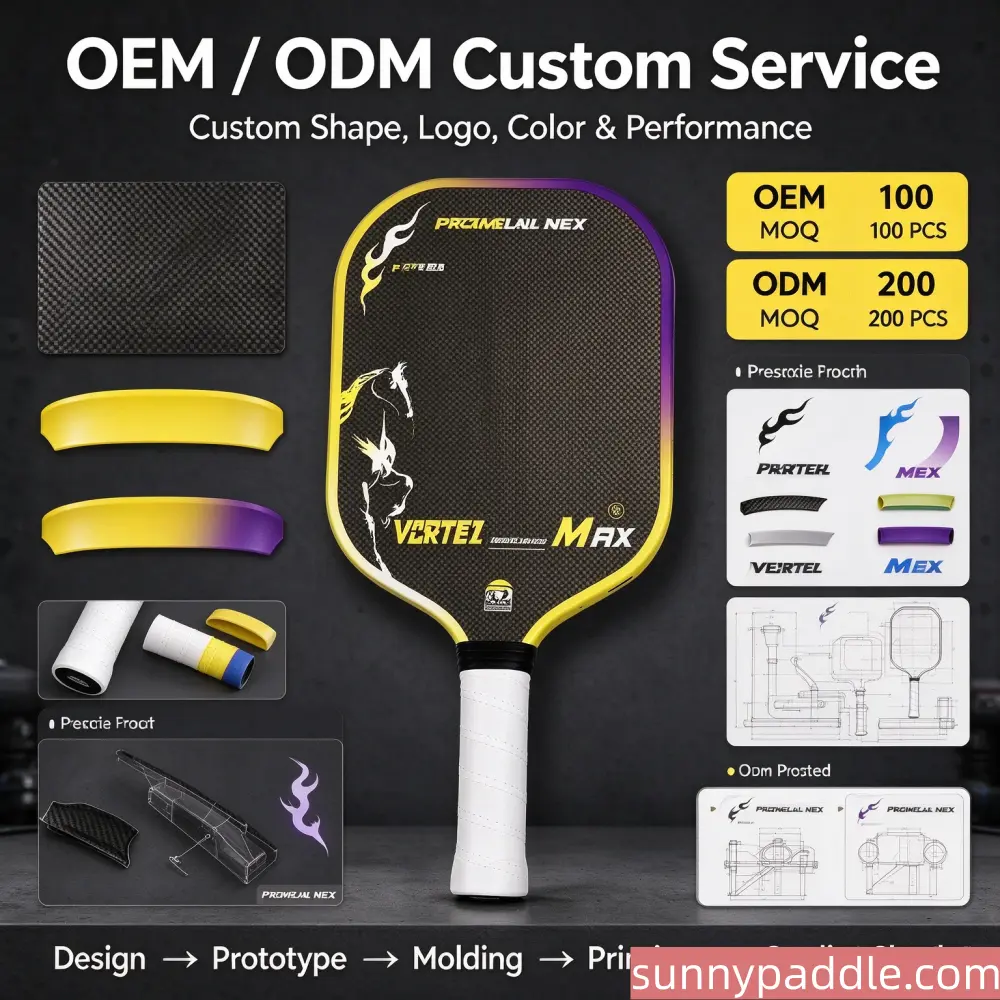
Customization is where a factory relationship becomes genuinely useful. Many buyers start with a catalog model like the SUP-711 and then adapt it to their own brand, price point and market. We support both OEM projects, where the buyer provides the design and specification, and ODM projects, where we help develop the paddle configuration based on the target market and price level.
What Can Be Customized
| Customization Area |
Available Options |
| Logo and branding |
Face logo, edge guard logo, grip band logo, packaging branding |
| Surface pattern |
UV printed artwork, color schemes, geometric or brand patterns, surface design adjustments |
| Thickness |
14mm or 16mm, with guidance on which suits the target player level |
| Grip |
Grip length, color, material and perforation options |
| Edge guard |
TPU edge guard color and structure variations |
| Packaging |
Color box, hang tag, user manual, barcode, labels, master carton design |
| Sampling |
Pre-production sample for approval before mass production |
Customization Process, Step by Step
Step 1 — Requirement discussion. We start with your target market, price range, player level, order quantity and branding needs. If you already have artwork or a reference paddle, we review it at this stage.
Step 2 — Proposal and quotation. Based on the requirements, we propose a configuration and provide a quotation that covers unit price, tooling or setup costs where applicable, packaging and estimated lead time.
Step 3 — Sampling. We produce a pre-production sample using the agreed specification and artwork. This is the most important step for custom paddles, because it confirms feel, weight, print quality and packaging before any volume commitment.
Step 4 — Sample approval. You review the sample and request adjustments if needed. Once approved, the sample becomes the reference standard for the production run.
Step 5 — Order confirmation and deposit. We confirm quantities, delivery schedule and payment terms, and begin production preparation on receipt of the deposit.
Step 6 — Material preparation. Carbon fiber face sheets, EPP foam cores, TPU edge guards, grips and packaging materials are prepared and checked against the approved specification.
Step 7 — Hot press molding. Paddle bodies are molded under controlled temperature and pressure, with in-process checks on weight and flatness.
Step 8 — UV printing and assembly. Artwork is UV printed and cured, then the edge guard, grip and any other components are assembled.
Step 9 — Inspection, packing and shipment. Finished paddles are inspected against the approved sample, packed to the confirmed specification, and shipped with documentation and tracking.
To start a project, send us your specification, target quantity and artwork. We will respond with a configuration proposal, a quotation and an estimated sampling timeline for your custom pickleball paddle project.
Quality Assurance, Testing and Buyer Confidence
Buyers evaluating a China pickleball paddle manufacturer need more than a product description. They need evidence that the factory can repeat the same result order after order. Our quality approach is built around that requirement.
Incoming and In-Process Checks
Raw materials are checked on arrival for dimensional accuracy, density and appearance. During production, hot press parameters are logged and monitored, because temperature and pressure drift is one of the main causes of inconsistent feel. Paddle bodies are checked for flatness, weight and surface defects before printing begins.
Finished Product Inspection
Finished SUP-711 paddles are checked for weight within the 225g to 235g range, grip length at 145mm, overall dimensions at 420mm by 190mm, edge guard fit and finish quality. UV print adhesion and color consistency are checked against the approved sample. For private label orders, packaging, labels, barcodes and carton markings are verified before shipment.
Documentation and Communication
We provide production photos and inspection records on request, and we can arrange third-party inspection for larger orders. Buyers receive packing lists, commercial documents and shipping information in a consistent format. If a defect issue arises, we work from the approved sample and inspection records to identify the cause and resolve it rather than treating each case in isolation.
What Buyers Typically Ask
New buyers usually want to know the minimum order quantity, the sampling lead time, the production lead time, whether the artwork can be changed after sampling, and whether the paddle can be produced to USAPA-compliant specifications. These are all answerable in the first conversation, and the answers depend on the specific configuration. We prefer to give exact figures based on your project rather than generic numbers, because a 14mm stock-color order and a 16mm fully custom private label order have very different timelines.
Summary: Why the SUP-711 Is a Practical Choice
The SUP-711 titanium wire pickleball paddle is a mid-to-high tier carbon fiber paddle with a distinctive surface finish, a damped and forgiving EPP foam core, a durable TPU edge guard and a hot press molded structure. It is produced to USAPA standard requirements, offered in 14mm and 16mm, and positioned to serve beginners through professional players from a single construction family.
For buyers, the value is not only in the paddle itself but in how it is made and who makes it. A China factory with in-house hot press molding, UV printing, assembly and inspection can support both catalog purchasing and full customization, which means the same supplier can grow with your product line. If you are evaluating titanium wire pickleball paddles for your market, we are glad to send samples, specifications and a quotation based on your target configuration.
Contact SunnyPaddle for current pricing, sampling availability and customization options for the SUP-711 and our wider range of carbon fiber and EPP foam core pickleball paddles.