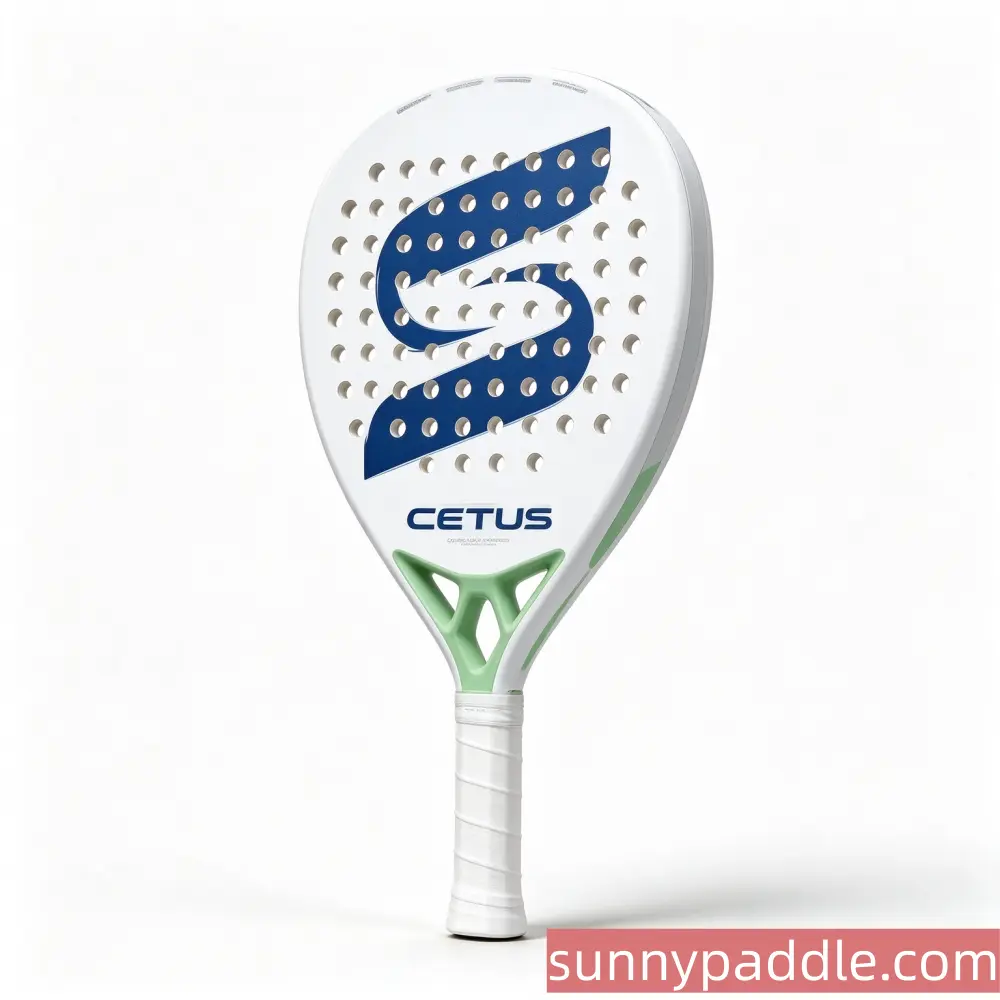
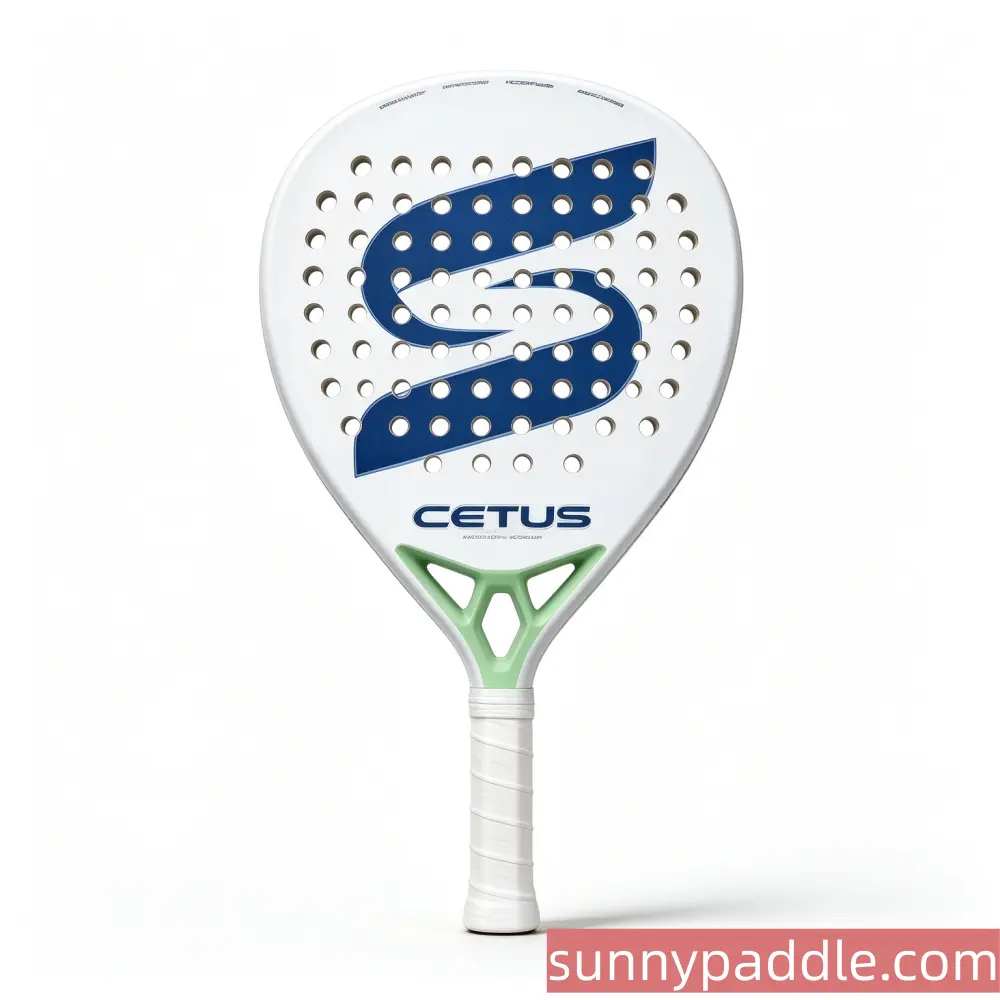
SUS-101 Teardrop Padel Racket – OEM/ODM Custom Manufacturer from China
The global padel market is experiencing unprecedented growth. According to industry reports, the sport now boasts more than 35 million players worldwide, supported by over 24,600 clubs and 77,300 courts across all five continents. The padel equipment sector alone is projected to reach €6 billion by 2026, driven by sustained investment in new facilities and a rapidly expanding player base. For brands seeking to capture this momentum, partnering with a reliable Teardrop Padel Racket Manufacturer in China offers a direct path to competitive pricing, scalable production, and complete customization control.
At sunnypaddle.com, we specialize in OEM and ODM manufacturing of performance padel equipment. Our flagship SUS-101 Teardrop Padel Racket represents the intersection of refined engineering and commercial flexibility—a racket designed for the largest and most active segment of padel players worldwide. This guide explains why the teardrop shape dominates the market, how our manufacturing process ensures quality, and how brands can leverage our OEM/ODM services to build a compelling product line.
Why the Teardrop Shape Dominates the Padel Market
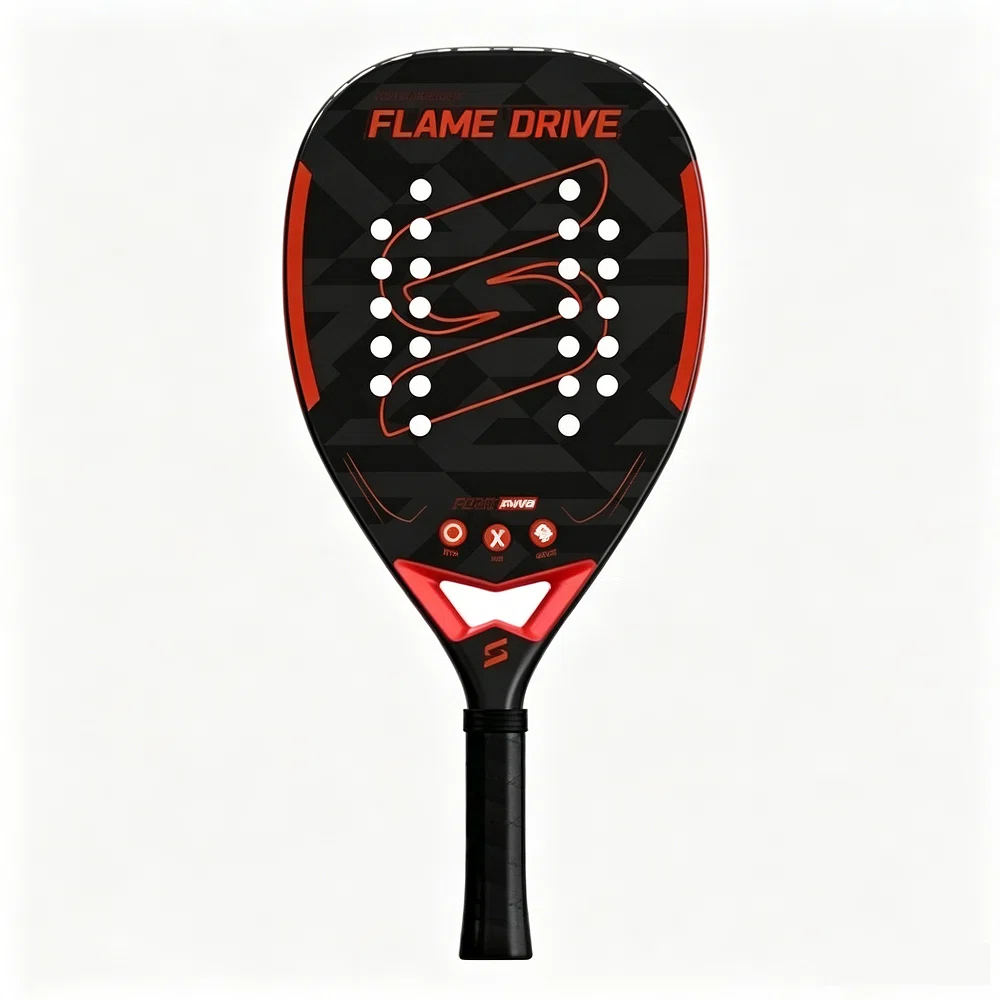
Padel racket shapes fall into three primary categories: round, teardrop, and diamond. Each shape dictates the racket's balance point, sweet spot location, and playing characteristics. The teardrop—also called a drop or hybrid shape—occupies the versatile middle ground, and it is precisely this versatility that has made it the single largest category in most 2026 product ranges.
Balance and Sweet Spot
A teardrop padel racket features a wider upper portion that tapers toward the handle, shifting the balance point slightly higher than a round frame while maintaining a generous sweet spot. This design delivers two distinct advantages. First, the elevated sweet spot adds penetrating power on volleys and overhead smashes. Second, the broader face preserves the forgiveness that round rackets are known for, reducing the punishment for off-center contact.
For manufacturers and brands, the teardrop shape aligns with where the market is heading. Industry analysis shows that teardrop rackets are the preferred choice for improving club players—those who have developed repeatable technique and are beginning to attack short balls but who are not yet ready for the demanding precision of a diamond frame. As one equipment guide puts it, the teardrop fails gracefully in both directions, making it the safest recommendation when a player's exact needs are unclear.
Target Player Profile
The ideal teardrop player sits in the intermediate to strong club range—someone playing weekly, competing in box leagues, and seeking a single racket that performs across attack and defense without specialization. For brands, this represents the largest and most commercially valuable customer segment: players who have committed to the sport but are still progressing, which means they purchase equipment more frequently than beginners and are less brand-loyal than professionals.
When comparing the three primary shapes, round rackets feature a low balance point with a large, centered sweet spot, making them ideal for beginners and control-focused players. Teardrop rackets offer a mid-high balance with a large, slightly elevated sweet spot, which suits improving club players and all-rounders. Diamond rackets have a high balance point and a small, elevated sweet spot, catering to advanced players and power hitters. The teardrop's position between these extremes is precisely what gives it such broad commercial appeal.
The SUS-101 Teardrop Padel Racket: Technical Specifications
The SUS-101 is engineered as a production-ready platform for private label brands. Its specifications reflect current market expectations for a mid-to-premium teardrop racket, with customization flexibility built into every component.
Core Construction
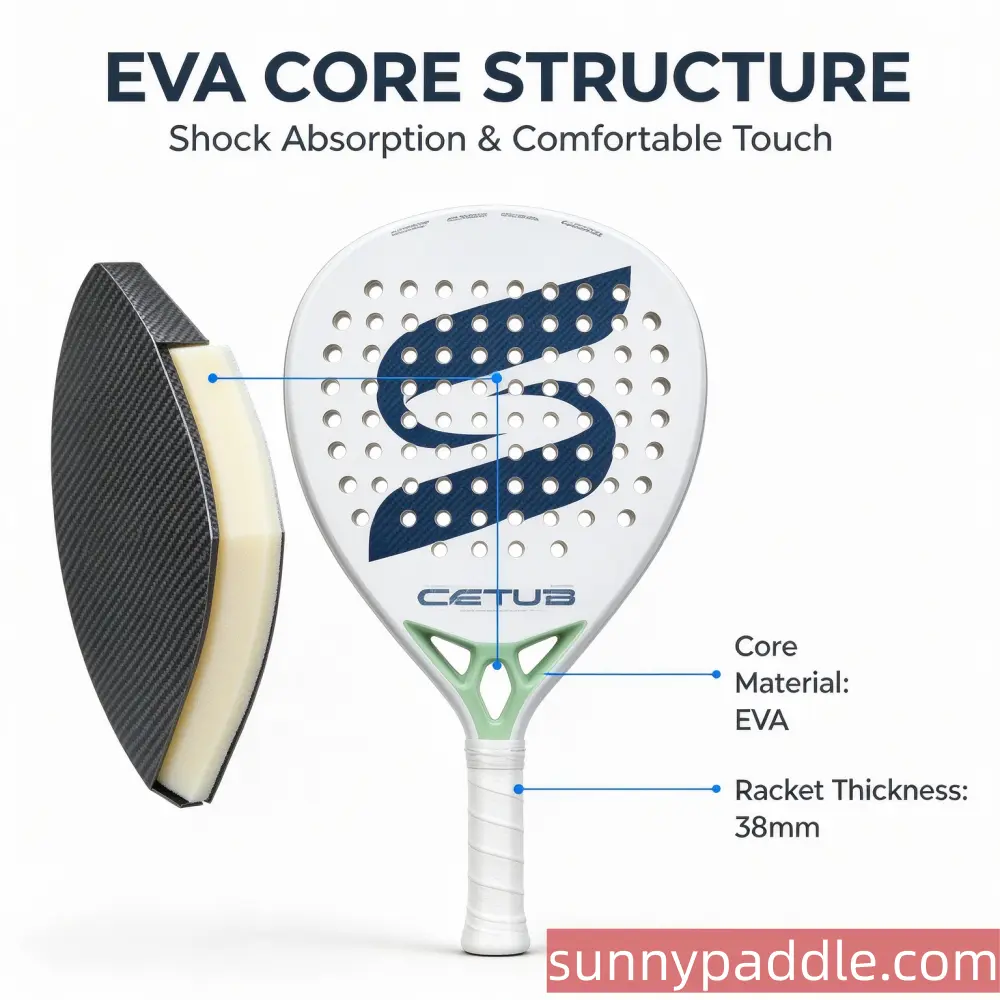
At the heart of the SUS-101 lies an EVA foam core. EVA (ethylene-vinyl acetate) remains the industry standard for padel racket cores because it offers an optimal balance of shock absorption, rebound response, and durability. Our manufacturing supports multiple EVA densities—soft, medium, and hard—allowing brands to tune the racket's feel for different player segments. Softer EVA delivers greater control and comfort, which suits improving players and those with arm or elbow sensitivity. Harder EVA produces faster ball rebound and more aggressive power, appealing to advanced competitors.
Face and Frame Materials
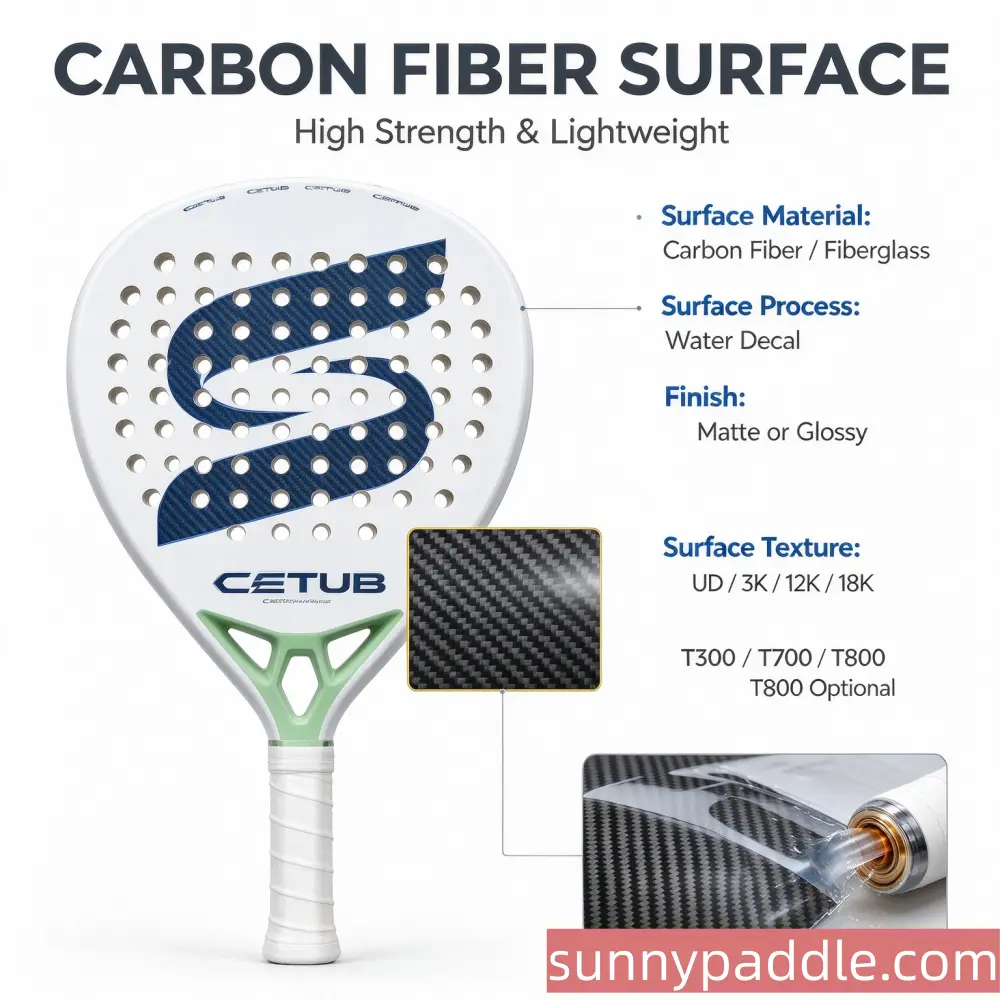
The racket face and frame are constructed from carbon fiber composite materials. We offer three carbon weave options to match different price points and performance targets. The 3K carbon fiber option uses a tighter, lighter weave that provides good stiffness and a responsive feel, suitable for mid-range consumer lines seeking a balance of performance and cost. The 12K carbon fiber option uses a denser weave that increases stiffness and delivers a more powerful, crisp response, making it the preferred choice for premium retail models and advanced players. The 18K carbon fiber option represents the highest-density weave, offering maximum stiffness and a professional-grade feel, best suited for flagship products targeting competitive players.
The frame itself can be specified as full carbon or a carbon-fiberglass hybrid, depending on the target retail price and desired durability characteristics.
Dimensional Tolerances
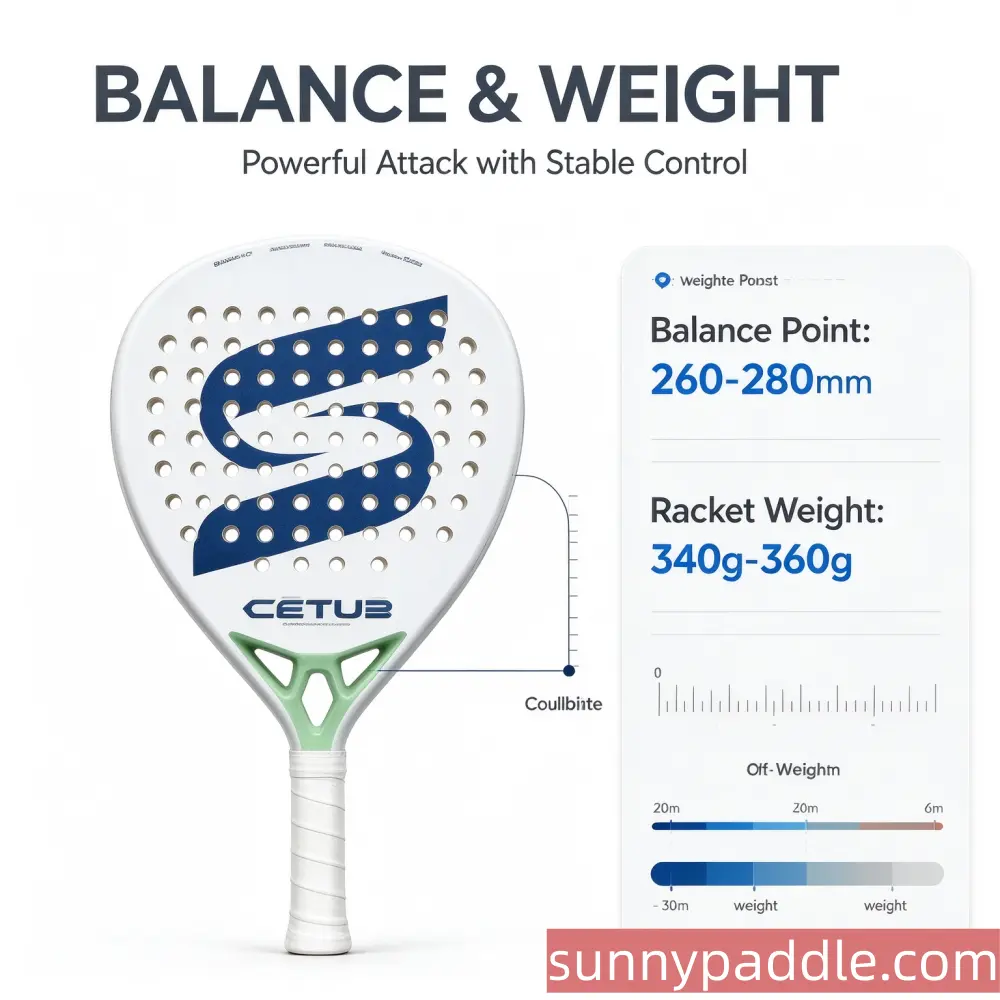
Our production line maintains strict tolerances to ensure consistency across every batch. Standard weight falls within ±10 grams of the target specification, and balance point is controlled to ±0.5 centimeters. These tolerances are verified through 100% in-line weight checks and sampling-based balance validation during mass production.
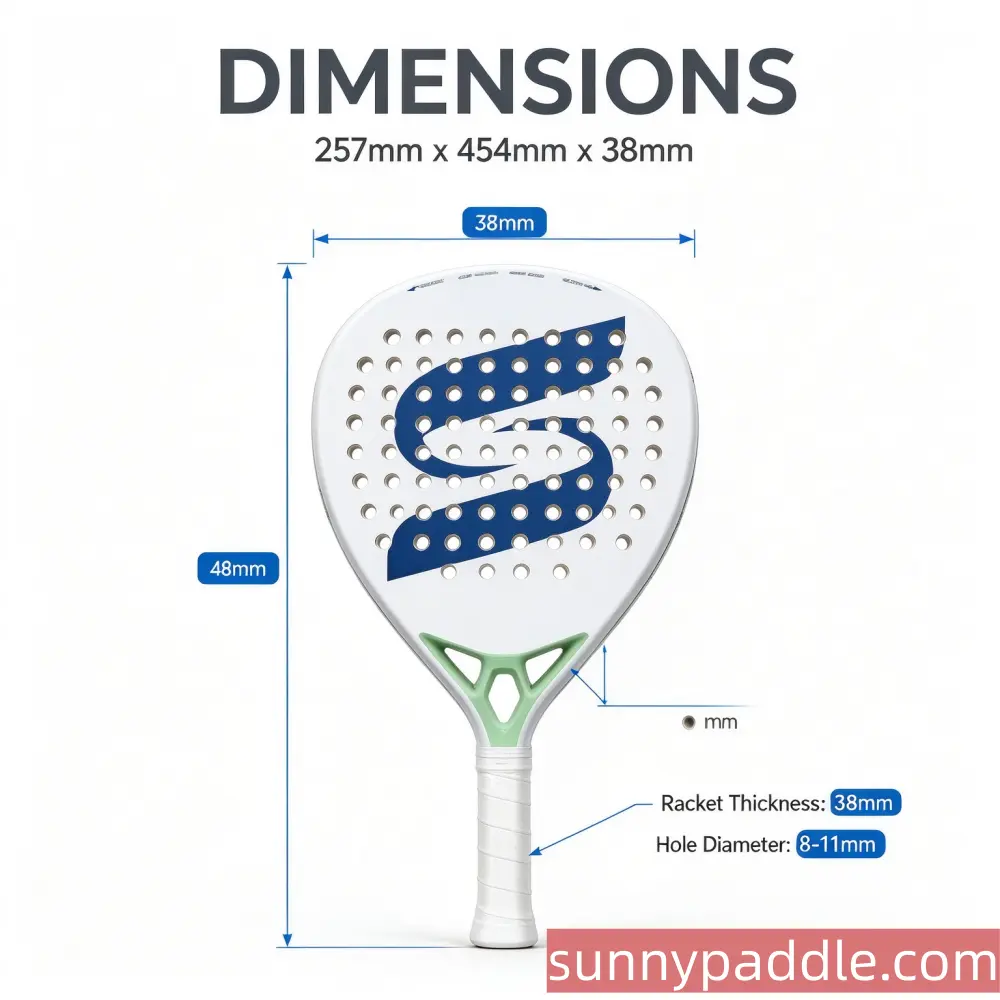
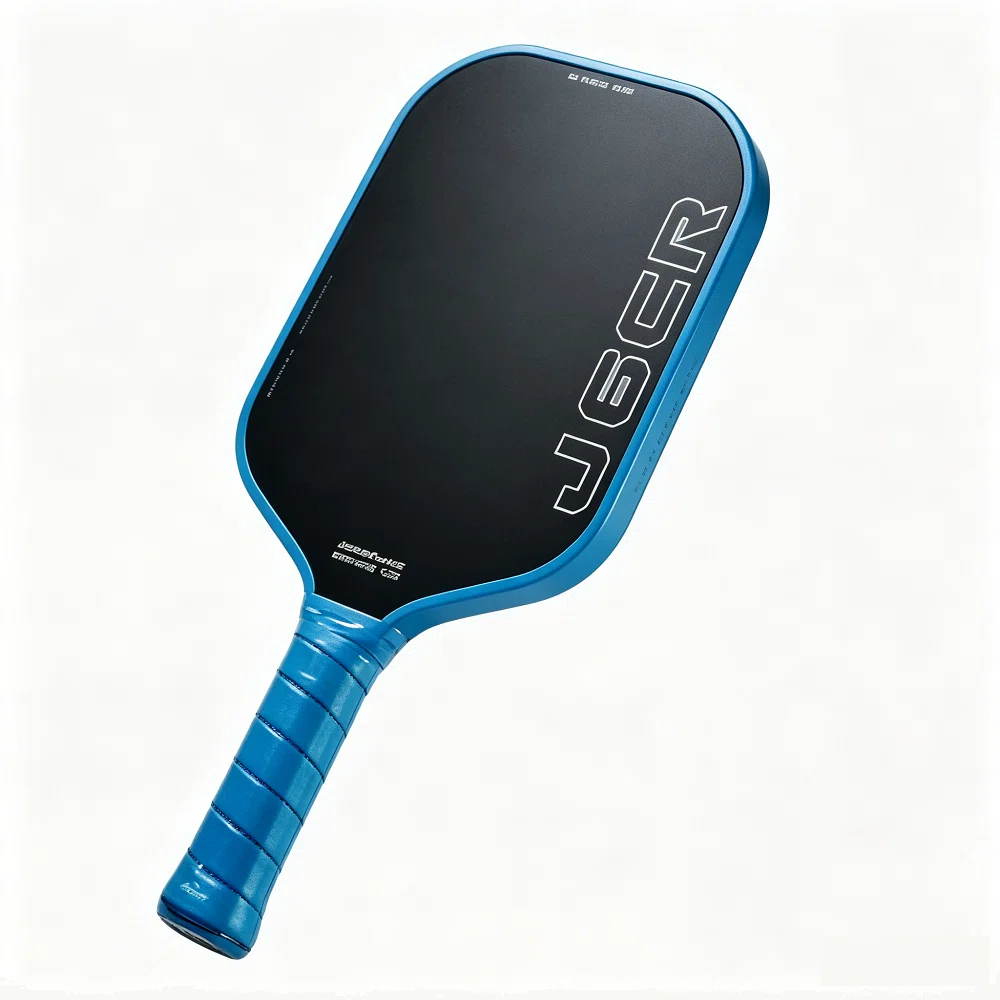
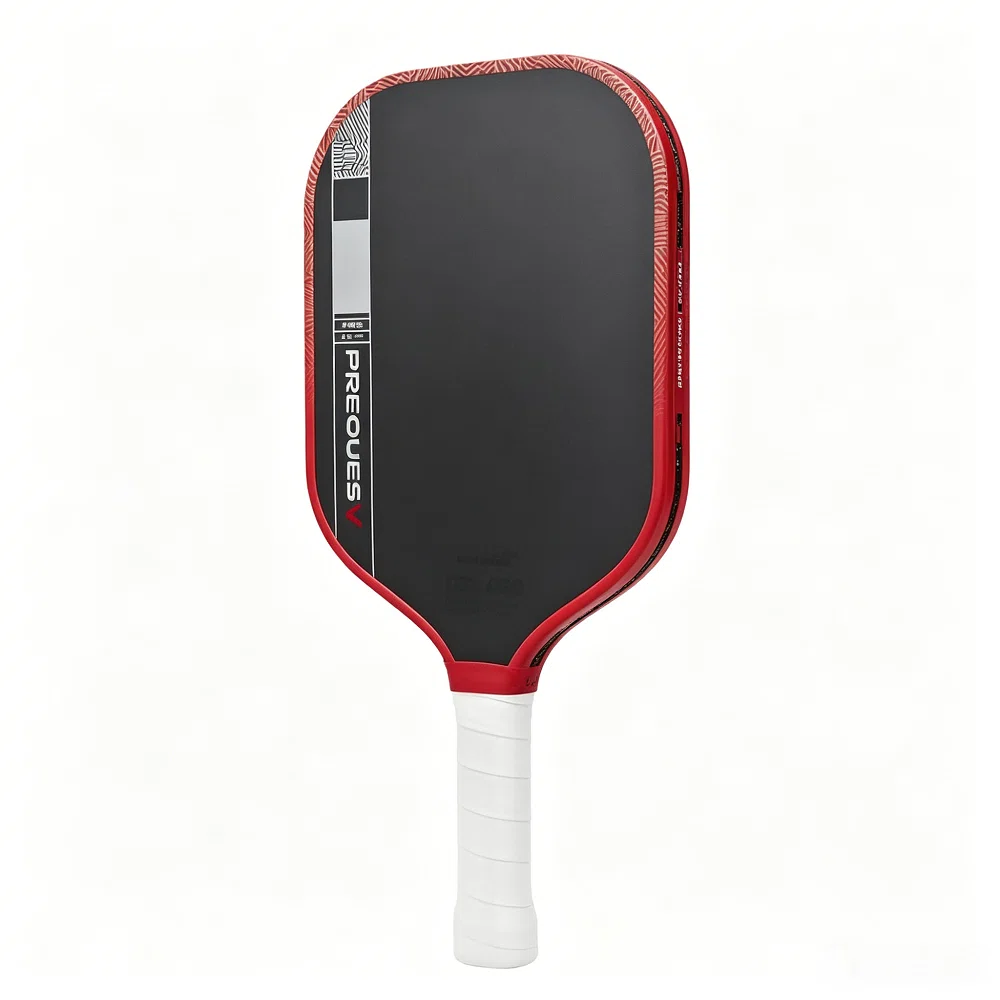
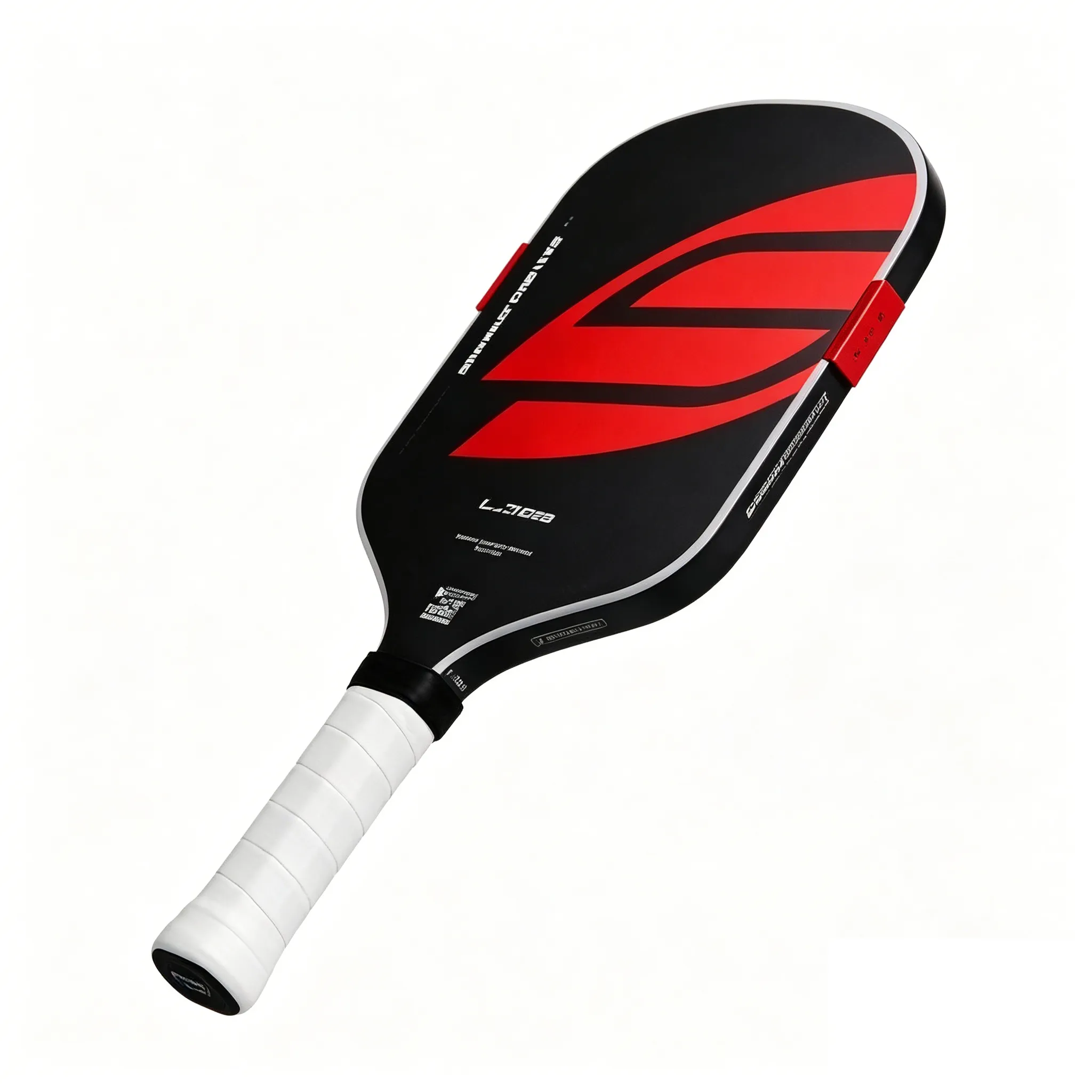
Standard specifications for the SUS-101 include a teardrop shape measuring 455 mm in length and 265 mm in width, with a 38 mm thickness profile. The standard weight is 365 g ± 10 g. The face uses carbon fiber composite, and the core is EVA foam. Customization options extend to round, diamond, or hybrid shapes, custom dimensions, custom thickness, and a weight range of 360–380 g. Face materials can be specified as 3K, 12K, or 18K carbon, or fiberglass, while core density can be soft, medium, or hard.
OEM and ODM Services for Padel Brands
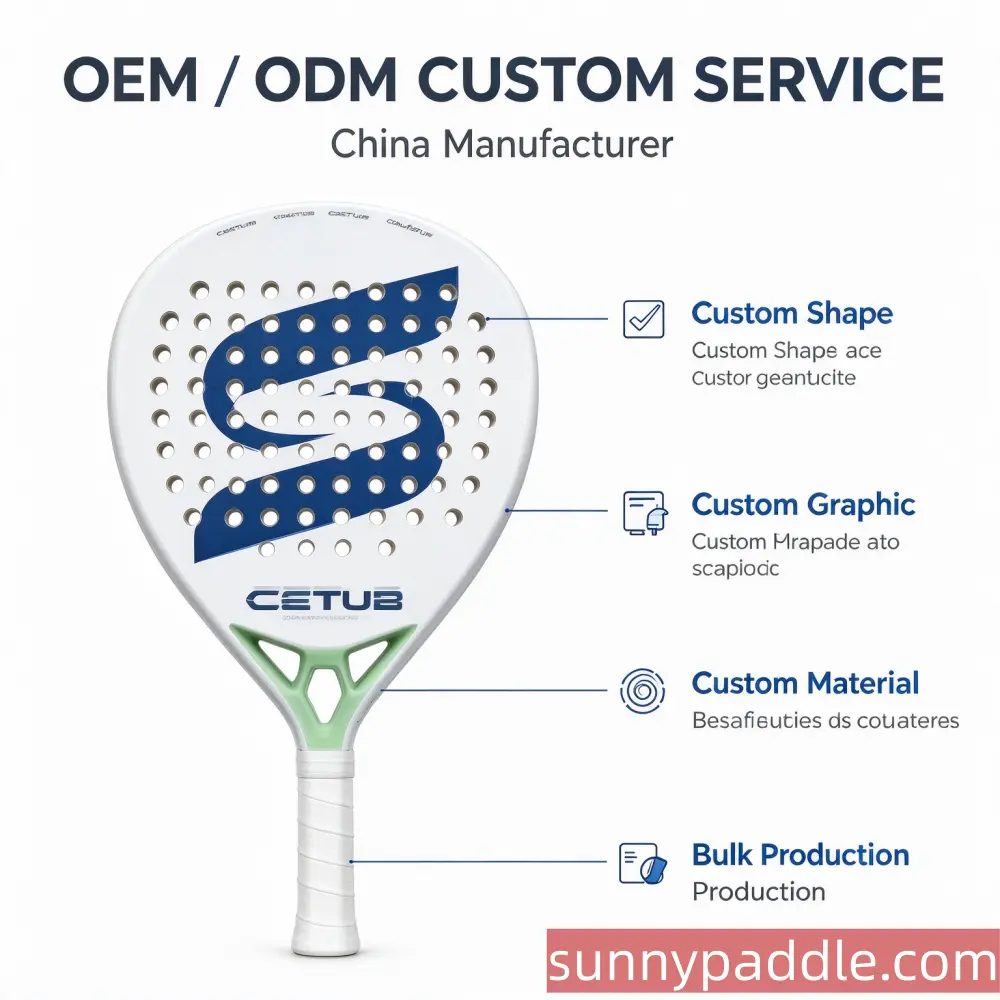
As a China-based Teardrop Padel Racket Manufacturer, we provide full-spectrum OEM and ODM services. Our capabilities span from minor cosmetic customization to complete new product development, depending on each client's stage and requirements.
OEM: Private Label Production
For brands with an established product concept, our OEM service enables private label manufacturing using the SUS-101 platform or other existing molds. Customization options include surface finish (matte or glossy), color selection, logo application through pad printing or water transfer, grip tape branding, and custom packaging. The OEM process follows a structured workflow: mold selection, material specification, surface structure choice, finish selection, watermark or graphic application, weight and balance targeting, packaging design, and logistics arrangement.
Typical OEM production lead time is 30–45 days following sample approval, with sample development taking 7–14 days for existing molds. Minimum order quantities for private label runs generally range from 300–500 units per model, though we accommodate negotiated MOQs for multi-model orders or long-term supply agreements.
ODM: Custom Development
For brands seeking a differentiated product, our ODM service supports the development of entirely new frame shapes, structural innovations, and proprietary designs. Our engineering team can produce new tooling based on client sketches or performance specifications, with first samples typically available within 2–4 weeks depending on complexity.
The ODM process begins with a design brief covering target player profile, desired balance characteristics, weight range, and visual direction. From there, we produce die-cut designs for approval, develop the mold, and iterate through sample rounds until the racket meets performance and aesthetic requirements. This approach is particularly valuable for brands entering the padel market with a differentiated positioning or for established brands expanding their range with a signature model.
Quality Control and Manufacturing Standards
For any brand sourcing from an overseas Teardrop Padel Racket Manufacturer, quality consistency is the primary concern. Our quality control framework addresses the critical risk points in padel racket production.
Incoming Material Verification
Every production batch begins with raw material inspection. Carbon fiber and fiberglass sheets are verified against certificates of conformity, with weave count (3K vs. 12K vs. 18K) and fiber orientation checked before layup. EVA foam cores are tested for density against the specified g/cm³ target. Adhesive lots are logged and traced for full batch accountability.
In-Process and Final Inspection
During production, each racket undergoes weight verification to ±3 grams tolerance. Balance point is measured and recorded. Surface finish is visually inspected for cracks, chips, or delamination. After assembly, logo adhesion and grip tape durability are tested through rub and peel checks on sampled units.
Final inspection includes a comprehensive packaging check to ensure product integrity during shipping. For clients requiring additional assurance, we coordinate third-party pre-shipment inspections through SGS or Intertek.
Our quality checkpoints cover weight at ±3 g with 100% checking, balance point at ±0.5 cm through sampling, surface finish with 100% visual inspection for cracks or chips, foam density verified at incoming batch stage against specified g/cm³, glue bonds checked for delamination during pilot and random testing, and logo durability confirmed through rub testing on sampled units. This multi-layered approach ensures that every SUS-101 racket leaving our facility meets the performance and aesthetic standards our clients expect.
Why Source Padel Rackets from China
China has become the dominant manufacturing base for padel equipment, and for good reason. The country's mature composites industry provides access to carbon fiber materials, precision molding equipment, and skilled labor at cost structures that are difficult to match elsewhere.
For padel brands specifically, Chinese manufacturers offer several advantages. Tooling development is faster and less expensive than European alternatives. Production capacity can scale from pilot runs of a few hundred units to container volumes without changing suppliers. And the proximity of component suppliers—grips, packaging, balls—enables coordinated sourcing and consolidated shipping.
The trade-off, of course, is the need for rigorous supplier vetting and quality control. This is where a manufacturer with documented processes and transparent communication makes the difference. A supplier that provides clear material certifications, in-process inspection data, and pre-shipment verification reports reduces the risk that overseas production entails.
Building a Padel Brand with a Reliable Manufacturing Partner
Launching or expanding a padel brand requires more than a good design. It requires a manufacturing partner that understands the sport's technical demands, the retail market's quality expectations, and the logistical realities of international supply chains.
Our approach at sunnypaddle.com is built on three principles: transparency in communication, consistency in production, and flexibility in customization. Whether you are a startup brand ordering your first 300 units or an established retailer seeking a long-term OEM partnership, we provide the engineering support, quality assurance, and production capacity to bring your teardrop padel racket to market.
We encourage prospective partners to request samples of the SUS-101 for hands-on evaluation. Testing the racket's balance, feel, and finish is the most reliable way to assess whether our manufacturing meets your brand's standards. From there, we can discuss material specifications, customization options, order volumes, and delivery timelines tailored to your business model.
Conclusion
The teardrop padel racket occupies the most commercially significant position in the market—versatile enough for improving players, powerful enough for competitive club play, and flexible enough for brands to position across multiple price tiers. The SUS-101 platform, manufactured by sunnypaddle.com, offers a production-ready foundation for OEM and ODM projects, with customizable materials, finishes, and branding options.
For brands evaluating a Teardrop Padel Racket Manufacturer in China, the key considerations are material quality, production consistency, customization capability, and communication reliability. We invite you to visit sunnypaddle.com to learn more about our capabilities, request samples, or begin a conversation about your next padel racket project.