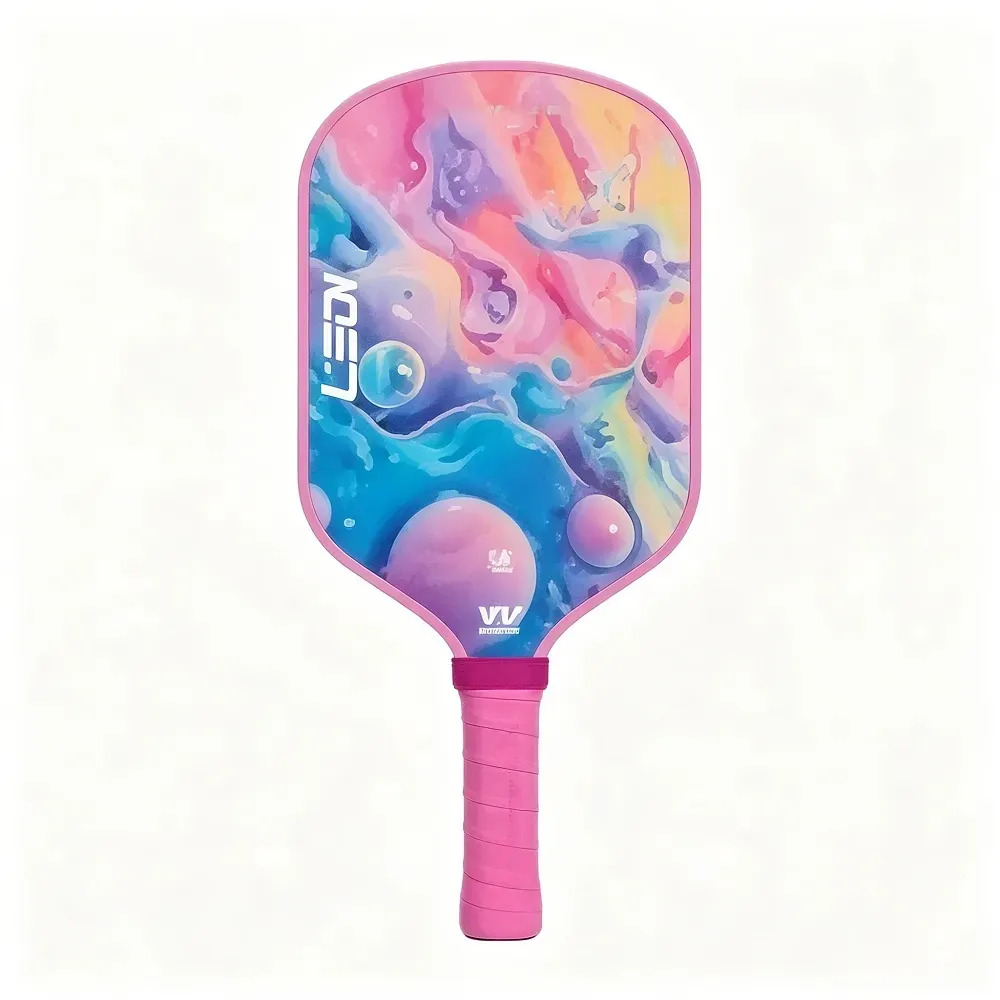
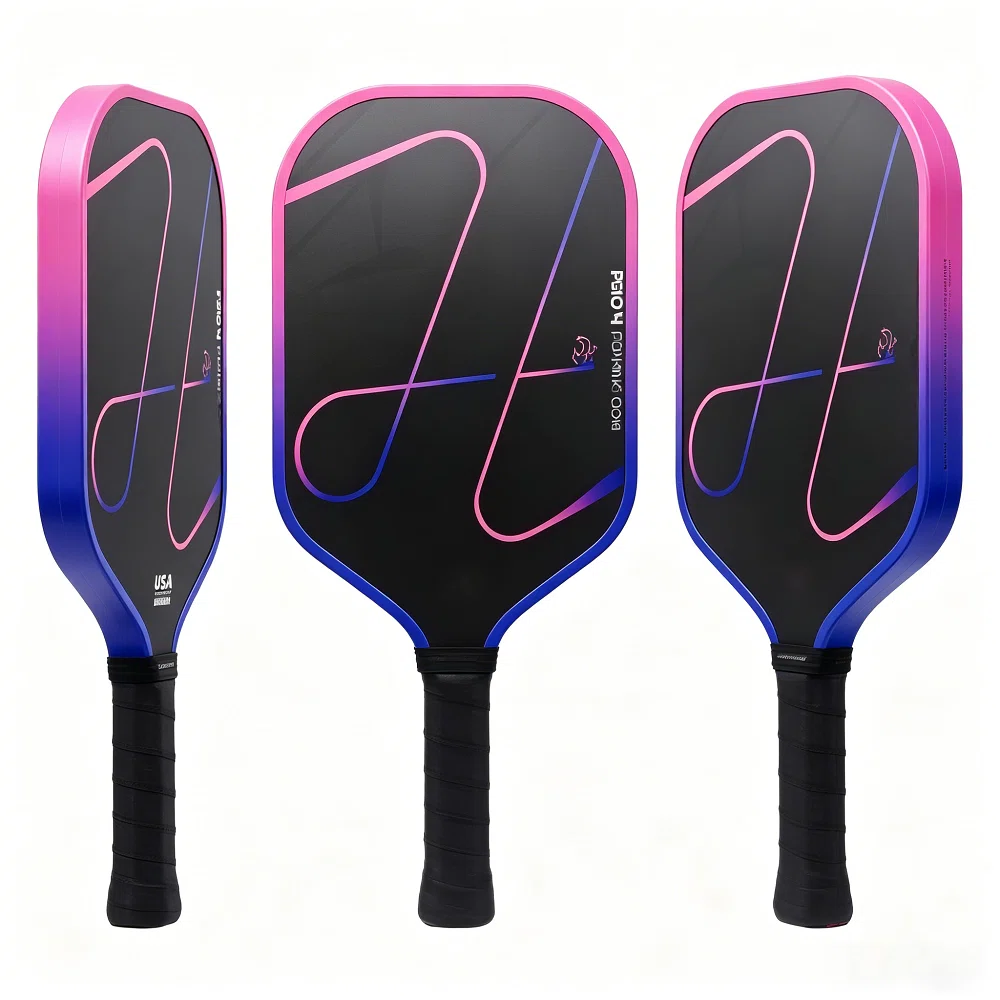
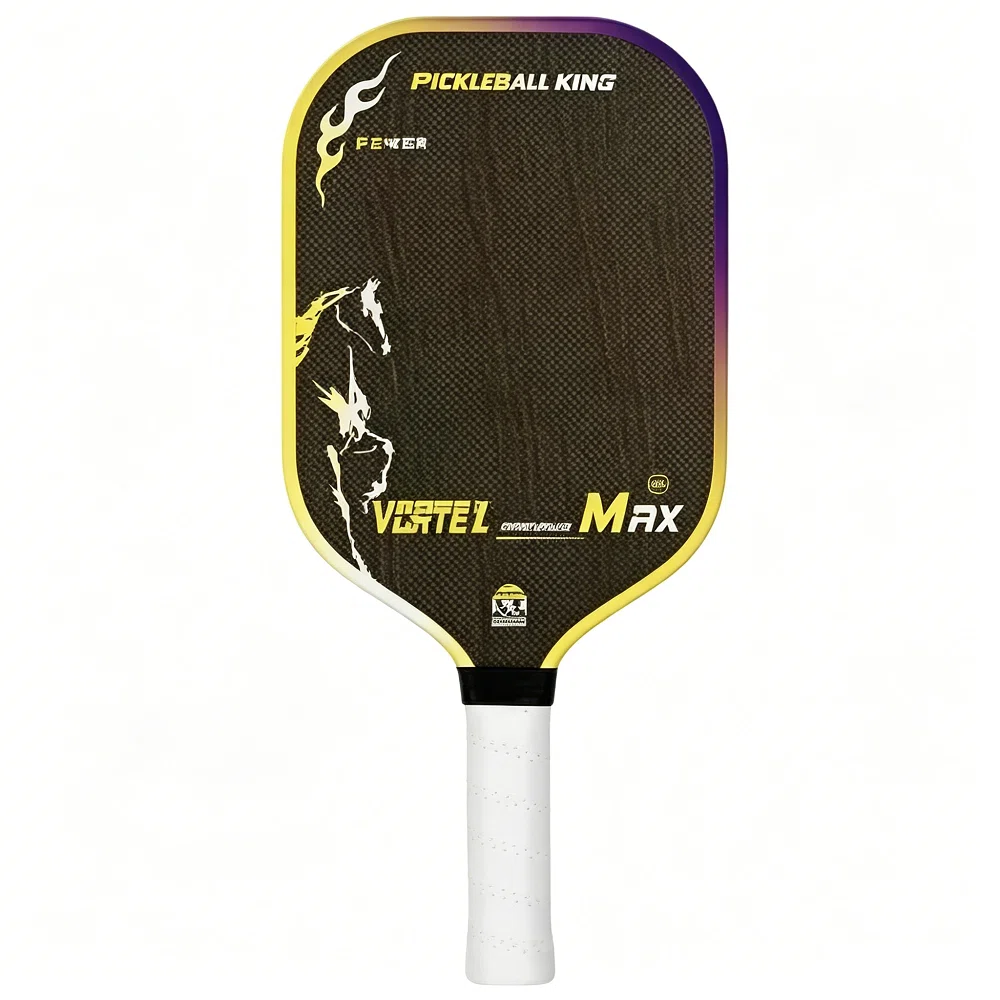
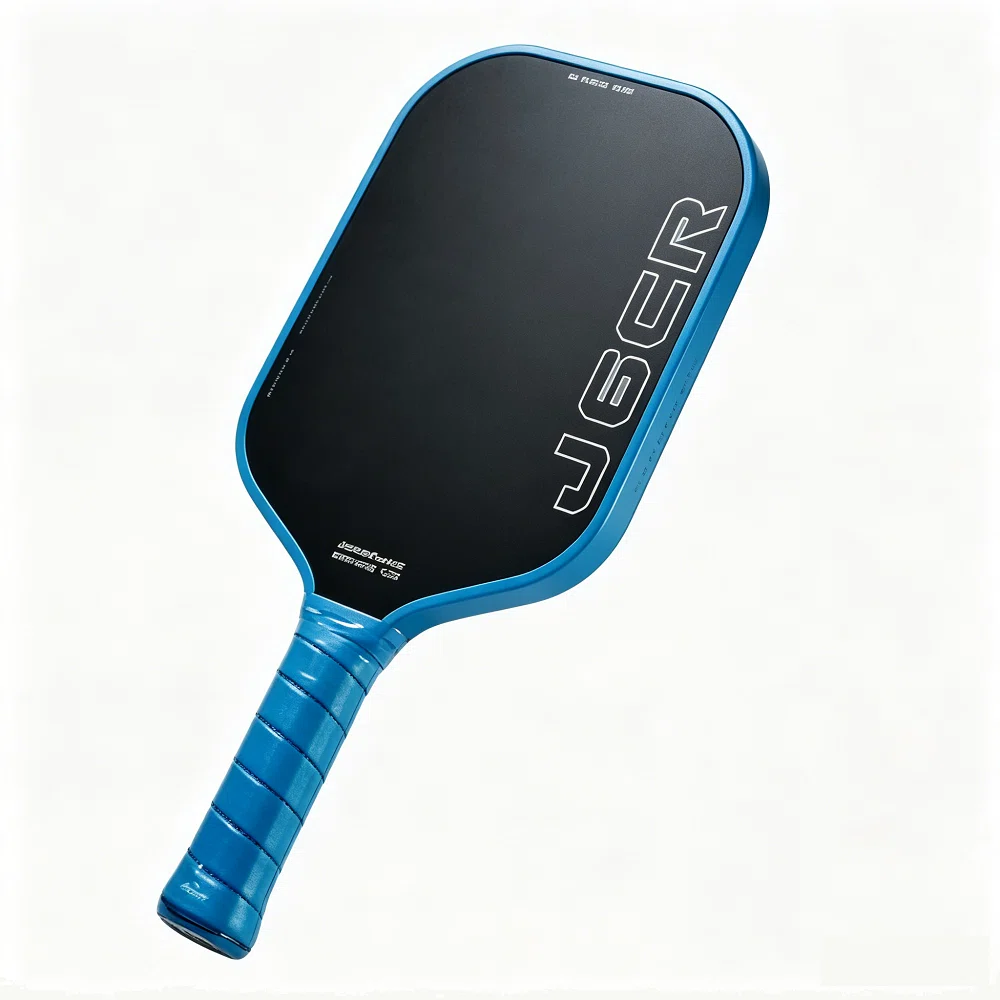
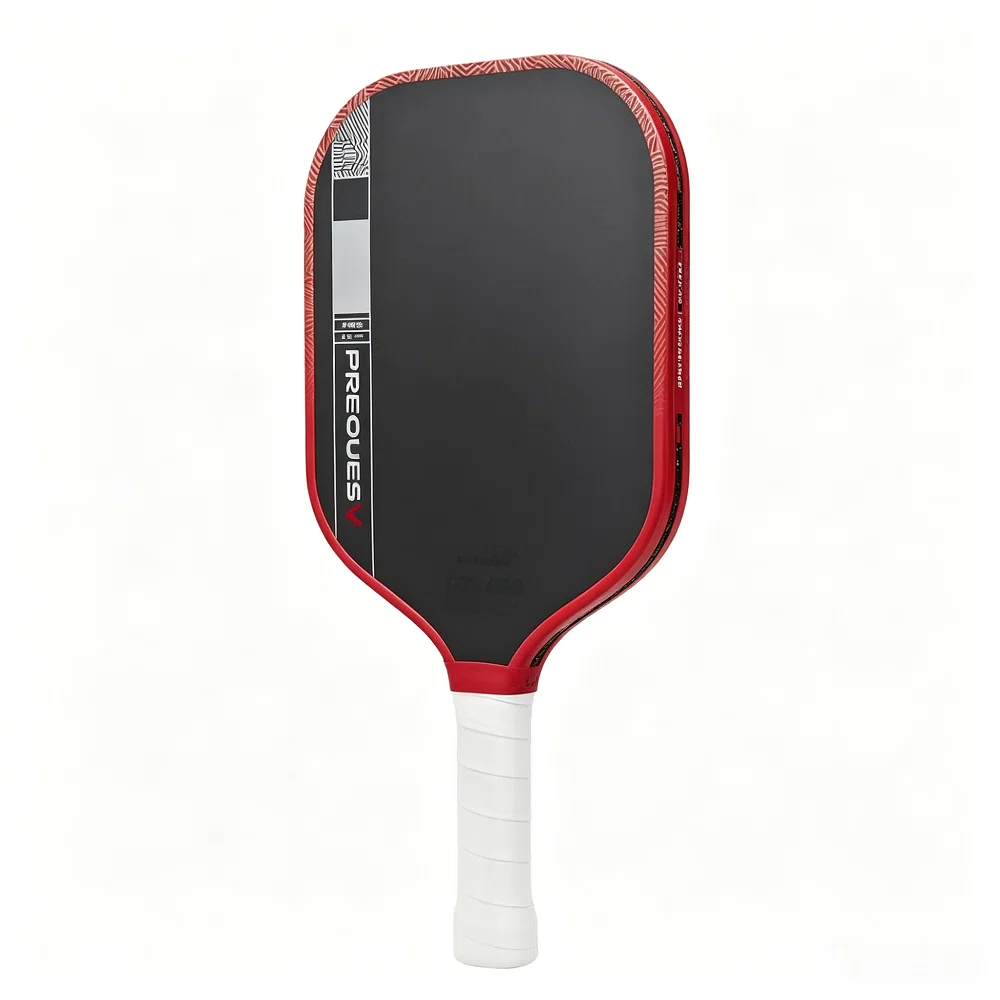
OEM ODM SUP-01 Fiberglass Pickleball Paddle: China Professional Manufacturer for Global B2B Buyers
The global pickleball equipment market is expanding at an exceptional pace, with paddles representing one of the highest-value segments for wholesale and private-label programmes. For importers, brand owners, and e-commerce sellers, sourcing a reliable fiberglass pickleball paddle from a qualified China professional manufacturer is no longer simply a cost exercise—it is a supply-chain decision with direct implications for product performance, regulatory compliance, and brand reputation.
We are a professional pickleball paddle factory based in China, specialising in OEM and ODM production for international B2B clients. This article examines the technical foundations of the SUP-01 fiberglass paddle platform, the manufacturing and testing standards behind it, and why we are positioned as a China professional manufacturer for brands seeking consistent quality at scale.
Market Context: Why Fiberglass Paddles Remain a High-Volume B2B Category
While carbon fiber paddles command attention at the premium end of the market, fiberglass remains the material of choice for entry-level and intermediate performance tiers. The global pickleball market was valued at approximately USD 1.97 billion in 2026, with forecasts projecting growth to USD 3.56 billion by 2030 at a compound annual growth rate of 16.0%. North America alone accounts for over 65% of global pickleball equipment revenue, driven by participation growth that saw the US player base expand from 8.9 million in 2022 to over 13.6 million in 2024.
For wholesale buyers and private-label brands, this growth translates into sustained demand for paddles that offer an accessible price point without compromising structural integrity. Fiberglass paddle construction delivers precisely that: a flexible, responsive surface that generates easy power, combined with a manufacturing cost base that supports competitive B2B pricing.
From our position as a China professional manufacturer, we observe that the most commercially successful fiberglass programmes are those designed not as stripped-down budget items, but as performance-optimised platforms tailored to specific player profiles. The SUP-01 is engineered with this philosophy.
The SUP-01 Platform: Fiberglass Surface Technology Explained
Fiberglass occupies a distinct position in pickleball paddle construction. Unlike carbon fiber, which is inherently stiff and absorbs energy on impact to deliver control and touch, fiberglass is more flexible. When a ball strikes a fiberglass surface, the material flexes and rebounds, propelling the ball forward with a lively, powerful response. This characteristic makes fiberglass particularly suitable for players who rely on natural power generation rather than high-swing-speed mechanics.
The SUP-01 platform leverages this material property through a multi-layer fiberglass face construction. The face plies are oriented to balance power output with sufficient structural stability, preventing the excessive deformation that can compromise shot consistency. Beneath the surface, a polymer honeycomb core provides the resilient foundation that defines the paddle’s overall feel and weight distribution.
From a technical procurement perspective, the value of the SUP-01 lies in its tunability. Core thickness, face ply count, and resin content can all be adjusted within the platform architecture to shift the performance envelope—more power, more forgiveness, or a different swing weight. For ODM clients, this means the ability to develop a differentiated product without incurring the cost and lead time of an entirely new structural design.
Manufacturing Process and Quality Control at Our China Facility
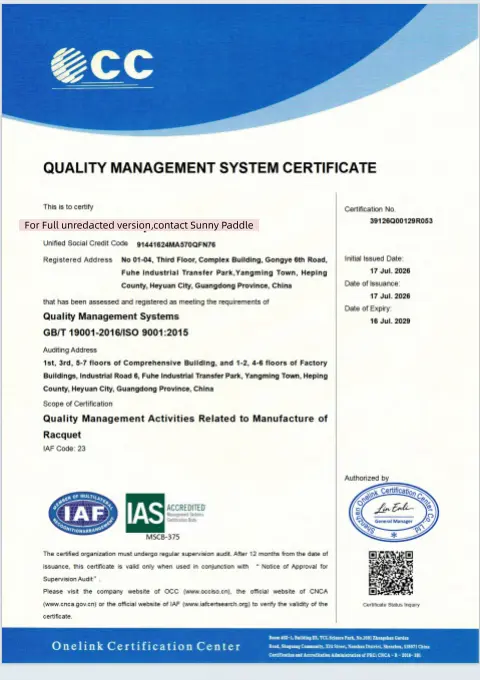
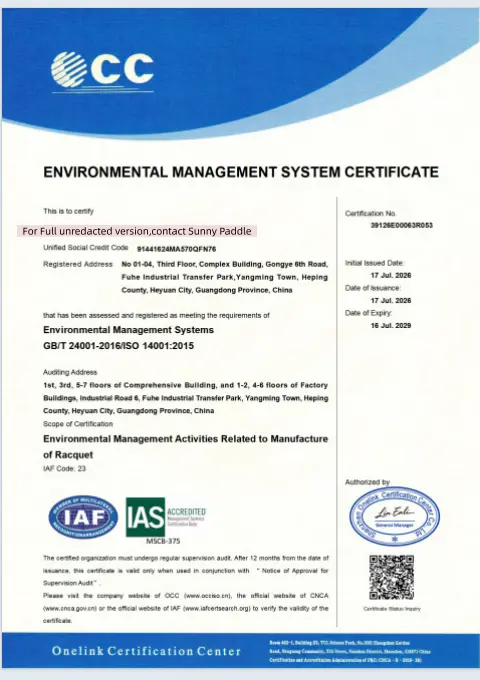
As a China professional manufacturer, our credibility with B2B buyers rests on documented process control rather than marketing claims. The SUP-01 production flow follows a structured sequence that mirrors the industry-standard phases for quality composite paddle manufacturing.
Material Preparation and Layup
Fiberglass fabric is cut to specification and stacked in controlled layups. The resin system is selected for its compatibility with the fiberglass substrate, ensuring consistent wet-out and cure characteristics. For OEM programmes with specific material requirements, we can source fiberglass from qualified suppliers and provide material certificates for traceability.
Core Integration and Thermoforming
The polymer honeycomb core is positioned between the face plies and subjected to controlled heat and pressure. This thermoforming stage bonds the face and core into a unified structure, eliminating the delamination risks that plague low-quality paddle production. Process parameters—temperature, dwell time, and press pressure—are logged and repeatable across production runs.
Edge Finishing and Surface Treatment
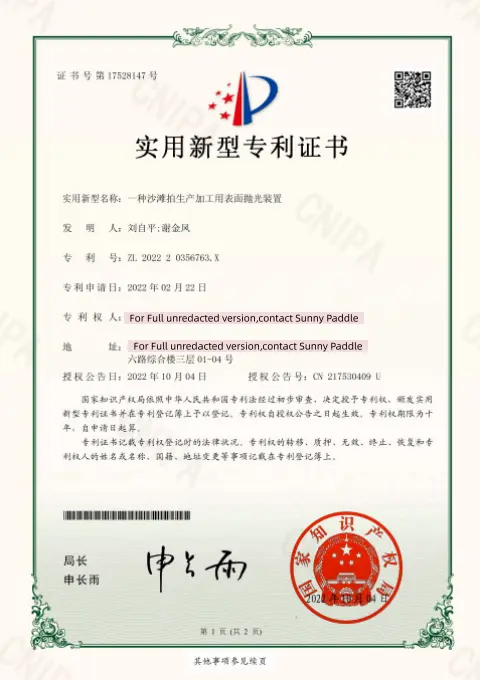
Edge guards are applied to protect the paddle perimeter from court impacts and to provide a clean visual finish. For OEM clients requiring branded edge graphics, we support edge band printing and embossing. The fiberglass surface itself can be left with a natural texture or modified through controlled abrasion processes to achieve specific roughness characteristics, subject to regulatory limits.
Quality Assurance Testing
Every production batch undergoes structured quality control. Key checkpoints include weight verification, balance measurement, and structural inspection. For clients targeting regulated markets, we conduct surface roughness testing using calibrated instruments to confirm compliance with applicable standards. The USA Pickleball Equipment Standards Manual specifies maximum surface roughness readings for approved paddles, and our QC protocols are designed to keep production within these tolerances.
Our testing capability extends to sample prototyping and pilot runs. Before a B2B client commits to a full production order, we can supply pre-production samples that reflect the exact material and process specifications of the final product—not a simplified approximation.
ODM and OEM Customisation: What Buyers Can Specify
The distinction between OEM and ODM matters for procurement strategy. OEM arrangements typically involve manufacturing a product to the buyer’s design and specification. ODM arrangements involve selecting from existing platform architectures that can be customised with the buyer’s branding, graphics, and performance modifications.
The SUP-01 fiberglass pickleball paddle platform supports both models. The table below outlines the customisation parameters available to B2B clients.
| Customisation Area |
OEM Capability |
ODM Capability |
| Paddle Shape & Dimensions |
Custom mold development based on client drawings |
Selection from existing shape families (standard, wide-body, elongated) |
| Face Material & Texture |
Specified fiberglass type, ply count, surface treatment |
Standard fiberglass layup with optional texture variation |
| Core Configuration |
Custom core density, thickness, and material |
Choice of standard core options within platform |
| Weight Range |
Target weight ± tolerance as specified (e.g., ±5g) |
Standard weight bands with nominal tolerance |
| Graphics & Branding |
Full-surface custom artwork, logo printing, edge graphics |
Surface printing on platform template with client branding |
| Grip & Handle |
Custom grip length, circumference, material, and branding |
Standard grip options with logo printing |
| Packaging |
Custom retail packaging, inserts, hang tags |
Standard packaging with client label application |
For brands requiring exclusive geometry or proprietary surface treatments, we support dedicated mold development. Tooling ownership and exclusivity terms are established contractually, ensuring that client-specific designs and molds are not reused for other customers.
Regulatory Compliance and Testing Standards for Export Markets
B2B buyers in regulated markets must navigate an evolving compliance landscape. The USA Pickleball Equipment Standards Manual establishes the technical requirements for paddle approval, including material safety, surface roughness limits, and coefficient of restitution (PBCoR) thresholds. Recent rule changes have tightened surface roughness enforcement, with on-site testing now used at sanctioned events to verify that production paddles match the specifications of approved models.
For wholesale buyers, the compliance question is not abstract. A fiberglass pickleball paddle that fails roughness or friction thresholds risks being disqualified at tournament level, which can trigger retail returns and brand damage. Our manufacturing protocols incorporate the measurement methods used in these regulatory frameworks, and we provide surface roughness test data with production batches for clients who require documentation.
Beyond USAPA standards, we support export documentation requirements for major markets, including material safety data sheets, compliance declarations, and third-party testing coordination where applicable.
Production Capacity, Lead Times, and Order Logistics
Scalability is a critical evaluation criterion for any China professional manufacturer. The ability to deliver a successful sample is meaningful only if the factory can replicate that quality across thousands of units within a predictable timeframe.
Our production planning supports both pilot runs and volume orders. For B2B clients evaluating the SUP-01 platform, we recommend an initial sample order to verify material quality, weight consistency, and branding execution. Following sample approval, standard production lead times are established based on order volume and current capacity allocation. Clients with recurring programmes can reserve production slots to align with seasonal demand cycles.
Packaging and logistics are integrated into the production workflow. We offer retail-ready packaging options as well as bulk carton configurations for e-commerce fulfilment. Freight coordination covers both sea and air shipping, with documentation prepared to support customs clearance in destination markets.
Why Partner With Us as Your Fiberglass Paddle Manufacturer
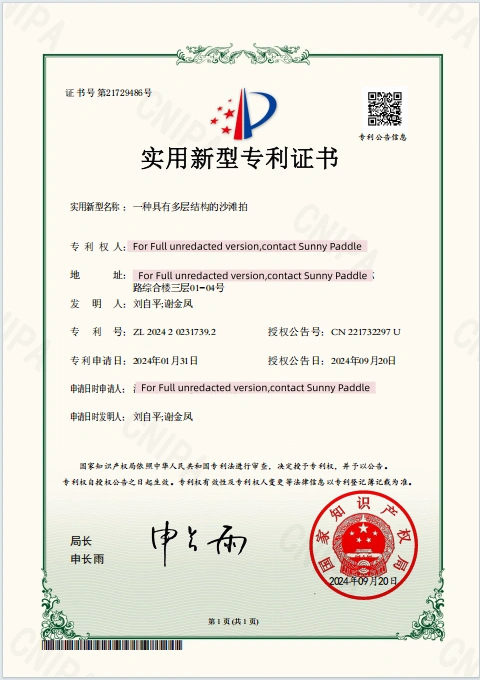
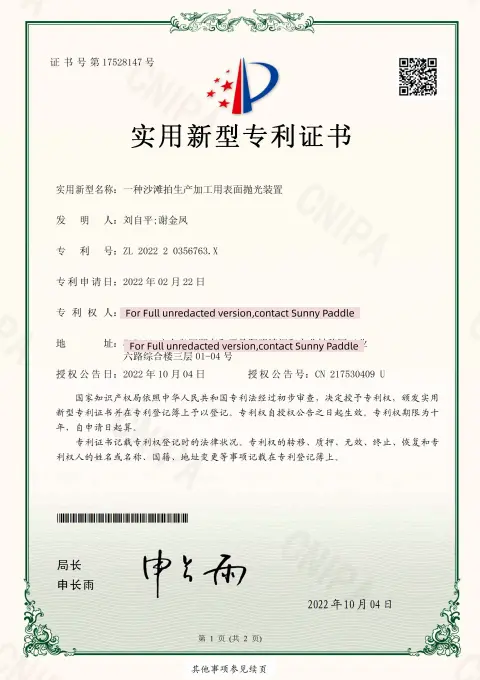
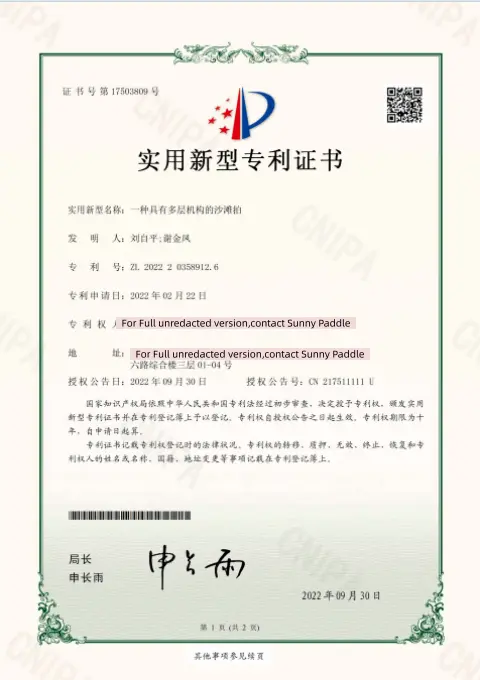
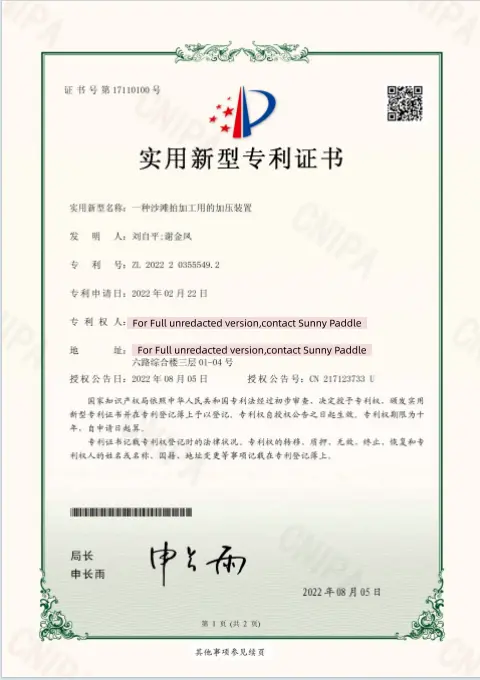
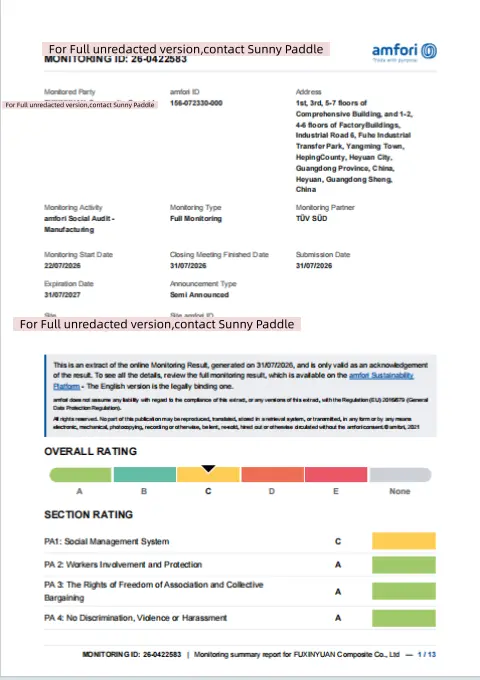
We are a China professional manufacturer with experience serving international B2B clients across OEM and ODM programmes. Our focus is on composite paddle production, with in-house capabilities spanning material preparation, thermoforming, finishing, and quality control.
For wholesale buyers and brand owners, the advantages of working directly with a factory rather than through trading intermediaries include:
- Transparent specifications. Material and process details are documented and verifiable, not obscured behind vague marketing language.
- Customisation depth. Platform-based ODM options reduce development cost while still delivering differentiated product.
- Quality consistency. Process controls and batch testing reduce the risk of variance that drives retail returns.
- Scalable capacity. Production planning supports growth from pilot orders to recurring volume programmes.
- Compliance support. Testing protocols align with regulatory standards for major pickleball markets.
Our product development team works with clients to translate performance requirements into manufacturing specifications. Whether the target is a power-oriented fiberglass paddle for entry-level players or a customised platform for a specific brand positioning, we approach each programme as a technical collaboration rather than a simple order fulfilment.
Next Steps for B2B Procurement
If you are evaluating fiberglass pickleball paddle suppliers for an OEM or ODM programme, we invite you to review the SUP-01 platform specifications and discuss your requirements with our team. Initial discussions typically cover target price point, order volume, customisation scope, and destination market compliance needs.
From that starting point, we can provide platform documentation, arrange sample production, and establish a production timeline aligned with your launch schedule. For buyers who require factory verification, we support audit coordination and documentation review.
Contact us through sunnypaddle.com to begin a technical discussion about your fiberglass pickleball paddle requirements.
Frequently Asked Questions
What is the minimum order quantity for the SUP-01 fiberglass paddle?
MOQ depends on customisation scope. For ODM configurations using existing platform tooling and standard branding options, lower trial quantities are possible. For OEM programmes requiring new molds or substantial structural changes, higher minimums apply to amortise tooling investment. We discuss MOQ parameters transparently during the RFQ stage.
Can you produce paddles with our brand logo and custom graphics?
Yes. We support full-surface printing, logo application, edge band graphics, and custom grip branding. Artwork files are handled under confidentiality, and customer-specific designs are not reused or circulated to other clients.
Do your paddles meet USAPA or UPA-A standards?
We manufacture to the technical specifications that underpin these regulatory frameworks, including surface roughness and material requirements. For clients pursuing formal approval for their branded products, we provide testing data and support the submission process. Compliance verification for a specific SKU should be confirmed against the relevant regulatory body’s current requirements.
What is the typical lead time for a production order?
Lead times vary with order volume, customisation complexity, and current production schedule. Pilot runs typically complete faster than full production orders. We provide a confirmed timeline upon final specification approval. Recurring clients can discuss capacity reservation for seasonal peaks.
Can you handle packaging and shipping to our destination?
Yes. We offer retail-ready and bulk packaging configurations, and coordinate freight logistics for both sea and air shipments. Export documentation is prepared to support customs clearance.