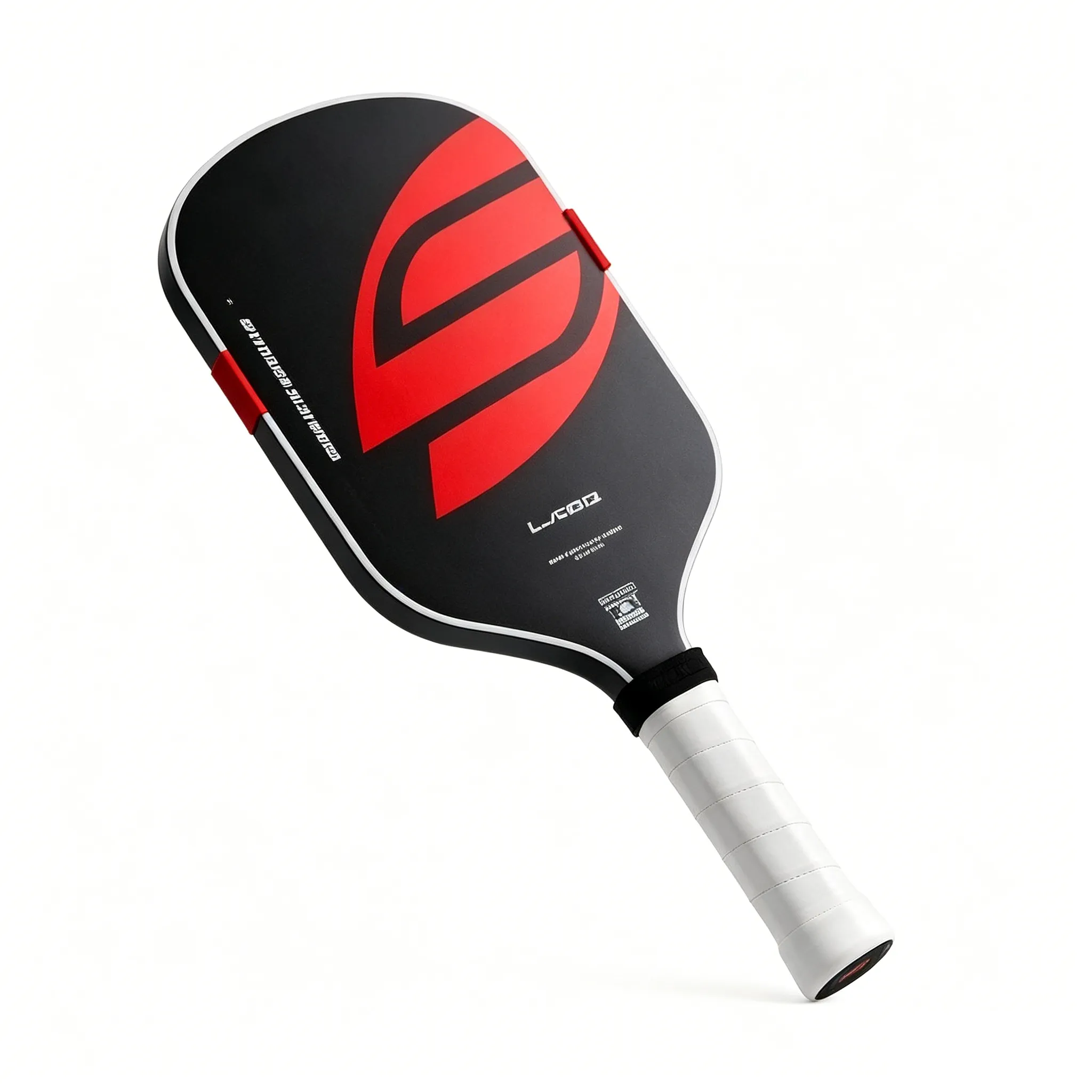
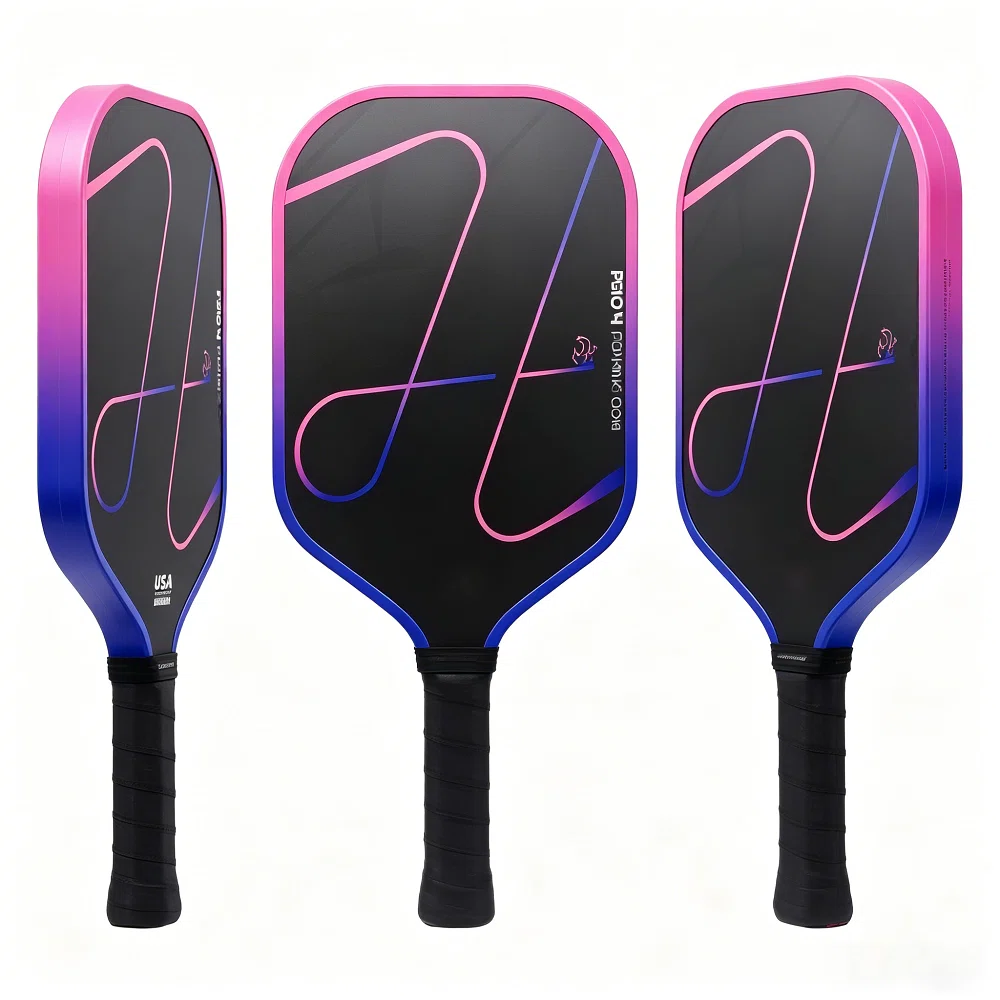
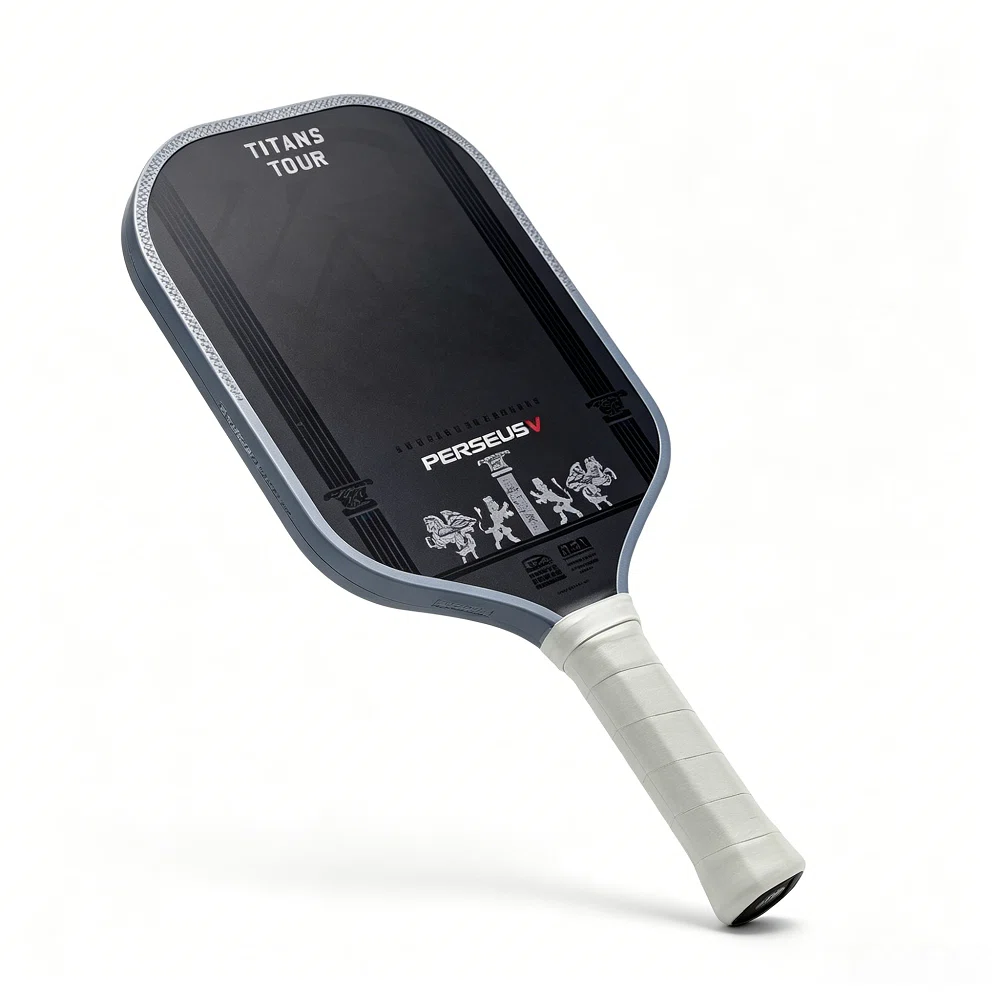
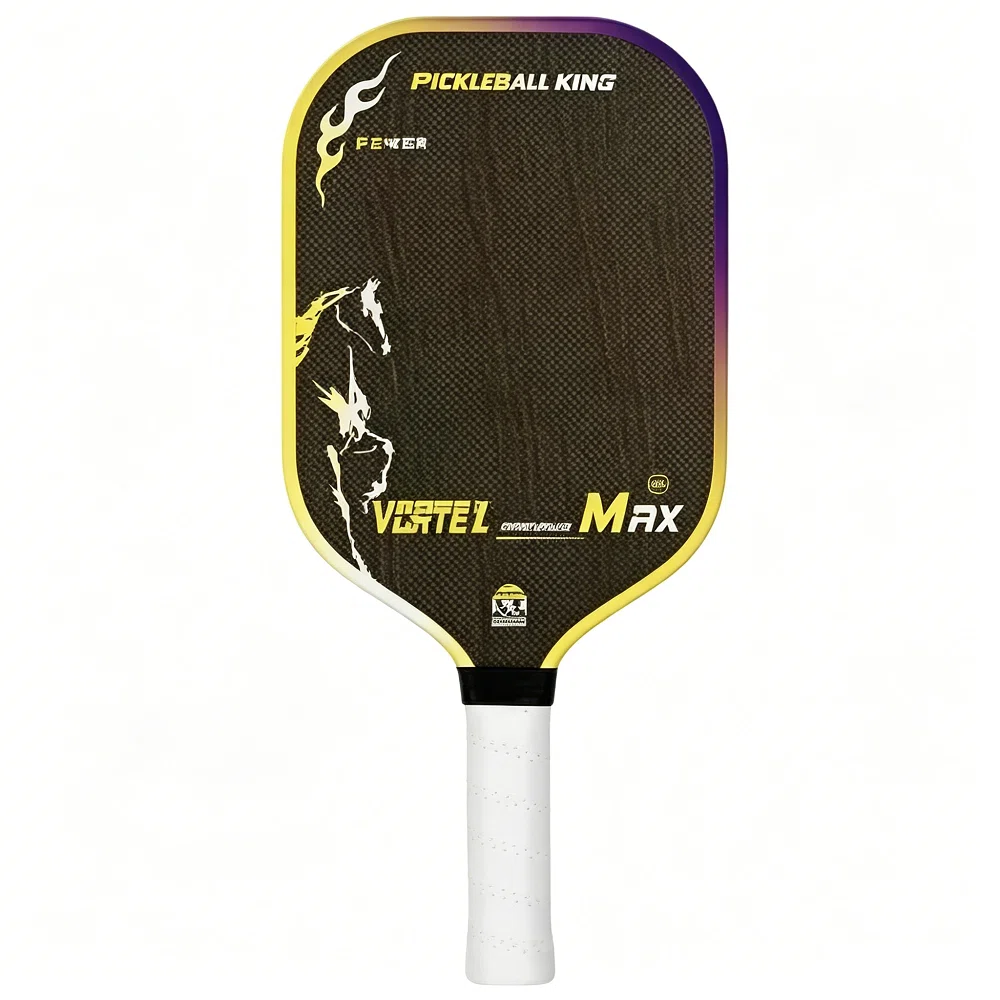
Titanium Wire Pickleball Paddle with T700 Carbon Fiber
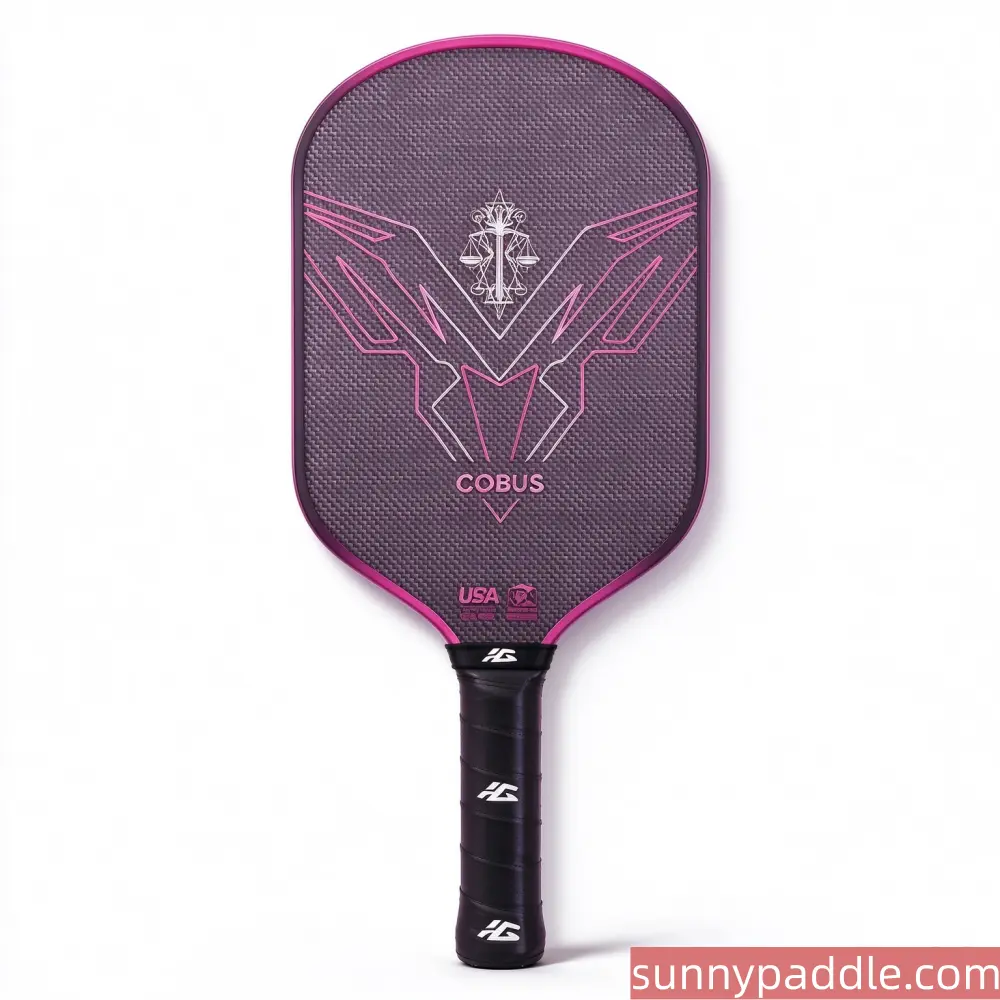
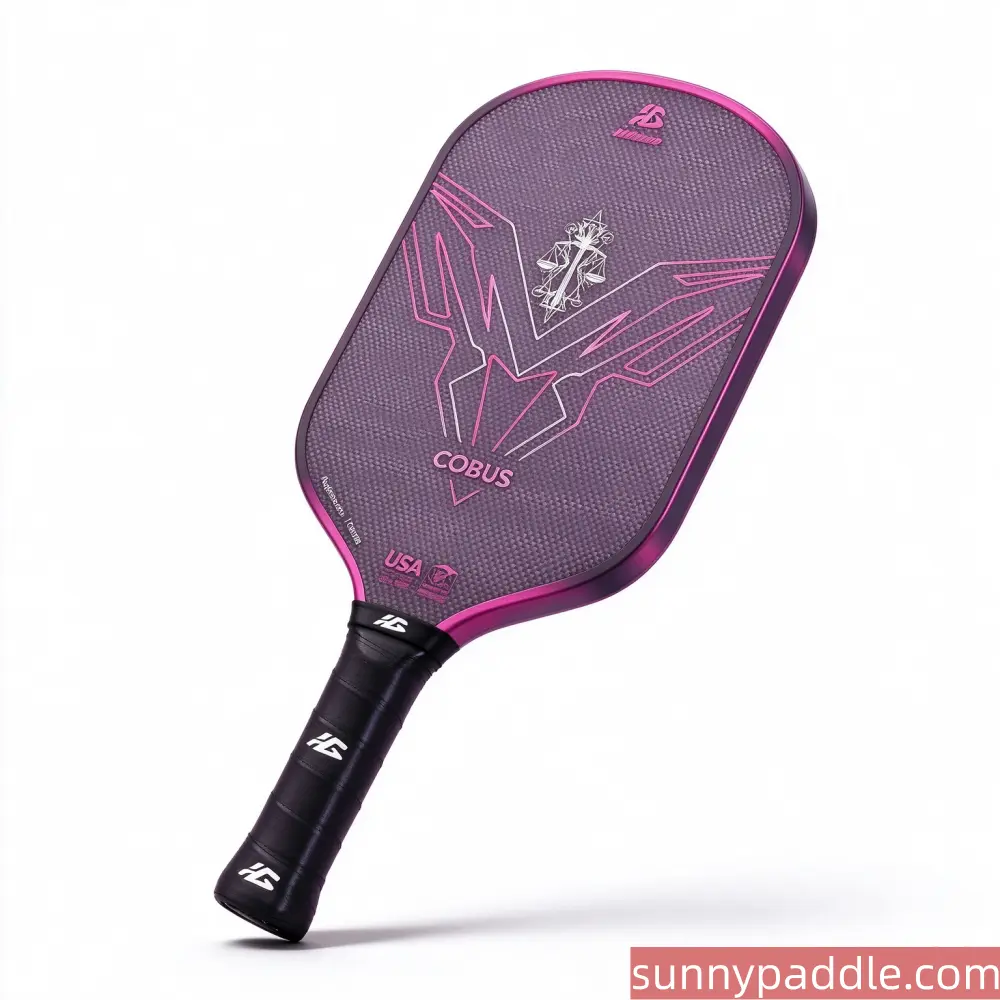
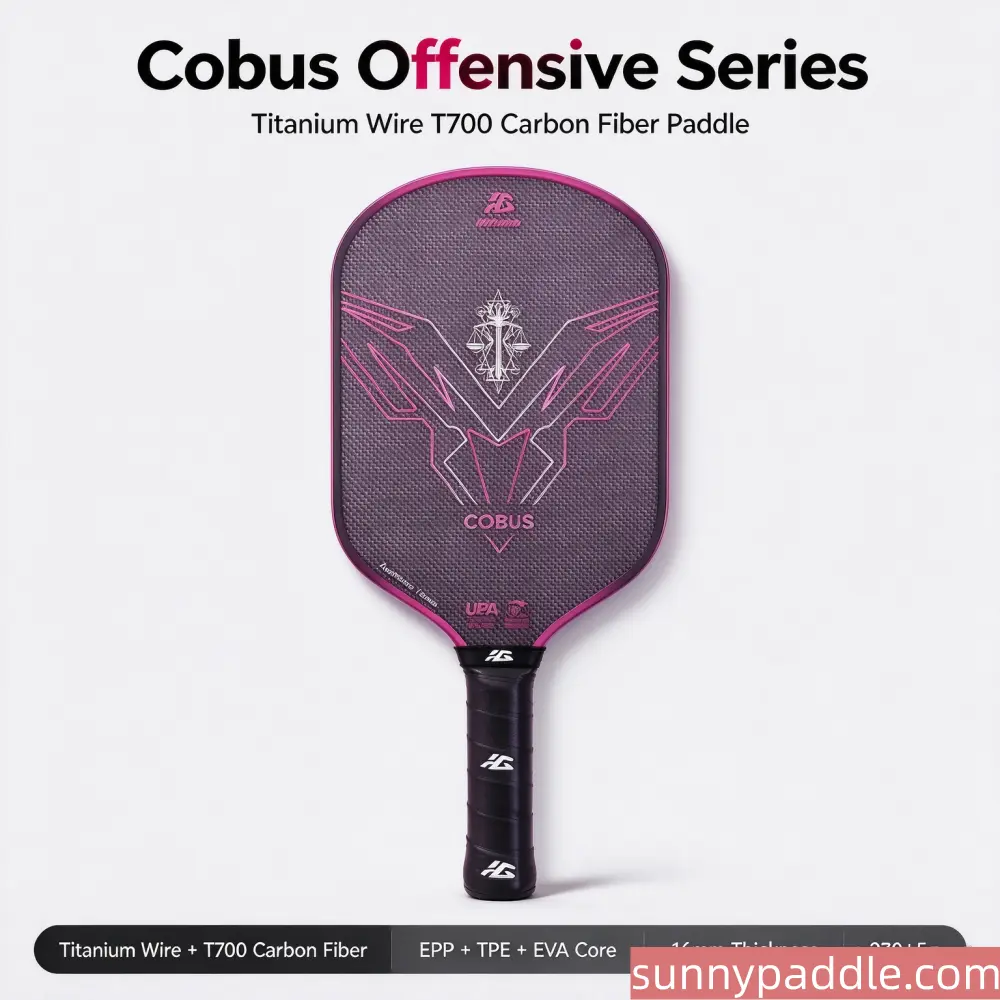
As the pickleball market continues to develop, sports brands, distributors, and sporting goods importers are looking for products that offer clear differentiation, reliable manufacturing, and opportunities for private-label development. Sunny Paddle, a China-based sports paddle manufacturer offering OEM and ODM services, introduces the Titanium Wire Pickleball Paddle, model SUP-902, featuring a distinctive combination of titanium wire and T700 carbon fiber.
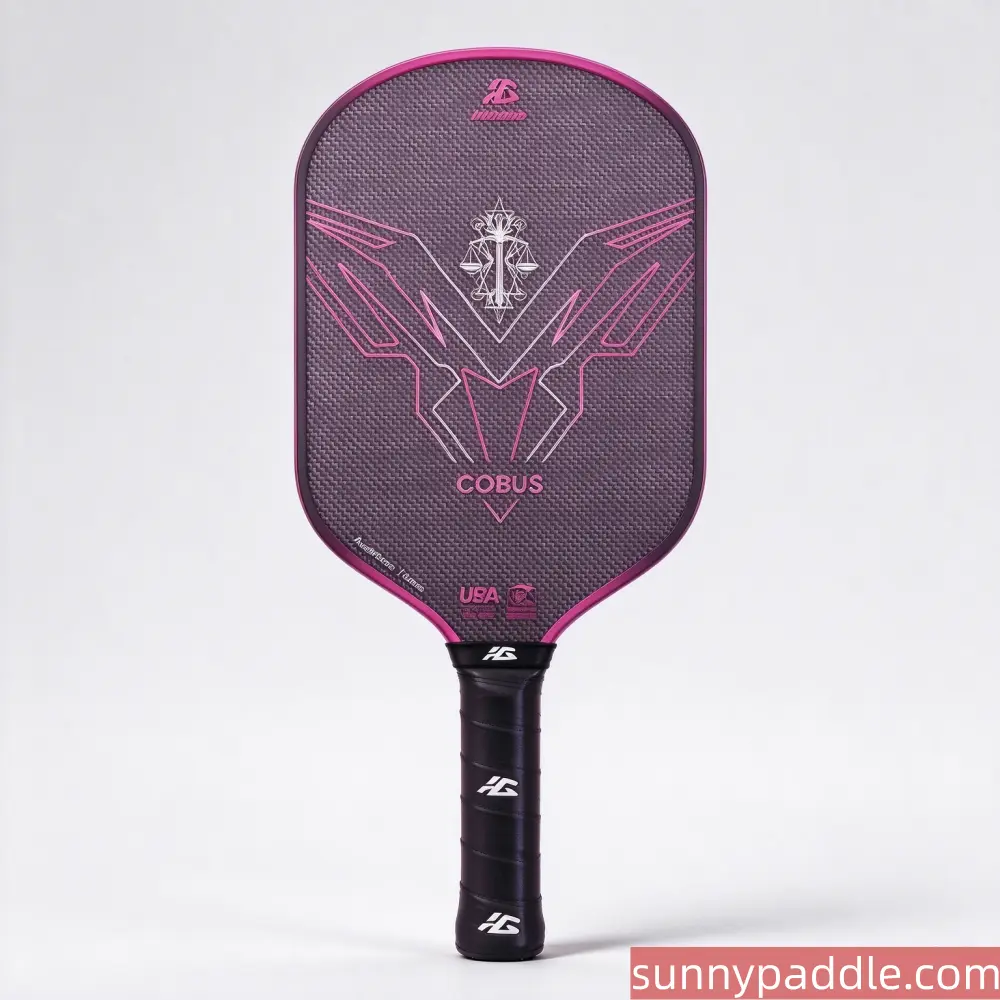
This product is designed for businesses seeking to expand their pickleball paddle collections with a distinctive material concept. By combining a titanium wire surface with T700 carbon fiber, the paddle offers a different approach to composite paddle construction and provides brands with an opportunity to develop a more specialized product offering. Its hot-press molding process, multi-material core construction, and carefully specified product dimensions form part of the overall design.
For B2B customers, the value of a new paddle extends beyond its appearance. Material selection, manufacturing consistency, quality control, customization flexibility, and supply capability all influence whether a product is suitable for a commercial launch. As a pickleball paddle manufacturer, Sunny Paddle works with business customers to develop products that align with their target markets, brand positioning, and purchasing requirements.
Whether you are an established sporting goods brand, a wholesale distributor, an importer, or a private-label business entering the pickleball market, our team can discuss product samples, branding options, design requirements, and potential production arrangements for your project.
1. Introducing the Titanium Wire and T700 Carbon Fiber Paddle
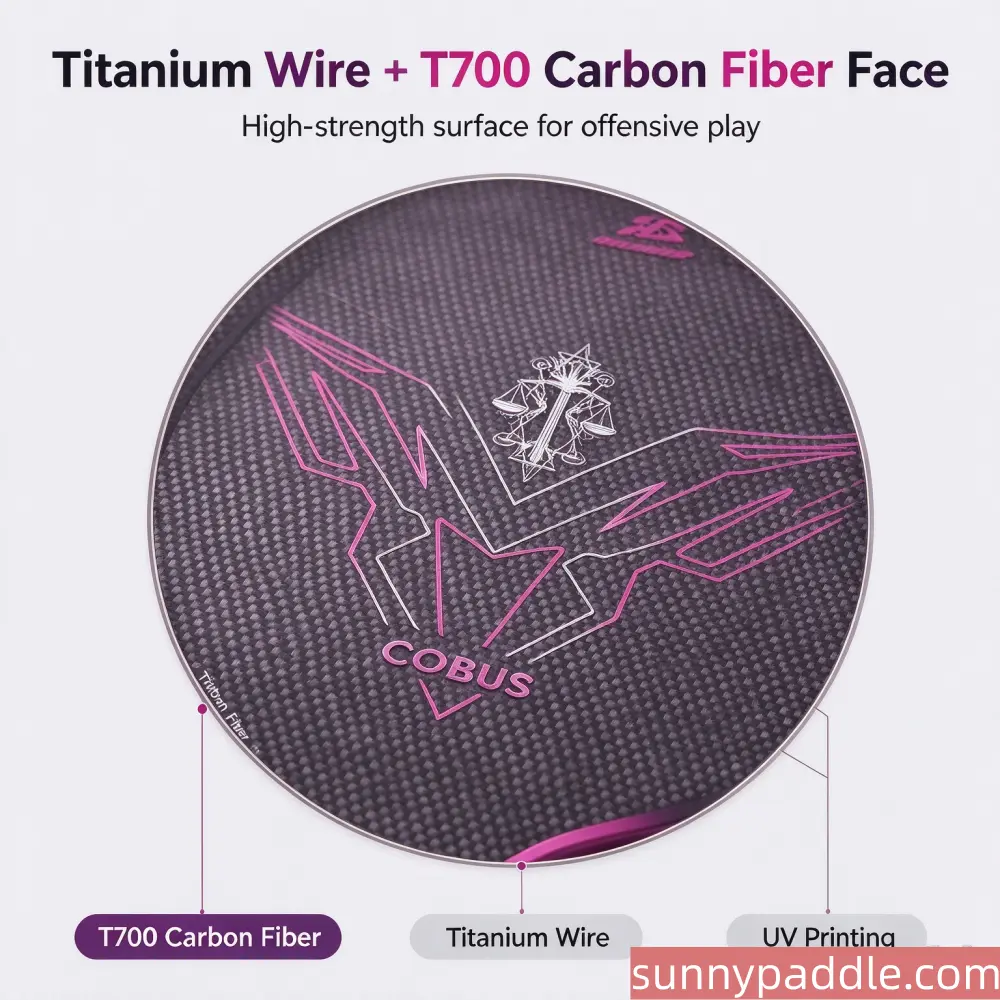
The SUP-902 Titanium Wire Pickleball Paddle stands out through its combination of two materials commonly associated with different aspects of composite product design. Titanium wire introduces a distinctive metallic element to the paddle surface, while T700 carbon fiber provides a carbon-based reinforcement material for the composite construction.
Rather than relying solely on a conventional carbon fiber surface, this design explores a different material combination that can help brands create a recognizable product identity. For companies developing differentiated pickleball equipment, material innovation can be an important part of product positioning, especially when launching a new collection or targeting customers interested in alternative paddle designs.
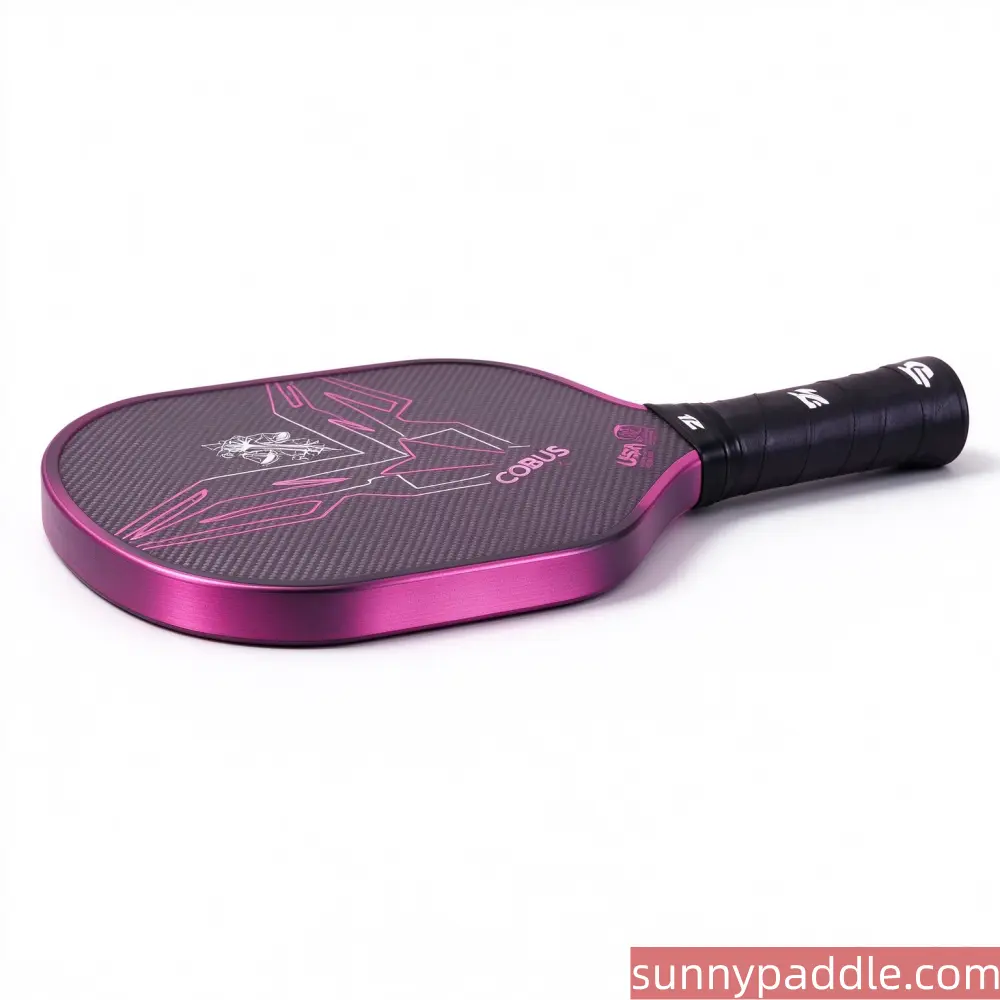
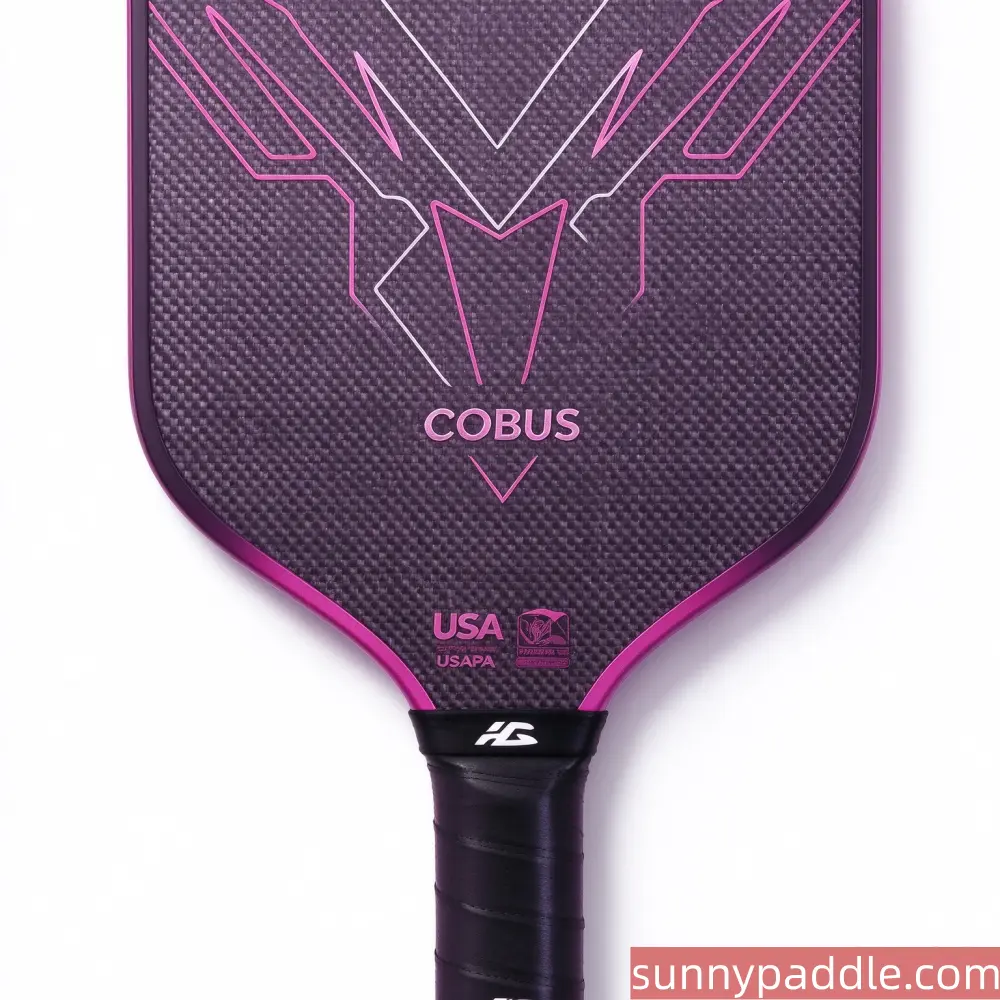
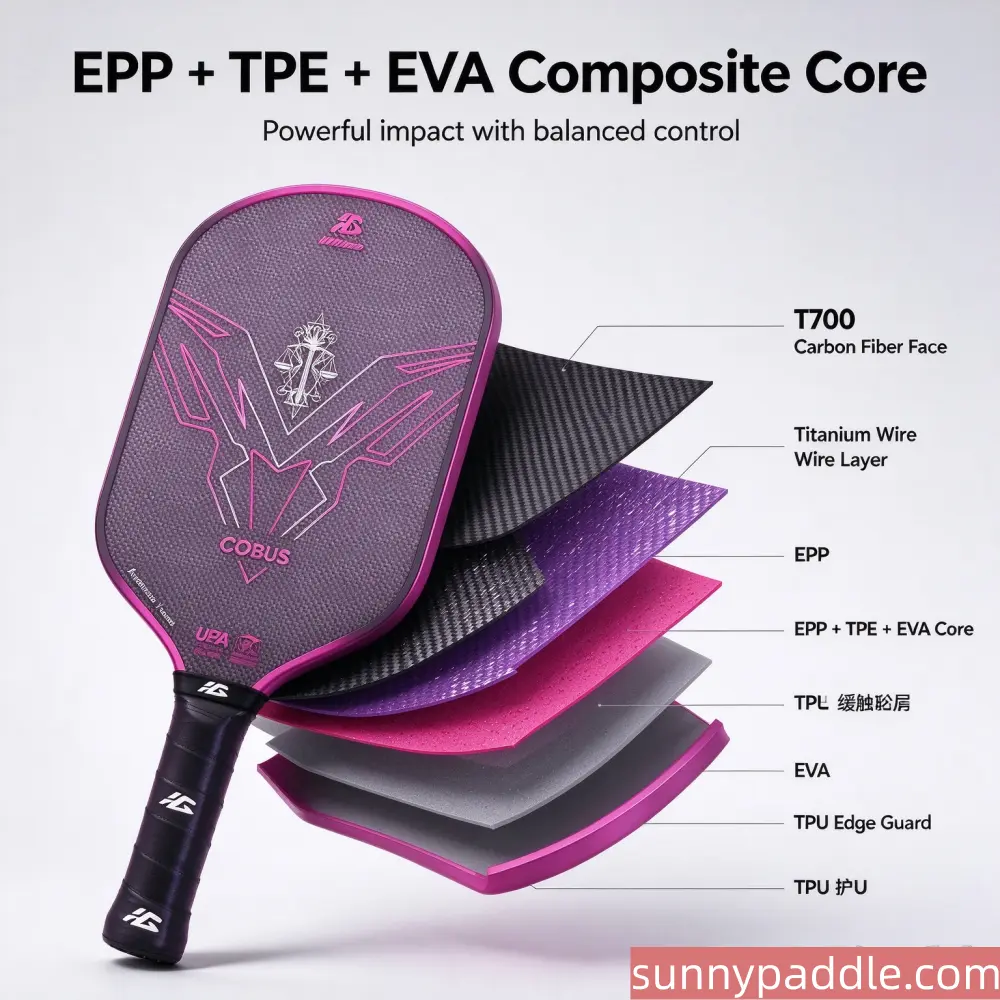
The product is manufactured using a hot-press molding process and features a core composed of EPP, TPE, and EVA. A TPU edge guard provides perimeter protection, while UV printing supports the application of product graphics. These elements form a complete product concept that can be evaluated through sample testing before a commercial launch.
Sunny Paddle approaches this product as both a finished paddle and a potential starting point for further product development. Depending on the intended market and manufacturing feasibility, business customers can discuss visual customization, branding, packaging, and other design requirements with our team.
2. Titanium Wire Surface Design: A Distinctive Material Concept
The titanium wire component is the defining feature of this paddle. Its inclusion creates a different surface material concept from paddles built around a conventional carbon fiber face alone. For brands looking to develop a distinctive product portfolio, this material combination provides a useful starting point for technical evaluation and market differentiation.
Exploring the Role of Titanium Wire
Titanium is known for its combination of relatively low density, strength, and corrosion resistance in appropriate applications. However, the performance of titanium wire within a pickleball paddle depends on factors such as wire specifications, weave or placement, bonding methods, surface treatment, and the interaction between the wire and surrounding composite layers.
For this reason, Sunny Paddle treats the titanium wire surface as an engineered component rather than relying on the material name alone to define performance. Its contribution to the finished paddle should be evaluated through the actual construction, production process, and relevant product testing.
For B2B buyers, this approach makes it possible to assess the product using practical criteria. These may include surface consistency, resistance to wear, bonding integrity, visual appearance, and performance during representative playing conditions. Test results can then support more precise product claims and help brands communicate the product's benefits responsibly.
Creating a More Recognizable Product Identity
In a competitive sporting goods market, a recognizable material concept can help a product stand apart from standard offerings. The combination of titanium wire and carbon fiber gives the SUP-902 a clear technical identity that can be used in product photography, catalog descriptions, distributor presentations, and brand marketing materials.
For private-label businesses, this provides an opportunity to develop a product around a specific design story rather than competing exclusively on price. A distinctive paddle can become part of a broader product range that includes different performance profiles, visual designs, and price segments.
Sunny Paddle can discuss the presentation of this material combination with customers during product development. Any proposed changes to the titanium wire structure, surface appearance, or composite construction would need to be reviewed for manufacturing feasibility and confirmed through samples before mass production.
3. T700 Carbon Fiber for Composite Paddle Construction
T700 carbon fiber is another important element of the SUP-902 design. Carbon fiber is widely used in composite products because of its high strength-to-weight potential and its ability to be incorporated into engineered structures. In sports equipment, the final characteristics depend on the complete composite system, including fiber orientation, resin formulation, laminate structure, thickness, and manufacturing conditions.
For a pickleball paddle, the carbon fiber layer cannot be evaluated independently of the core and other structural components. The interaction between the face, core, bonding system, and perimeter construction contributes to the finished product's overall behavior. This is why sample evaluation and process consistency are important when developing a new composite paddle.
Material Selection with Product Objectives in Mind
Different brands may prioritize different characteristics when developing a paddle. Some may focus on a distinctive surface appearance, while others may emphasize weight targets, structural consistency, playing feel, or a specific price position. Material selection should therefore reflect the intended product objectives rather than relying on a single material specification as a guarantee of performance.
Sunny Paddle can work with business customers to discuss the intended application of a carbon fiber paddle and identify which design factors require attention during sampling. Where alternative surface materials or structural adjustments are proposed, feasibility depends on the material supply, production process, tooling requirements, and the resulting product performance.
Combining Titanium Wire and Carbon Fiber
The defining feature of the SUP-902 is the combination of titanium wire and T700 carbon fiber in one paddle surface design. This concept creates a potential point of differentiation for brands that want to explore alternatives to conventional surface constructions.
However, the benefits of a hybrid surface must be established through the actual finished product. Claims about spin generation, ball control, impact resistance, durability, or power should be supported by appropriate comparative testing rather than inferred from the material names alone.
For brands considering this design, Sunny Paddle recommends evaluating physical samples under realistic playing conditions and documenting the results. This helps buyers make informed decisions about product positioning, customer expectations, and suitability for their intended market.
4. Multi-Material Core Construction
The SUP-902 uses a core construction incorporating EPP, TPE, and EVA. These materials have different physical characteristics, and their contribution to the finished paddle depends on their formulation, density, geometry, placement, and interaction with the surrounding structure.
Rather than treating the core as an isolated specification, product development should consider the relationship between the core and the paddle face. Core construction, surface materials, bonding, thickness, and overall geometry work together to determine the behavior of the finished product.
Understanding EPP, TPE, and EVA
EPP, or expanded polypropylene, is a lightweight cellular material used in a range of applications. TPE, or thermoplastic elastomer, describes a family of materials that combine selected elastic characteristics with thermoplastic processing behavior. EVA, or ethylene-vinyl acetate, is used in many applications where cushioning and flexibility are relevant.
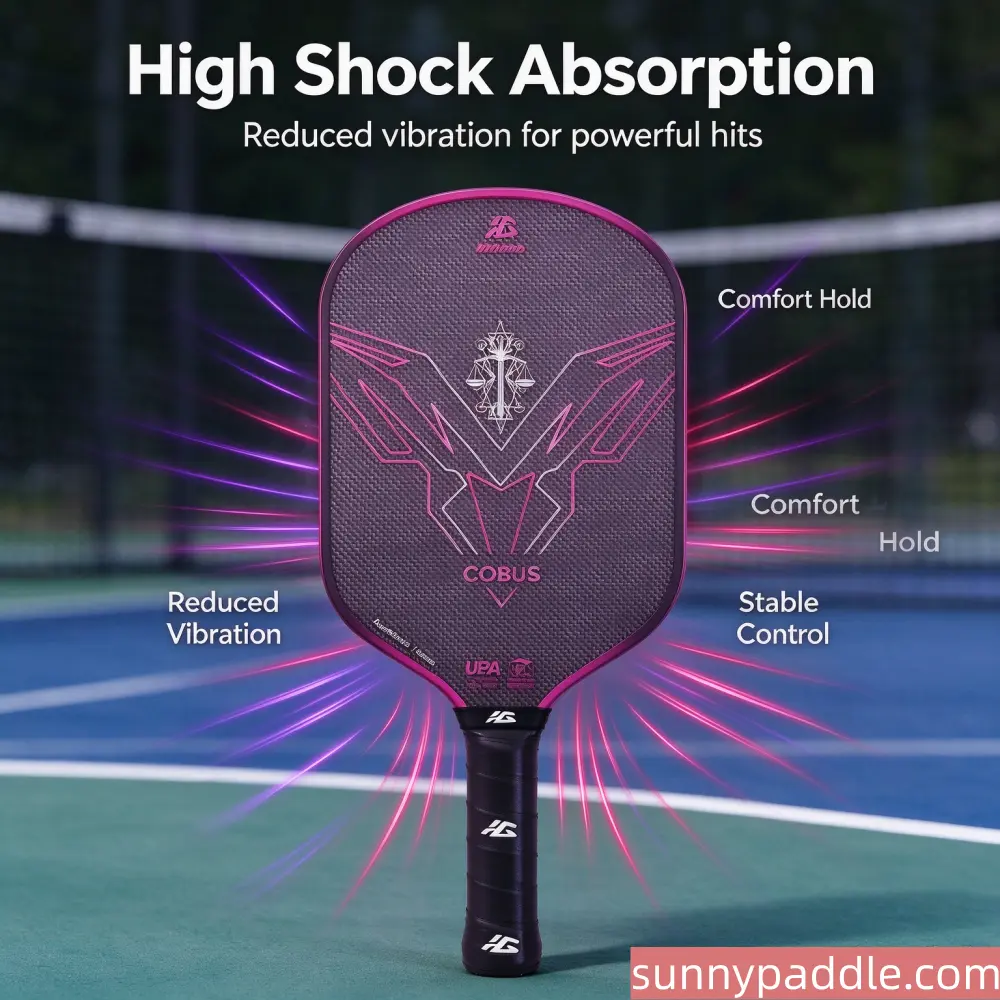
The exact contribution of these materials to the SUP-902 depends on the specific grades and the way they are assembled. Their inclusion should not automatically be interpreted as proof of a particular level of cushioning, power, control, or vibration reduction. These characteristics need to be evaluated in the finished paddle.
Balancing Structure and Product Requirements
For OEM and ODM customers, core design is an important part of the product development discussion. Brands may have different requirements for product weight, perceived stiffness, playing feel, durability, and manufacturing cost. A suitable design needs to balance these requirements while maintaining consistent production quality.
Sunny Paddle can discuss the existing SUP-902 construction with buyers and review whether any requested adjustments are technically feasible. Changes to core materials or internal geometry may affect tooling, assembly, bonding, quality control, and product validation. For this reason, design changes should be assessed through a structured sampling process.
5. Hot-Press Molding and Manufacturing Process
The SUP-902 uses hot-press molding as its stated molding process. In composite paddle production, controlled heat and pressure can be used to consolidate materials and form a product structure. The precise temperature, pressure, cycle time, material preparation, and cooling conditions depend on the production system and the materials involved.
Consistent manufacturing requires more than selecting an appropriate molding method. Materials must be prepared correctly, components must be positioned accurately, and production parameters must be controlled according to the approved process. Variations in these areas can affect appearance, dimensions, bonding, and the consistency of finished products.
Material Preparation and Component Assembly
Before molding, the relevant materials and components must be prepared according to the product specification. Depending on the construction, this may involve cutting, positioning, surface preparation, and the arrangement of the core and face layers. The titanium wire component requires particular attention to its intended placement and compatibility with the surrounding materials.
Accurate preparation helps establish a repeatable starting point for the molding process. For a product using a hybrid surface construction, material alignment and interface quality are important areas to consider during process development and inspection.
Molding, Finishing, and Assembly
Following material preparation, the paddle structure is formed using the applicable hot-press process. Subsequent operations may include trimming, edge finishing, handle assembly, grip installation, surface graphics, and final inspection, depending on the confirmed manufacturing route.
The SUP-902 includes a TPU edge guard and UV-printed graphics. These features contribute to the finished product's appearance and construction. Their fit, finish, alignment, and consistency should be checked against the approved sample and production specification.
For B2B orders, the manufacturing process should be documented clearly enough to support repeatability. Once a sample is approved, relevant product requirements and agreed inspection criteria can be used as the reference for production planning and quality checks.
6. Product Design Details and Practical Evaluation
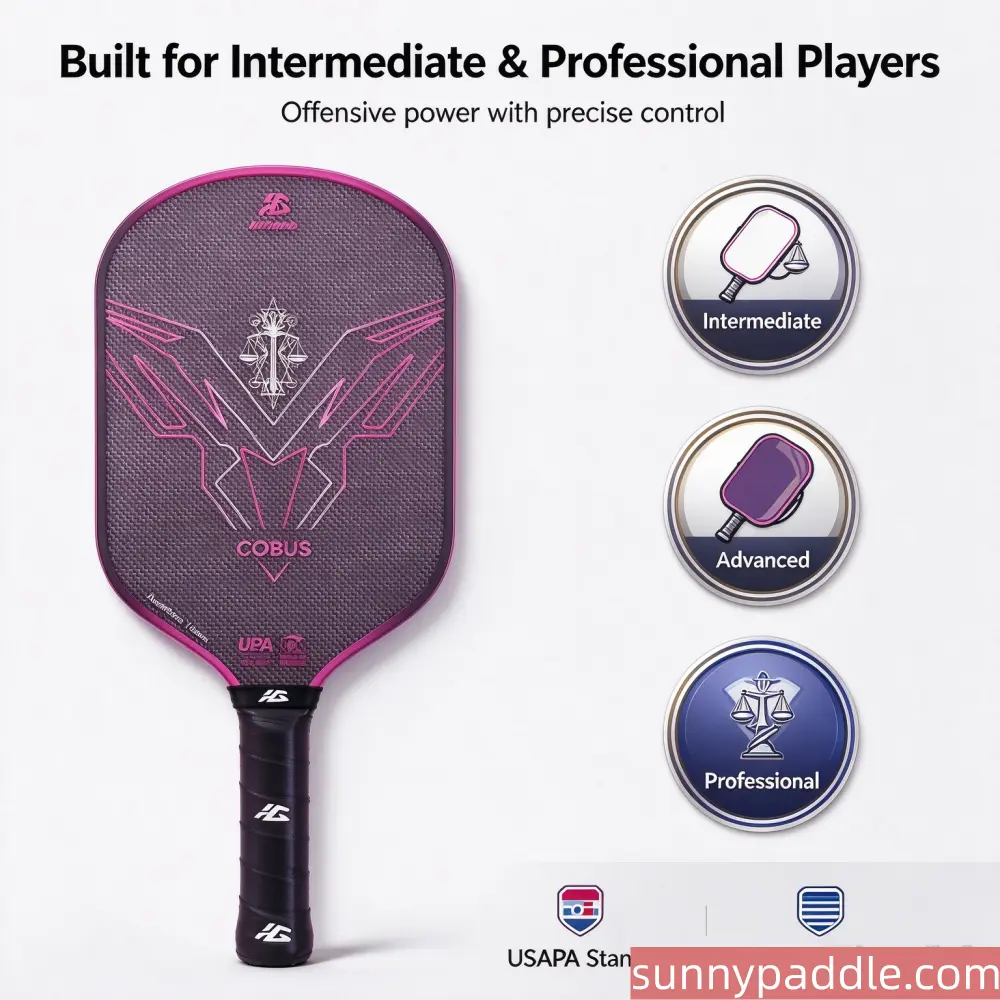
The SUP-902 is developed as an offensive-oriented pickleball paddle and is intended for consideration by beginner, intermediate, and professional player segments. Actual suitability will depend on individual preferences, playing style, the final product construction, and performance evaluation.
Its specified thickness is 16 mm, with a paddle size of 420 à 190 mm and a handle length of 145 mm. The stated weight is approximately 230 g, with a tolerance of ±5 g. These specifications help establish the product's physical format and provide a reference for sample approval and production control.
The product also incorporates a TPU edge guard. Edge protection is relevant to the overall construction because the perimeter can be exposed to contact during handling and play. Actual protection and durability depend on the material, profile, attachment method, and finished assembly.
UV printing is specified for the product graphics. This process can support detailed visual designs, subject to the available printing system, surface compatibility, and confirmed production requirements. For private-label customers, graphics and brand presentation can be discussed as part of the product customization process.
Rather than relying exclusively on written specifications, buyers should assess representative samples for weight consistency, balance, handle comfort, surface finish, construction quality, and playing behavior. This process provides a more reliable basis for making purchasing and product-positioning decisions.
7. Quality Control from Samples to Mass Production
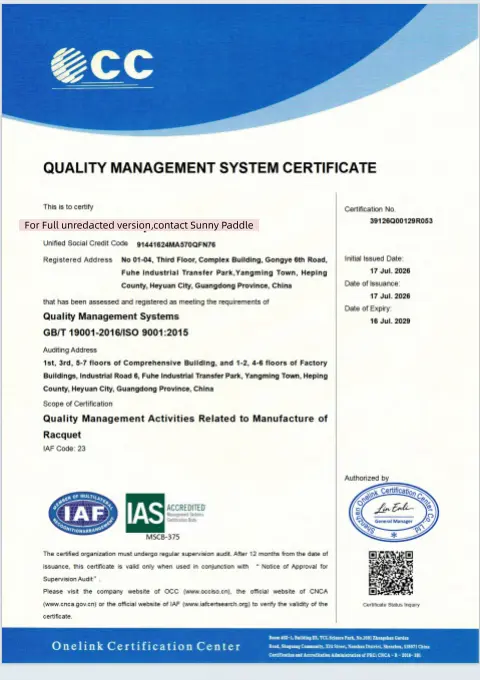
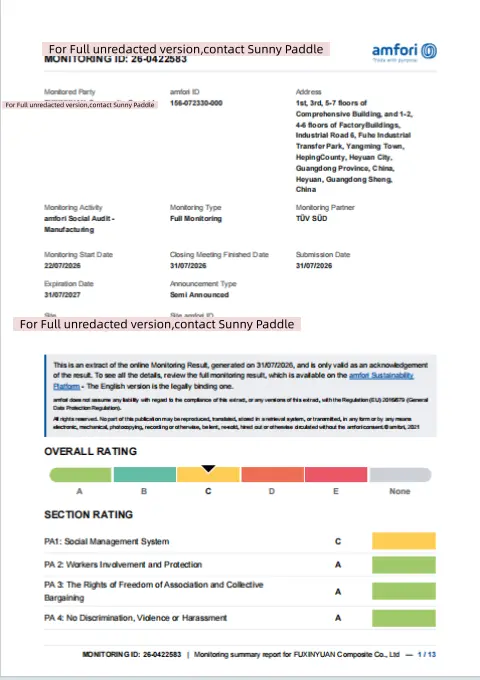
For a sports paddle manufacturer, quality control is central to building long-term relationships with brands and distributors. A successful sample is an important milestone, but buyers also need confidence that subsequent production will remain consistent with the approved product.
Sunny Paddle's manufacturing approach for B2B projects should connect the product specification, sample approval, production planning, and final inspection. The applicable inspection plan depends on the product design, order requirements, and agreed acceptance criteria.
Incoming Material Checks
Material checks can help confirm that the components used in production correspond to the approved specifications. For a titanium wire and carbon fiber paddle, relevant considerations may include material identification, surface condition, dimensions, and consistency between supplied batches.
Where material certificates or supplier documentation are available, they can be reviewed as part of the purchasing and quality documentation process. Buyers requiring specific material verification should communicate those requirements before production begins.
In-Process Quality Checks
During manufacturing, checks may focus on component positioning, molding consistency, surface condition, bonding quality, dimensions, and assembly. The inspection points should reflect the product's construction and any risks identified during sample evaluation.
For products that combine multiple materials, interface quality and assembly consistency deserve particular attention. The exact inspection methods and acceptance limits should be agreed according to the manufacturing process and the evidence available from product validation.
Finished Product Inspection
Finished product inspection may include overall appearance, dimensions, weight, handle assembly, edge guard fit, graphic quality, and other agreed characteristics. Sampling frequency and acceptance criteria should be established according to the order and the customer's quality requirements.
For brands entering a new market, maintaining a clear approved sample and product specification helps reduce ambiguity. Any material, design, or process changes that could affect the product should be reviewed before implementation, particularly when consistency with an approved product is commercially important.
8. Sunny Paddle: Your China Pickleball Paddle Manufacturing Partner
Choosing a manufacturing partner involves more than comparing unit prices. Businesses need to consider product development communication, production planning, customization capability, quality management, and the ability to coordinate changes from the first sample to repeat orders.
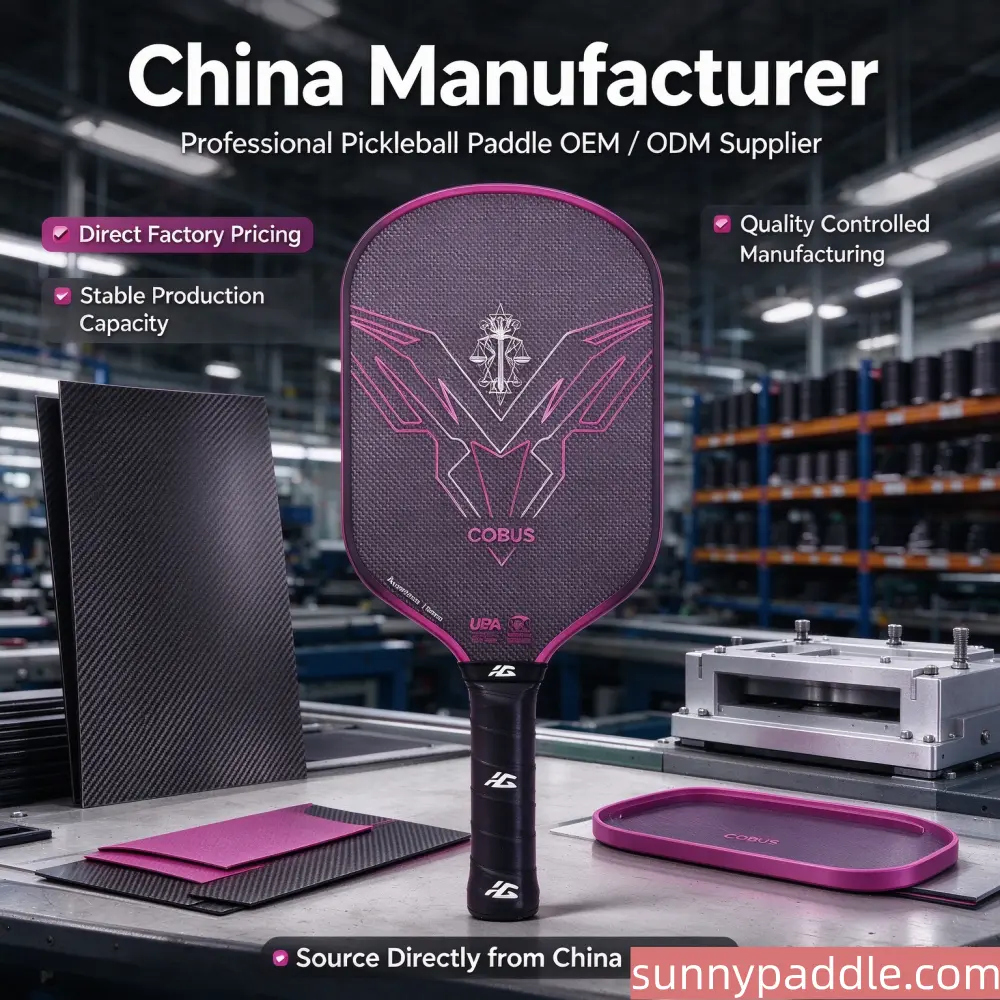
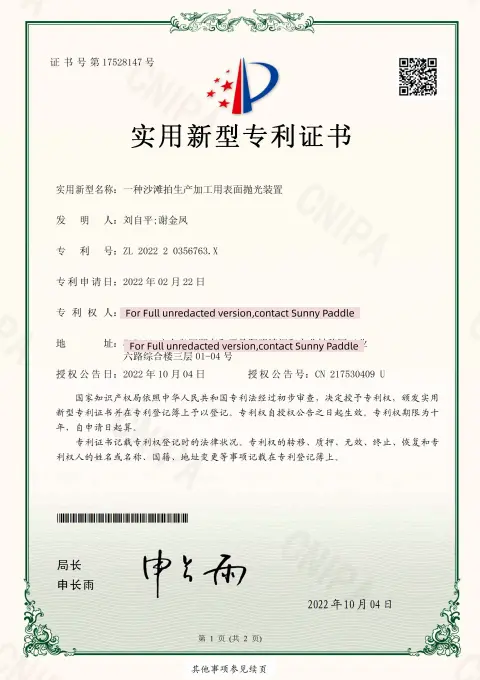
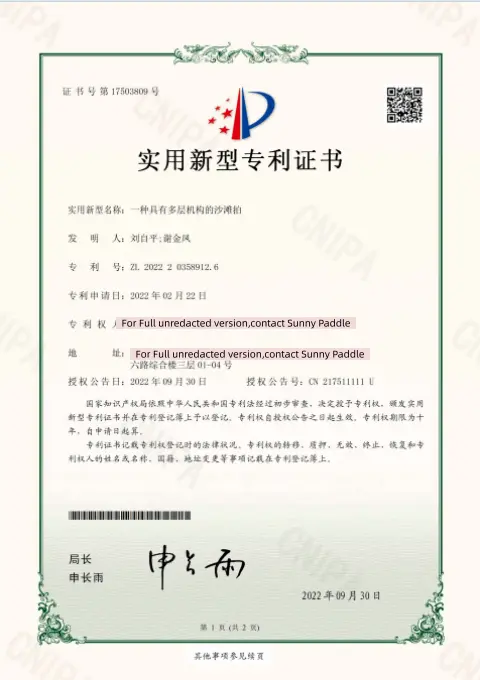
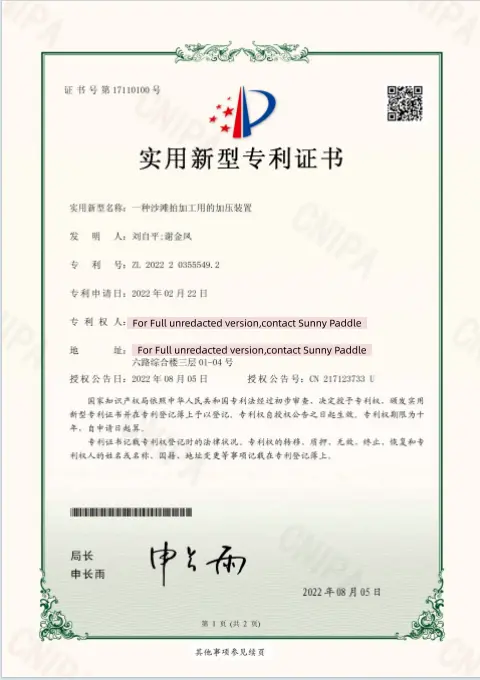
Sunny Paddle focuses on sports paddle manufacturing and OEM/ODM cooperation, with product categories that include pickleball paddles, beach tennis rackets, and padel rackets. This product focus supports conversations with businesses developing sports equipment collections and seeking a manufacturing partner for branded products.
As a China-based manufacturer, Sunny Paddle can discuss product specifications, design requirements, material options, sample development, and manufacturing feasibility with business customers. The scope of each project depends on the requested design, available production processes, order volume, and technical requirements.
Working with a Manufacturer from the Beginning
Direct communication with a manufacturer can help buyers clarify product requirements earlier in the development process. Instead of treating the product as a fixed item, an OEM/ODM project can begin with a discussion of the target customer, expected retail positioning, design preferences, and production objectives.
For the SUP-902, that conversation can start with the existing titanium wire and T700 carbon fiber construction. Buyers can review the current product concept, identify their priorities, and determine whether the existing design is suitable for their market or whether further development should be considered.
Early clarification is particularly useful for projects involving specialized materials. It helps establish which specifications are fixed, which details may be customized, what testing is required, and which changes could affect cost, lead time, or manufacturing feasibility.
Communication and Production Planning
Successful B2B manufacturing depends on clear documentation and communication. Product drawings, artwork files, sample comments, approved specifications, packaging requirements, and inspection criteria can all contribute to a more organized project workflow.
Sunny Paddle encourages buyers to provide their expected order quantity, target market, brand requirements, and preferred development timeline when requesting a quotation. With this information, the team can review the scope of work and discuss the most suitable next steps.
9. OEM Private Label Services for Sports Brands
OEM manufacturing allows businesses to develop branded products using an agreed product design and manufacturing arrangement. For companies that already have a clear market strategy, this can provide a practical way to expand their product range without establishing their own paddle production facilities.
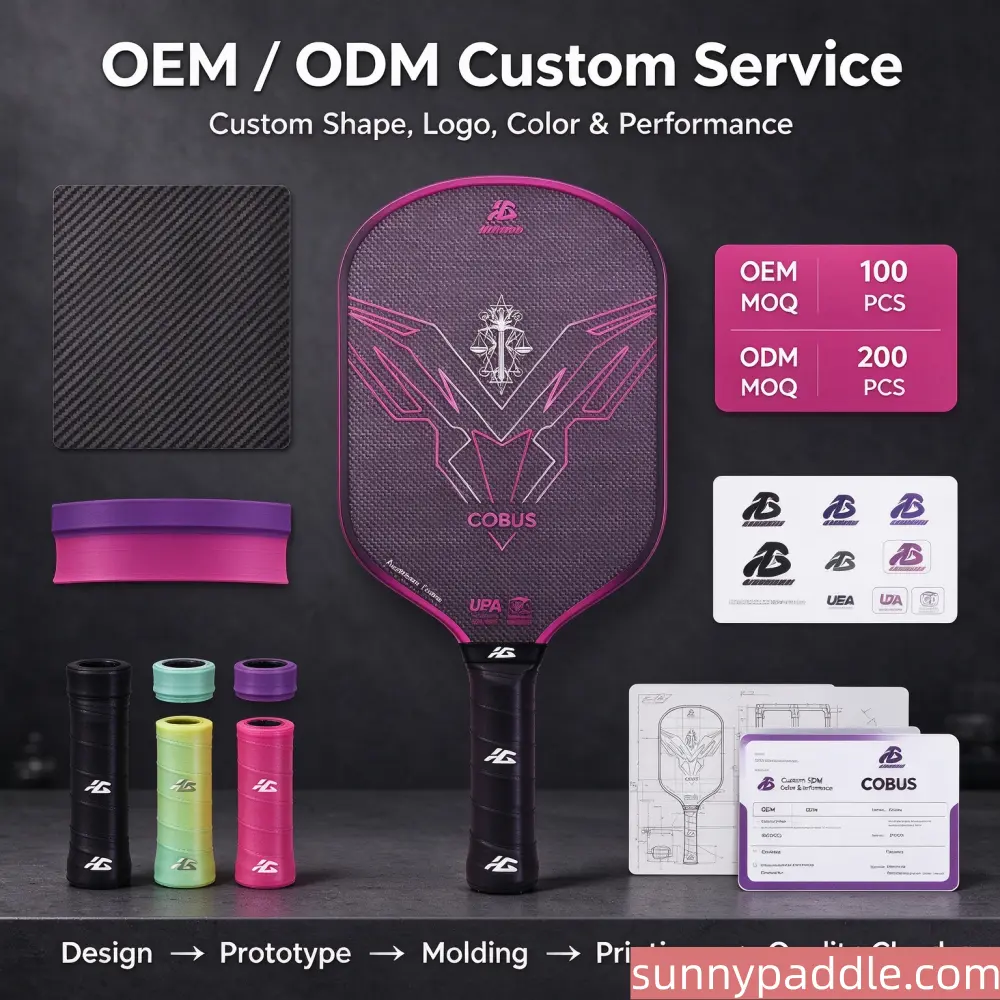
For the SUP-902, private-label discussions can cover the product's branding and presentation, subject to the available manufacturing options. Potential areas include logo application, surface graphics, handle appearance, packaging, and related visual elements.
Logo and Graphic Customization
Brand identity is an important part of product presentation. A coordinated visual design can help a paddle fit into an existing collection or establish the identity of a new product line. Depending on the available process and design requirements, customers can discuss logo placement, graphic artwork, color selection, and UV printing options.
Artwork should be reviewed for production suitability before approval. File quality, placement, scale, surface characteristics, and printing limitations can affect the final result. A physical sample or approved production reference is useful when visual consistency is a priority.
Packaging and Product Presentation
Packaging requirements vary according to the intended sales channel. A distributor supplying sporting goods stores may have different needs from an e-commerce brand or a business selling through specialist pickleball retailers.
Customers can discuss packaging concepts and presentation requirements as part of the quotation process. Availability, minimum order quantities, costs, and production lead times depend on the chosen packaging design and supplier arrangements.
Planning a Private-Label Product Range
Some businesses begin with one differentiated paddle and later expand into a broader collection. A product such as the SUP-902 may be evaluated as one option within a portfolio that includes different materials, specifications, and price positions.
When planning multiple products, it is useful to establish consistent brand guidelines and define the intended role of each model. This can help organize visual identity, purchasing decisions, product documentation, and future development priorities.
10. ODM Product Development and Custom Paddle Projects
ODM cooperation is relevant to businesses that need more than a logo change. These projects may involve developing a product concept, evaluating alternative materials, adjusting design details, or coordinating technical changes to meet a defined market objective.
Sunny Paddle can discuss potential development directions with customers based on their requirements and the technical feasibility of the proposed changes. The starting point may be the existing SUP-902 design, or it may be a new concept that uses selected elements from the current product as a reference.
Development Based on Market Requirements
Before changing a paddle design, buyers should define the commercial objective. This may involve a target price, a desired appearance, a particular weight range, a specific customer segment, or a need for a distinctive surface material.
Once the objective is clear, the development discussion can focus on relevant design factors. Material substitutions, core adjustments, surface changes, and modifications to the handle or edge protection may each introduce different manufacturing considerations. Not every requested change will be compatible with the existing construction or production process.
Sample Evaluation and Design Refinement
Sampling provides an opportunity to assess whether the proposed product meets the agreed requirements. Buyers can evaluate the physical paddle, provide feedback, and identify changes that should be considered before a production decision is made.
For a specialized material combination such as titanium wire and T700 carbon fiber, sample review should include the construction quality as well as the intended playing characteristics. Where performance claims are central to the product's commercial positioning, appropriate testing should be planned before finalizing marketing materials.
From Approved Design to Production
Once the sample and specifications have been approved, the next step is to confirm the production scope. This includes the agreed materials, product dimensions, branding details, packaging, order quantity, inspection requirements, and delivery arrangements.
Changes after sample approval should be documented and assessed before implementation. This helps maintain alignment between the buyer's expectations and the product being manufactured, reducing the risk of confusion during repeat orders.
11. Supporting Distributors, Importers, and Sporting Goods Brands
The global pickleball supply chain includes established sports brands, regional distributors, sporting goods importers, specialist retailers, and private-label businesses. Each customer group may approach product sourcing with different commercial objectives, but all benefit from clear product information and reliable manufacturing coordination.
For Established Pickleball Brands
Established brands may be looking for a differentiated model that complements their existing product range. The SUP-902 offers a material concept that can be assessed for potential inclusion in a collection, subject to product validation and commercial requirements.
Brands can discuss the current construction, review samples, and explore whether private-label graphics or other feasible adjustments align with their product strategy.
For Wholesalers and Distributors
Wholesalers and distributors often need products that can be positioned clearly within their catalogs and presented consistently to downstream customers. A distinctive material concept can provide an additional point of discussion when evaluating a new model.
Before placing a wholesale order, buyers should confirm the product specification, packaging, available customization options, pricing, lead time, and any market-specific compliance requirements. These details should be established directly during the quotation and order-confirmation process.
For Importers and Private-Label Businesses
Importers and private-label businesses may value a manufacturing partner that can coordinate product development and branded production in one workflow. Beginning with a defined product concept and an approved sample can help clarify expectations before larger purchasing commitments are made.
Sunny Paddle can discuss project requirements based on the buyer's intended market, estimated volume, design objectives, and launch schedule. Commercial terms and production feasibility are confirmed individually for each project.
12. Product Validation and Responsible Performance Claims
For a new paddle featuring a specialized surface construction, product validation is important both for purchasing decisions and for accurate marketing. Material descriptions alone cannot establish how a complete paddle will perform during play. Testing should reflect the actual product and the claims a brand intends to make.
For the SUP-902, evaluation can begin with physical inspection and representative play testing. Depending on the product's intended positioning, buyers may also wish to assess weight consistency, surface condition, bonding integrity, resistance to normal use, and other relevant characteristics.
Evaluating the Surface and Composite Structure
Surface evaluation may consider visual uniformity, exposed material condition, and the stability of the interface between the titanium wire and surrounding composite layers. Structural evaluation may consider bonding, edge construction, and signs of damage after representative use.
Any formal test plan should identify the test method, sample configuration, acceptance criteria, and reporting requirements. Results are most useful when they relate directly to the finished product rather than relying only on general information about individual materials.
Confirming Market and Regulatory Requirements
Brands selling into specific markets should confirm the applicable sporting equipment rules, product requirements, and commercial claims before launch. Where a product is described as compliant with a particular association's standards, the relevant requirements and current approval status should be verified for the exact model.
For buyers targeting organized play, Sunny Paddle recommends confirming applicable requirements before placing a commercial order. Any claim of approval, certification, or compliance should be supported by appropriate documentation and should accurately describe the status of the product being offered.
13. Developing a Differentiated Pickleball Paddle Collection
A strong product portfolio usually includes more than one design concept. Brands may serve customers with different playing preferences, budgets, and expectations, making it useful to develop a collection with clear distinctions between models.
The titanium wire and T700 carbon fiber concept may serve as a starting point for a specialized product within a broader collection. Other products may emphasize different materials, construction methods, appearance, or price positions, depending on the manufacturer's capabilities and the brand's market strategy.
For businesses working with Sunny Paddle, portfolio planning can begin by identifying the target customer and the role each model is expected to play. This makes it easier to prioritize development resources and organize product specifications, artwork, and sampling requirements.
For example, a brand may want a distinctive flagship model alongside more conventional paddles for broader distribution. Another business may prefer to focus on a small number of differentiated models for a specialist audience. The appropriate approach depends on customer research, product validation, purchasing plans, and commercial objectives.
Consistent communication between the brand and manufacturer is particularly valuable when developing a series of products. Shared specifications, documented sample approvals, and clearly defined customization requirements can support more organized production planning as the collection expands.
14. Why Work Directly with Sunny Paddle?
Working directly with a manufacturer gives B2B customers an opportunity to discuss product details with the team responsible for evaluating production feasibility. This can be useful when a project involves material combinations, custom artwork, specification adjustments, or a staged product launch.
Sunny Paddle's product focus includes pickleball paddles, beach tennis rackets, and padel rackets, with OEM and ODM services for business customers. This provides a starting point for companies seeking to develop sports paddle products for their own brands or distribution channels.
Manufacturing-Oriented Communication
Our approach to B2B projects centers on clarifying the product requirements and reviewing the practical steps needed to meet them. This includes discussion of materials, construction, dimensions, branding, sampling, quality expectations, and order planning.
For the SUP-902, customers can start by reviewing the existing design and identifying which elements are most relevant to their market. Any requested customization can then be assessed according to available materials, production capability, technical feasibility, and order requirements.
Support for Product Development and Branding
Businesses developing private-label products need to coordinate more than the physical paddle. Branding, artwork, packaging, product descriptions, and documentation all contribute to the final commercial offering.
Sunny Paddle can discuss these elements as part of the wider project scope. The specific services available, associated costs, and required lead times should be confirmed according to the customer's design and purchasing requirements.
A Practical Path from Inquiry to Order
A well-organized sourcing project typically begins with a clear inquiry, followed by a review of the product requirements, sample evaluation, quotation, specification confirmation, and production planning. The exact sequence may vary depending on the complexity of the project and the level of customization required.
By establishing the key requirements early, both parties can make more informed decisions about product suitability, development costs, expected timelines, and the next steps toward a commercial order.
15. Start Your Titanium Wire Pickleball Paddle Project with Sunny Paddle
The SUP-902 Titanium Wire Pickleball Paddle combines titanium wire and T700 carbon fiber in a distinctive surface concept, supported by a multi-material core, hot-press molding, a TPU edge guard, and UV-printed graphics. For brands and distributors looking for a differentiated product to evaluate, it offers a starting point for technical review and commercial planning.
As a China-based pickleball paddle manufacturer offering OEM and ODM services, Sunny Paddle welcomes inquiries from sporting goods brands, wholesalers, importers, and private-label businesses interested in discussing this product and other sports paddle manufacturing projects.
When contacting our team, please share your target market, estimated order quantity, branding requirements, packaging preferences, and expected development timeline. If you have an existing product specification or design reference, providing it at the inquiry stage can help clarify the scope of work.
Our team can then discuss sample availability, customization feasibility, quotation requirements, and the practical steps involved in evaluating the product for your business. Final pricing, minimum order quantities, lead times, and available options depend on the confirmed project requirements.
Whether you are expanding an existing pickleball collection or developing a new private-label range, Sunny Paddle can work with you to explore suitable manufacturing options and plan the next stage of your project.
Contact Sunny Paddle to discuss the Titanium Wire Pickleball Paddle, request product samples, or explore OEM and ODM opportunities for your brand.
```