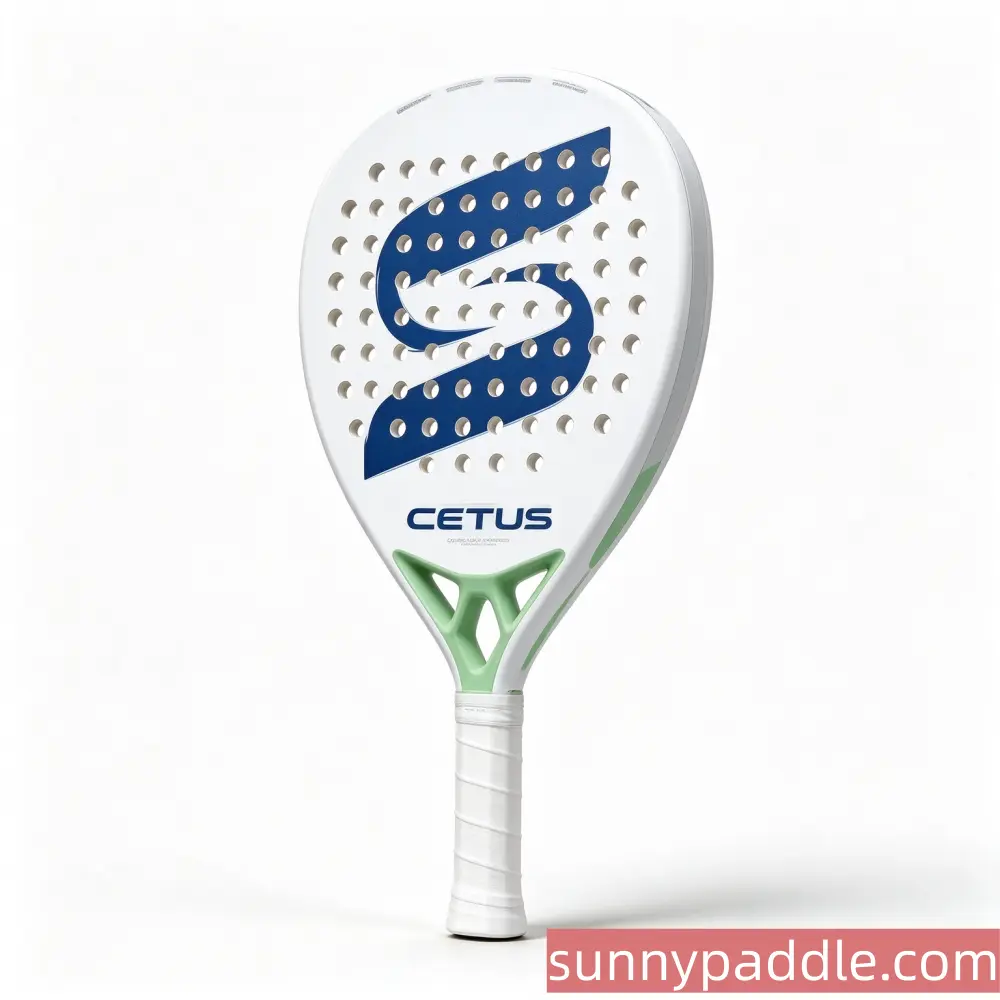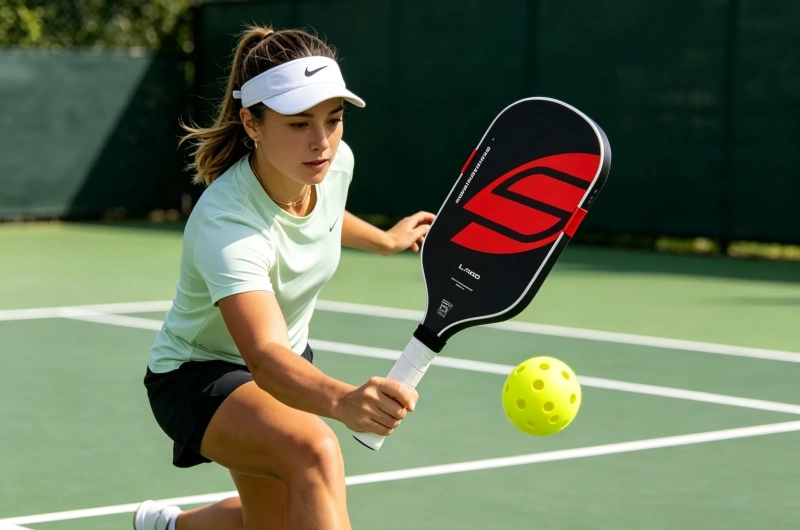
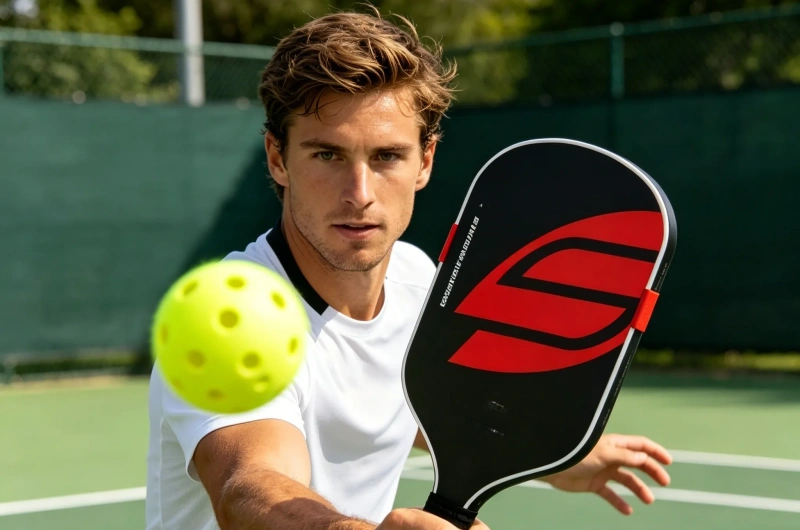
The padel boom has moved from a regional phenomenon to a global industry. More than 35 million players now compete on over 77,000 courts worldwide, and equipment demand continues to climb as new clubs open across Europe, the Middle East, Asia, and the Americas. For brands and retailers looking to enter this market, the fastest route to a competitive product line runs through direct factory partnerships in China. At sunnypaddle.com, we manufacture OEM and ODM teardrop shape padel rackets for clients who need performance engineering, custom branding, and reliable production at scale.
This guide covers why the teardrop shape has become the dominant category in padel retail, what our factory offers in terms of materials and customization, how our OEM and ODM processes work, and what brands should look for when selecting a Teardrop Padel Racket Manufacturer.
Padel rackets come in three fundamental shapes: round, teardrop, and diamond. Each shape determines where the weight sits in the frame, how large the sweet spot is, and what style of play the racket rewards. The teardrop, sometimes called a hybrid or drop shape, sits between the other two and has become the single most popular category in most 2026 product ranges.
A teardrop frame is wider at the top and narrows toward the handle. This geometry shifts the balance point slightly higher than a round racket while keeping the sweet spot broad and forgiving. The result is a racket that generates useful power on volleys and overheads without demanding the pinpoint contact that a diamond frame requires. Off-center hits are penalized less severely than with a power-oriented diamond, which makes the teardrop a practical choice for the majority of players who have not yet reached elite precision.
For brands, this translates into broad market appeal. Teardrop shape padel rackets serve the large population of improving club players—people who play weekly, compete in leagues, and want one racket that handles both attack and defense. This segment buys equipment more frequently than beginners and shows less brand loyalty than professionals, making it the most commercially attractive target for new and growing brands.
Round rackets have a low balance point, a large centered sweet spot, and suit beginners and control-focused players. Teardrop rackets have a mid-high balance point, a large slightly elevated sweet spot, and suit improving club players and all-rounders. Diamond rackets have a high balance point, a small elevated sweet spot, and suit advanced players and power hitters. When a brand builds a product line, the teardrop is typically the volume model that anchors the range, while round and diamond variants serve niche segments at the entry and premium ends.
Our production facility in China specializes in composite padel rackets, with the teardrop shape as our primary platform. We control the full process from material sourcing through final inspection, which gives clients direct visibility into quality and lead times.
Every racket we produce uses an EVA foam core. EVA remains the industry standard because it balances shock absorption, rebound, and durability better than alternative foams. We stock three densities: soft, medium, and hard. Soft EVA produces a control-oriented feel with reduced vibration, which suits improving players and anyone managing arm or elbow discomfort. Medium EVA delivers an all-round response that matches the teardrop shape's versatile positioning. Hard EVA generates faster ball rebound and more aggressive power for advanced competitors and attacking players.
Brands can specify core density per model, which allows a single teardrop frame design to serve multiple price points and player profiles without retooling.
The racket face and frame are built from carbon fiber composites. We offer three weave options. The 3K carbon weave is lighter and tighter, delivering good stiffness and a responsive feel at a moderate cost—well suited to mid-range consumer lines. The 12K carbon weave is denser and stiffer, producing a crisper, more powerful response that works well for premium retail models. The 18K carbon weave is the highest-density option, offering maximum stiffness and a professional-grade feel for flagship products.
We also produce hybrid frames that combine carbon fiber with fiberglass, which lowers cost while maintaining acceptable durability for entry-level and promotional models. This flexibility lets a brand build a full range from a single manufacturing partner.
Consistency matters more than any single specification when a brand scales. Our production line holds weight to within plus or minus 10 grams of the target and controls balance point to within half a centimeter. These tolerances are verified through full in-line weight checks and sampling-based balance validation during every production run.
Standard teardrop specifications include a length of 455 mm, a width of 265 mm, and a thickness of 38 mm. The standard weight is 365 grams with a plus or minus 10 gram tolerance. Custom dimensions, thicknesses, and weight targets between 360 and 380 grams are available on request.
For brands with an established product concept, our OEM service delivers private label manufacturing on the teardrop platform or any existing mold in our catalog. This is the fastest path to market for retailers, sports clubs, and distributors who want their own branded racket without developing new tooling.
OEM clients can customize surface finish in matte or glossy, select from a full color range, apply logos through pad printing or water transfer, brand the grip tape, and design custom packaging. The production workflow runs through mold selection, material specification, surface structure choice, finish selection, graphic application, weight and balance targeting, packaging design, and logistics arrangement.
Sample development for existing molds takes 7 to 14 days. Production lead time after sample approval is typically 30 to 45 days. Minimum order quantities for private label runs generally fall between 300 and 500 units per model, though we negotiate terms for multi-model orders and long-term supply agreements.
For brands that need a differentiated product, our ODM service supports the development of new frame shapes, structural innovations, and proprietary designs. This is the right path for brands entering padel with a unique positioning or for established brands adding a signature model to their range.
Development begins with a design brief that covers the target player profile, desired balance characteristics, weight range, and visual direction. Our engineering team then produces die-cut designs for approval, develops the mold, and iterates through sample rounds until the racket meets performance and aesthetic requirements. First samples are typically available within 2 to 4 weeks depending on design complexity.
Because we control tooling in-house, ODM clients retain full ownership of their mold and design. This protects brand differentiation and allows for long-term product evolution without depending on a third party's catalog.
Quality consistency is the primary concern for any brand sourcing from an overseas Teardrop Padel Racket Manufacturer. Our quality framework targets the specific risk points in composite racket production.
Every batch starts with raw material inspection. Carbon fiber and fiberglass sheets are checked against certificates of conformity, with weave count and fiber orientation verified before layup. EVA foam cores are tested for density against the specified target. Adhesive lots are logged and traced so that any issue can be isolated to a specific production window.
During production, every racket is weighed to a plus or minus 3 gram tolerance, and balance point is measured and recorded. Surface finish is visually inspected for cracks, chips, and delamination. After assembly, logo adhesion and grip tape durability are tested through rub and peel checks on sampled units. Final inspection includes a packaging check to confirm product integrity during shipping.
For clients who need additional assurance, we coordinate third-party pre-shipment inspections through recognized agencies. We also provide material certifications and inspection data on request, so brands can document their quality claims with confidence.
China has become the dominant manufacturing base for padel equipment because of its mature composites industry, precision molding capacity, and skilled labor force. For padel brands specifically, direct factory sourcing offers several concrete advantages over trading companies and intermediaries.
Tooling development is faster and less expensive than European alternatives. Production capacity scales from pilot runs of a few hundred units to full container volumes without changing suppliers. And the concentration of component suppliers—grips, packaging, accessories—enables coordinated sourcing and consolidated shipping, which reduces both cost and logistical complexity.
The trade-off is the need for rigorous supplier vetting. A factory that provides clear material certifications, in-process inspection data, and pre-shipment verification reports substantially reduces the risk that overseas production carries. Direct communication with the production team, rather than through a middleman, also shortens problem-solving cycles when issues arise.
For private label runs on existing molds, the typical minimum is 300 to 500 units per model. We negotiate lower thresholds for multi-model orders and long-term supply agreements. For fully custom ODM development, minimums depend on tooling investment and are discussed case by case.
Yes. Logo application through pad printing or water transfer, custom grip tape branding, and fully custom packaging are all standard OEM services. We provide digital proofs and physical samples before mass production.
Sample development for existing molds takes 7 to 14 days. Mass production after sample approval typically runs 30 to 45 days, depending on order volume and material availability. Custom ODM tooling adds 2 to 4 weeks for first samples.
Yes. We encourage prospective partners to request samples of our teardrop platform for hands-on testing. Evaluating balance, feel, and finish is the most reliable way to confirm that our manufacturing meets your brand's standards before committing to a production order.
Launching or expanding a padel brand requires more than a design file. It requires a manufacturing partner that understands the sport's technical demands, the retail market's quality expectations, and the logistical realities of international supply chains.
Our approach at sunnypaddle.com rests on three principles: transparency in communication, consistency in production, and flexibility in customization. Whether you are a startup ordering your first 300 units or an established retailer seeking a long-term OEM partnership, we provide the engineering support, quality assurance, and production capacity to bring your teardrop shape padel rackets to market.
The teardrop shape occupies the most commercially significant position in padel retail—versatile enough for improving players, powerful enough for competitive club play, and flexible enough for brands to position across multiple price tiers. As a Teardrop Padel Racket Manufacturer with full OEM and ODM capability, we offer a production-ready foundation for your next product line.
To learn more about our capabilities, request samples, or begin a conversation about your padel racket project, visit our website or contact our team directly. We look forward to helping you build a product that performs on court and sells in the market.