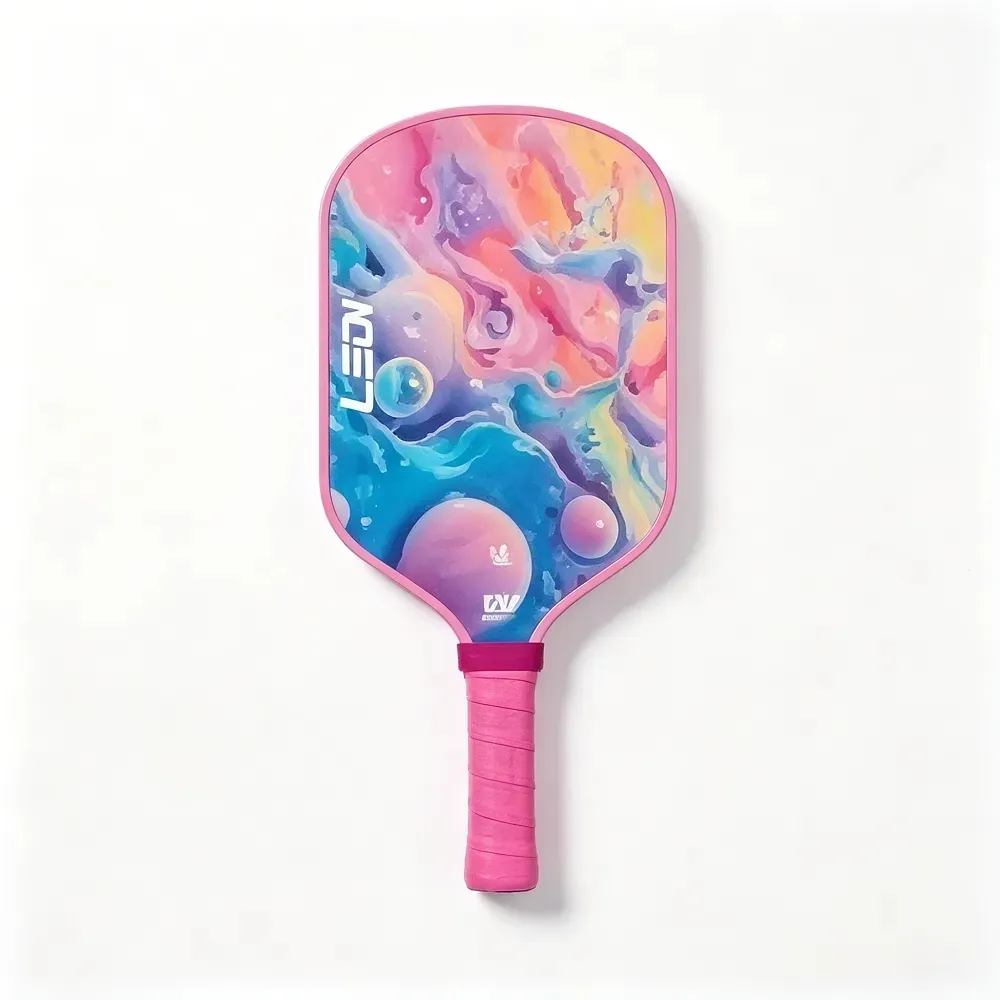
Honeycomb Core vs Nomex Core Pickleball Paddles: Full OEM Sourcing Guide for Private Label Brands
Source:sunnypaddle.com Release on: 2026-09-14-09-14-14
Honeycomb Core vs Nomex Core Pickleball Paddles: Full OEM Sourcing Guide for Private Label Brands
For private label brands, wholesale distributors, and product designers working with a trusted pickleball paddle manufacturer, the internal core material is one of the most critical decisions when developing a new paddle line. Many buyers focus only on paddle face materials like carbon fiber or fiberglass, while ignoring how the core directly shapes power, control, heat resistance, weight consistency and long-term durability. Polypropylene honeycomb core and Nomex aramid honeycomb core are the two dominant core options for high-performance pickleball paddles. Each material brings distinct manufacturing challenges, performance characteristics and price points. As an experienced pickleball paddle manufacturer supporting OEM and private label projects, this complete guide breaks down the differences between honeycomb core and Nomex core paddles, helping you select the correct core for your target market and avoid costly sourcing mistakes.
1. What Are Honeycomb Core and Nomex Core for Pickleball Paddles?
Both PP honeycomb and Nomex core use a cellular honeycomb structure. This hexagonal cell design delivers high stiffness at low weight, which is why nearly all modern pickleball paddles adopt honeycomb structures. However, the base fiber material changes everything in terms of thermal stability, impact resistance and production complexity. A professional pickleball paddle manufacturer will adjust lamination pressure, curing temperature and QC standards based on which core material you choose.
1.1 Polypropylene (PP) Honeycomb Core
PP honeycomb core is the mainstream, widely used core material for most commercial pickleball paddles. It is constructed from thin polypropylene sheets formed into continuous hexagonal cells. This lightweight plastic honeycomb balances decent shock absorption and low material cost. Most mid-range and entry-level private label paddle lines rely on PP honeycomb core because it is easy to source and stable during standard thermoforming or cold press manufacturing.
Key advantages: Low raw material cost, consistent weight batch-to-batch, good vibration dampening, wide availability, easier cutting and machining, lower risk of delamination during normal lamination. PP honeycomb works well for mass OEM orders with tight budget targets.
Limitations: Lower heat resistance. When exposed to sustained high temperatures, such as hot shipping containers or direct sunlight storage, PP honeycomb can soften, deform or lose stiffness. It also has lower impact strength compared to Nomex core. Heavy repeated impacts may lead to internal cell collapse over time, which changes paddle feel and performance.
Best-fit private label markets: Recreational paddles, mid-range consumer lines, bulk wholesale, Amazon retail, beginner and intermediate players.
1.2 Nomex Aramid Honeycomb Core
Nomex core is a honeycomb structure manufactured from aramid paper, coated with phenolic resin. Aramid fiber is the same family of high-performance material used in flame-resistant and ballistic protection products. Nomex honeycomb was originally developed for aerospace components. For pickleball paddles, Nomex core delivers superior heat resistance and structural rigidity. Only specialized pickleball paddle manufacturer facilities handle Nomex core production, as it requires tighter process control during lamination.
Key advantages: Outstanding thermal stability, no softening under high-temperature environments, excellent structural rigidity, high impact resistance, minimal permanent deformation after heavy impacts. Nomex core maintains consistent paddle feel even under extreme heat or heavy use, making it ideal for premium pro-level paddle lines.
Limitations: Much higher material cost. Nomex core is stiffer and less forgiving on vibration transfer, so players may feel more harsh vibration at ball impact. Machining and trimming Nomex core is harder and wears cutting tools faster. OEM production yield is slightly lower, which adds to overall unit cost. It requires strict temperature control during the curing process.
Best-fit private label markets: Pro tour-level paddles, high-end premium brands, competitive player equipment, outdoor hot-climate markets.
2. Side-by-Side Comparison Table: PP Honeycomb Core vs Nomex Core Pickleball Paddles
| Parameter | PP Honeycomb Core | Nomex Aramid Honeycomb Core |
|---|---|---|
| Heat Resistance | Moderate; risk of softening above 60°C | Excellent; maintains rigidity at high temperatures |
| Impact Resistance | Good, prone to cell collapse under extreme repeated hits | Excellent, strong anti-deformation performance |
| Vibration & Feel | Softer feel, good vibration dampening | Stiff, crisp hit feedback, higher vibration transfer |
| Weight Consistency (OEM Batch) | Very consistent | Good, tighter QC required |
| Relative Material Cost | Low to medium | High |
| Machining & Production Difficulty | Easy, high production yield | Harder, tool wear & strict temperature control |
| Long Term Stability in Hot Environments | Fair | Excellent |
| Ideal Target Retail Segment | Recreational & mid-market | Premium & professional competitive |
3. Critical OEM & Private Label Considerations to Discuss With Your Pickleball Paddle Manufacturer
When planning your private label project, core material selection affects far more than paddle feel. It impacts your production timeline, unit pricing, QC standards, storage requirements and customer complaint rates. Before confirming your order, cover these key topics with your pickleball paddle manufacturer.
3.1 Temperature Exposure & Storage Risks
Many overseas shipments pass through hot shipping containers. If your paddles use PP honeycomb core and are stored in high heat for weeks, core softening may cause permanent warping or deadened paddle response. For brands selling to regions with intense summer heat, Nomex core eliminates this risk. Discuss your target sales regions with your manufacturer to pick the right core material.
3.2 Weight Tolerance & Product Line Positioning
PP honeycomb is easier to calibrate for tight weight tolerance across mass production. If you are building a large mid-range line with strict weight grouping, PP honeycomb is easier for your pickleball paddle manufacturer to produce. Nomex core can still hit tight weight specs, but it requires extra sorting and inspection steps, which increases cost and lead time.
3.3 Lamination & Thermoforming Compatibility
Nomex core cannot tolerate uncontrolled high temperature during molding. A manufacturer without experience working with Nomex may overheat the core and cause hidden internal damage. If you plan to order thermoformed paddles with Nomex core, always verify that your factory has proven Nomex production experience and request pre-production samples for long-term aging testing.
3.4 MOQ & Sample Validation
PP honeycomb core samples and small MOQ runs are more affordable. Nomex core samples cost more, and tooling/setup costs are higher. For new private label brands, a common approach is to start with PP honeycomb prototypes for market testing, then develop a premium Nomex core SKU once demand is proven.
4. Common Sourcing Pitfalls With Honeycomb & Nomex Core Pickleball Paddles
- Suppliers label PP honeycomb paddles as "premium core" without clarifying heat limitations, leading to post-sale complaints when paddles deform in hot storage.
- False Nomex labeling: some manufacturers use modified PP honeycomb and market it as Nomex core to get higher prices. Always request material certificates and independent thermal test reports.
- Insufficient aging testing: samples may look perfect, but long-term heat cycling reveals hidden core deformation. Ask your pickleball paddle manufacturer to run accelerated aging tests.
- Ignoring vibration feedback: Nomex core’s stiff feel can lead to customer complaints about hand shock if the paddle face layup is not adjusted to compensate.
- Overlooking cutting quality: poor trimming on honeycomb cores creates micro cracks along paddle edges, which grow into delamination after repeated ball strikes.
5. How To Choose Between Honeycomb Core and Nomex Core For Your Private Label Line
Use this simple decision framework when working with your pickleball paddle manufacturer:
If your brand targets recreational and intermediate players, your budget is moderate, and most sales are in temperate climates → PP honeycomb core is the practical choice.
If you are building a high-end pro paddle line, selling to competitive players, or shipping to regions with extreme heat, and your retail price point supports higher manufacturing cost → Nomex core is the better investment.
Many successful private label brands launch dual SKUs: one PP honeycomb core model for volume sales and one Nomex core premium model to capture high-end buyers.
6. Final Thoughts
PP honeycomb core and Nomex core each occupy distinct positions in the pickleball paddle market. There is no universal “better” core material; the right option depends on your brand positioning, target customer, retail price range and operating environment. While the paddle face receives most buyer attention, the internal honeycomb core defines the core playing characteristics and long-term reliability of your finished product. Partnering with an experienced pickleball paddle manufacturer is essential to translate your private label design into consistent, high-quality paddles.
Contact SunnyPaddle today, your trusted China pickleball paddle manufacturer. Request PP honeycomb and Nomex core paddle samples for performance and aging validation. Our engineering team can review your product specifications and recommend the most suitable core material for your private label paddle series.






Share your thoughts
All fields marked with an asterisk() are required