Top 7 Things Brands Must Evaluate Before Sourcing Pickleball Paddles from China
The global pickleball market is experiencing explosive growth, with players demanding higher performance, greater spin, and increased durability. For sports brands, Amazon sellers, and equipment distributors looking to capitalize on this boom, sourcing pickleball paddles from China offers an unmatched advantage in manufacturing scale, material access, and cost efficiency.
However, navigating the supplier landscape in China is not without risks. Choosing the wrong manufacturer can lead to delayed product launches, high defect rates, delamination issues, or even rejected USA Pickleball (USAP) certification submissions.
To help your brand build a resilient and high-performing supply chain, here are the 7 critical factors you must evaluate before partnering with a Chinese paddle manufacturer.
1. Factory vs. Trading Company: Verify the Real Manufacturer
One of the most common pitfalls for international buyers is unknowingly dealing with middleman trading companies posing as direct manufacturers. While trading companies can source products, they often lack direct quality control over the production line, inflate costs, and struggle with technical customizations.
- How to Evaluate: Always request a live video audit (via WeChat, Zoom, or WhatsApp) to inspect the active workshop, CNC cutting machines, and pressing stations. Ask for factory business licenses and third-party audit reports (such as ISO 9001 or BSCI). Direct factories will always welcome live virtual tours and third-party inspections.
2. R&D and Technology Capabilities: Thermoforming & Advanced Materials
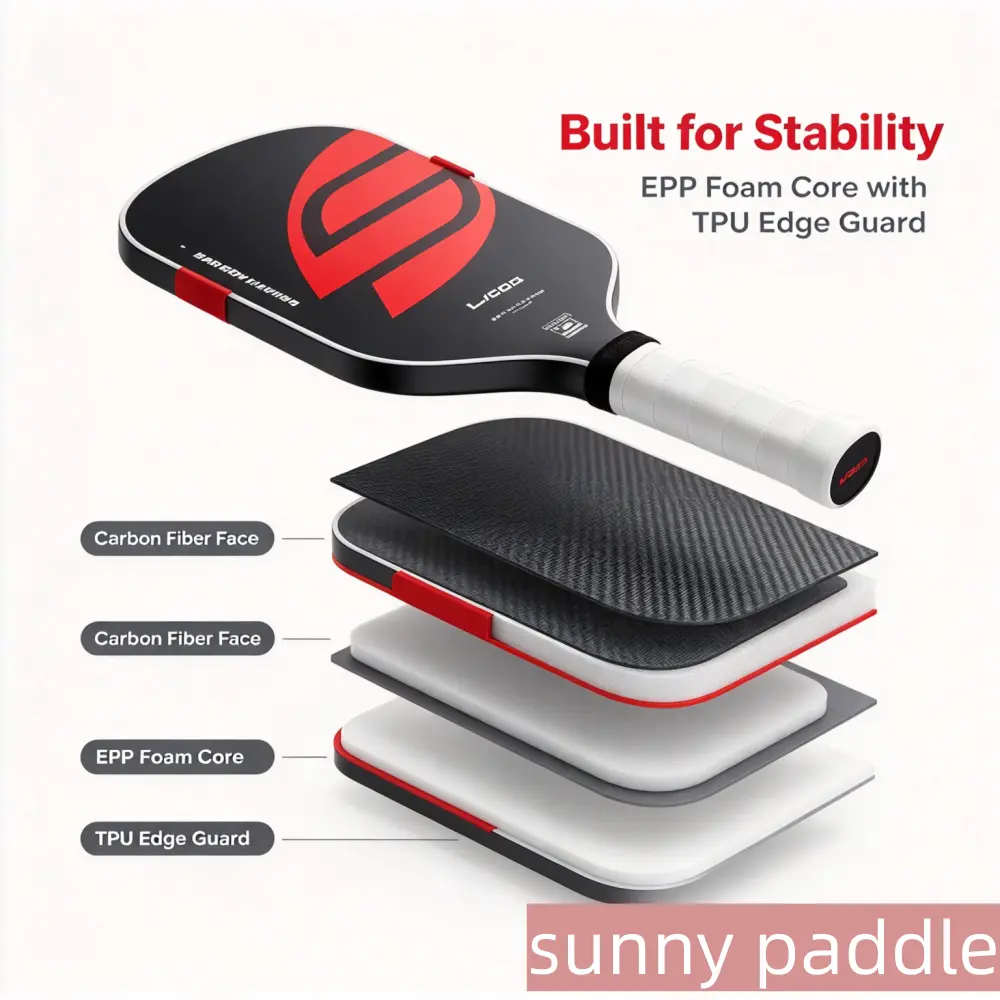
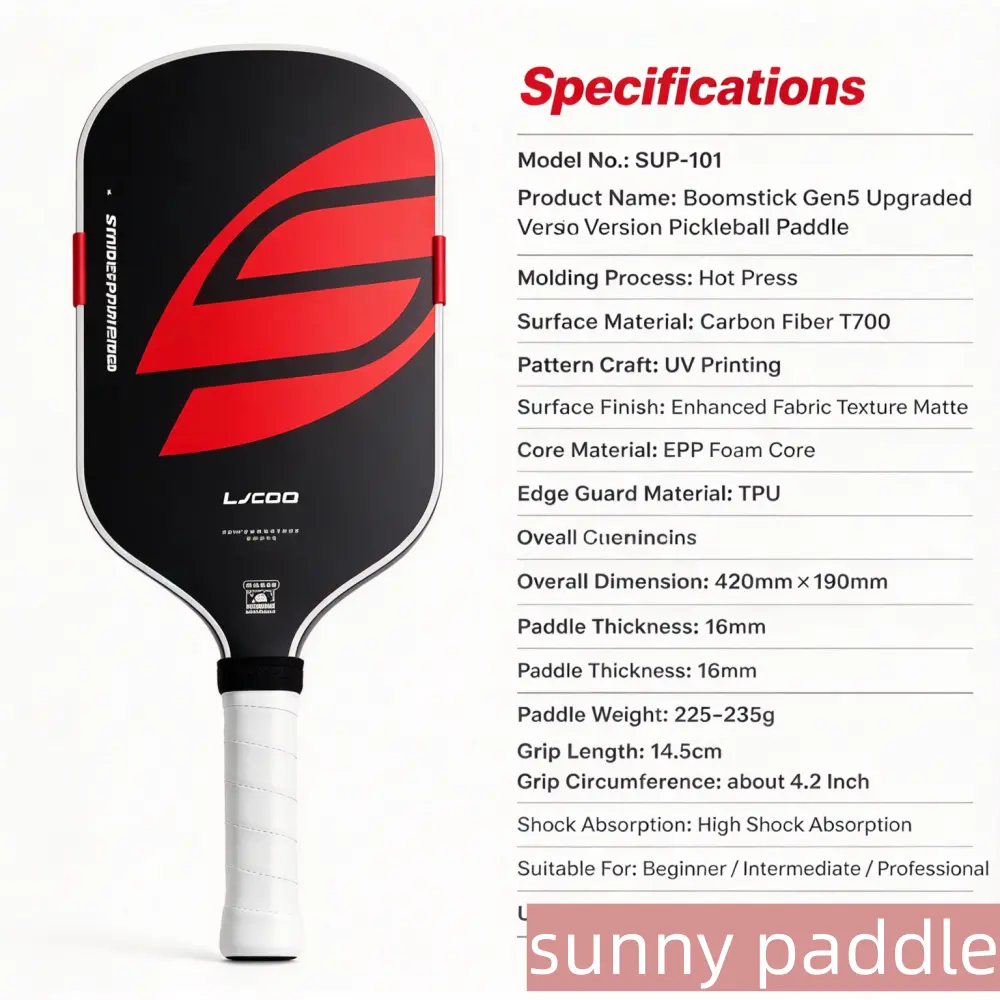
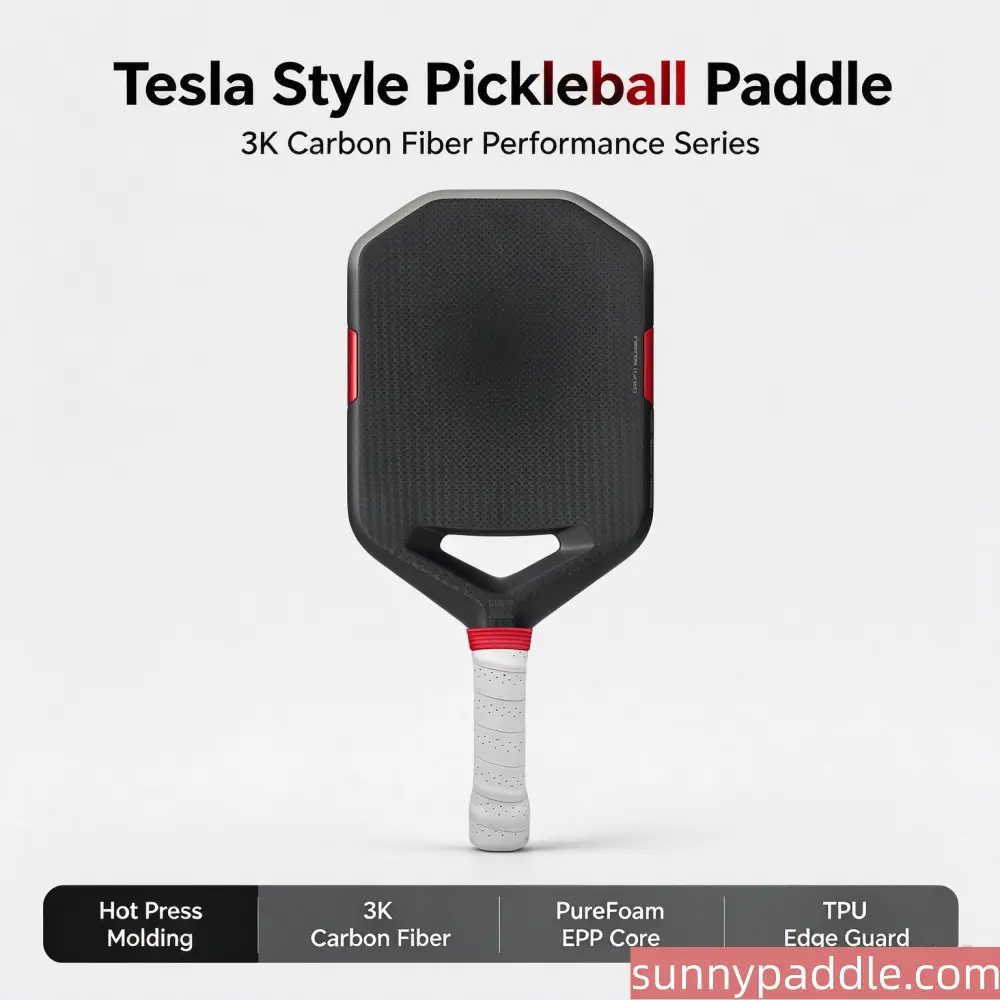
The pickleball industry moves fast. Traditional cold-pressed paddles are rapidly giving way to Gen 2 and Gen 3 thermoformed (heat-pressed) paddles, foam-injected perimeters, and advanced surface materials like T700 raw carbon fiber, Kevlar hybrids, and titanium weaves.
- How to Evaluate: Ask potential suppliers if they possess in-house thermoforming molding capabilities, resin formulation expertise, and precision CNC trimming. A truly capable manufacturer should be able to guide you on balancing power, control, and vibration damping based on composite layups.
3. Quality Control (QC) Protocols: Testing Beyond the Surface
A premium paddle isnât defined just by how it looks out of the box, but by how it holds up after thousands of high-velocity impacts. Issues like core-crushing, dead spots, and surface delamination (separation of face and core) can ruin a brandâs reputation overnight.
- How to Evaluate: Inspect the supplierâs Quality Control (QC) documentation. Ensure they enforce strict testing across three stages:
- IQC (Incoming Quality Control): Raw material inspection for carbon fiber consistency and PP honeycomb core density.
- IPQC (In-Process Quality Control): Weight tolerance checks (maintaining ±3g) and resin curing monitors.
- OQC (Outgoing Quality Control): Delamination pull-tests, flex/fatigue tests, and ball-impact durability checks.
4. USAP Approval Support: Ensuring Tournament Compliance
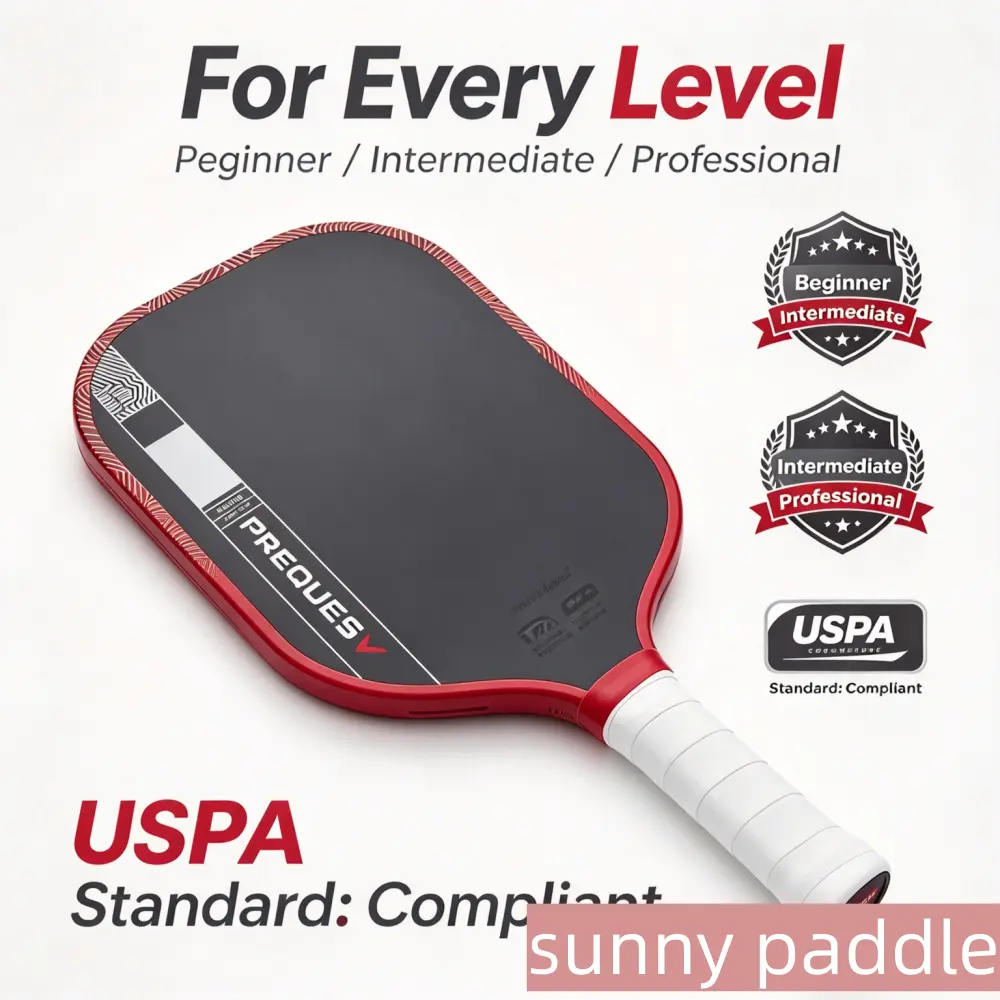
If you plan to sell paddles in North America or target competitive players, getting USA Pickleball (USAP) Approved is mandatory. USAP enforces strict standards regarding surface roughness (grit/spin), deflection (pop/bounce), dimensions, and edge guards.
- How to Evaluate: Ask the factory about their track record with USAP testing. Do they have in-house testing equipment (such as surface roughness gauges and deflection testers) to pre-screen prototypes before submitting them to USAP labs? A reliable supplier will assist you through the submission process to ensure a high first-time pass rate.
5. IP Protection & NNN Agreements: Safeguarding Your Custom Molds
If you are investing in custom shapes, proprietary throat designs, or unique ergonomic handles, IP theft is a major concern. You must ensure your manufacturer will not sell your custom molds or designs to your competitors.
- How to Evaluate: Prior to sharing 3D CAD files or tech packs, require the factory to sign an enforceable NNN Agreement (Non-disclosure, Non-use, Non-circumvention) alongside a standard NDA. Ensure the contract explicitly states that all custom tooling belongs exclusively to your brand.
6. MOQ Flexibility & Lead Times: Balancing Agility and Scale
Whether you are a startup launching a 200-piece trial order or an established brand scaling to 10,000 units per month, supplier flexibility is vital for inventory management.
- How to Evaluate: Clarify the Minimum Order Quantity (MOQ) for both private-label (public mold with custom graphics) and fully custom ODM projects. Additionally, confirm sample development lead times (typically 7â14 days) and mass production timelines (typically 25â35 days) to avoid seasonal stockouts.
7. Full-Set Customization & One-Stop Packaging
Managing multiple vendors for paddles, edge guards, grip tapes, neoprene covers, and retail color packaging creates supply chain friction and increases shipping costs.
- How to Evaluate: Choose a partner capable of delivering a complete turnkey solution. Working with a supplier who handles everythingâfrom custom end-cap branding and grip wrapping to barcoding and FBA-compliant master carton packagingâstreamlines your logistics and speeds up time-to-market.
Why We Recommend Sunny Paddle as Your Manufacturing Partner
If you are looking for a trusted, high-performance manufacturing partner in China that checks every single box above, Sunny Paddle is a top-tier choice for your OEM/ODM needs.
As a specialized, direct-factory manufacturer of premium racket sports equipmentâincluding pickleball paddles, padel rackets, and beach tennis racketsâSunny Paddle has built a reputation for engineering excellence and supply chain transparency.
What Makes Sunny Paddle the Right Partner for Your Brand?
- Direct Factory Manufacturing & Full Transparency: Sunny Paddle is a genuine manufacturing facility equipped with advanced thermoforming presses, automated CNC cutters, and in-house dust-free painting booths. They warmly welcome live video factory audits and third-party inspections.
- Cutting-Edge R&D: Specializing in next-generation thermoformed paddles, foam-injected perimeter technology, and high-friction T700 Raw Carbon & Kevlar composite faces, Sunny Paddle keeps your product line at the forefront of market trends.
- Rigorous QC & USAP Compliance Support: With a dedicated in-house lab testing for spin rate (RPM), deflection, and bond strength, Sunny Paddle pre-tests all prototypes to ensure smooth USAP certification and an industry-leading low defect rate.
- IP Security & Brand Protection: Sunny Paddle respects client intellectual property, offering strict NNN agreements and exclusive mold protection for custom ODM clients.
- Flexible OEM/ODM & Turnkey Packaging: From low-MOQ trial orders for growing brands to full-scale mass production with custom edge guards, grip wraps, neoprene sleeves, and retail boxes, Sunny Paddle provides a seamless, one-stop sourcing experience.
Ready to Build Your Next Best-Selling Pickleball Paddle?
Sourcing from China doesn't have to be complicated. Partnering with an experienced, quality-focused manufacturer like Sunny Paddle ensures your brand delivers the durability, power, and precision that modern players demand.
Contact the Sunny Paddle team today to request a custom sample pack, get an OEM price quote, or receive our comprehensive Supplier Evaluation Checklist to jumpstart your production!