Custom Round Shape Padel Rackets – OEM/ODM Padel Racket Factory
If you are sourcing Round Shape Padel Rackets for an overseas brand, club program or distribution portfolio, the conversation rarely fails on price alone. It usually fails somewhere between the first inquiry and the first bulk shipment: a spec sheet that was never precise enough, a sample that felt different from the production run, or a factory that treated “round shape” as a single checkbox instead of a performance platform. This article is written from the factory side of that relationship. It explains what experienced buyers actually need to verify before committing to a Round Shape Padel Rackets Manufacturer, and how a source factory in China can make that verification straightforward instead of adversarial.
Why round shape keeps appearing in serious OEM briefs
Round padel rackets are not a beginner-only category in the way some buyers assume. Their defining geometry—the widest point in the middle of the face and a lower, centered balance—places the sweet spot directly in the middle of the hitting surface. That produces a frame that feels easier to swing late, more forgiving on off-centre contact, and notably more predictable in defensive and net-blocking situations. For a club rental fleet, a coaching program, or a brand building an entry-to-intermediate line, those traits translate into lower return rates and fewer player complaints.
The trade-off is equally clear: a round frame will not generate the flat, explosive smash that a head-heavy diamond frame produces. That is why a credible Round Shape Padel Rackets program is not about claiming the round shape is “best.” It is about matching the shape to the player segment the buyer is actually serving, and then controlling the variables that determine whether the final product delivers on that promise consistently.
What overseas buyers are really asking when they say “I need a round racket”
In a mature sourcing relationship, “round shape” is only the entry point. The questions that determine whether a project succeeds are quantitative, and they are the same questions a responsible factory should be prepared to answer before a purchase order exists.
The specifications that separate a stable product from an inconsistent one
A round racket from Supplier A and a round racket from Supplier B can share the same silhouette and behave nothing alike. The differences live in the face material, the core hardness, the weight tolerance and the balance measurement method. For B2B procurement, the practical way to compare suppliers is to insist on measurable parameters rather than marketing language. The table below reflects the specification categories that should be clarified at the quotation stage, not after the sample has been approved.
| Specification area | What a buyer should require | Why it matters for a round-shape program |
|---|---|---|
| Face material | Exact fibre type and weave: fibreglass, 3K carbon, 12K carbon, 18K carbon or a hybrid layup | Determines stiffness, feel and the price tier the round frame can credibly occupy |
| EVA core | Shore A hardness range, not subjective terms such as “soft” or “medium” | Soft (~30–40 Shore A) favours comfort; medium (~40–55) is a balanced club spec; hard (~55–70) adds rebound |
| Weight | Target grams with a per-unit tolerance, for example 355 g ±5 g | Round frames are usually specified in the 345–365 g band for control and all-round use; inconsistency is the most common source of buyer complaints |
| Balance | Balance point measured in millimetres from the butt cap, with a tolerance band | The low, centred balance is the defining mechanical trait of a round racket; it must be measured, not assumed |
| Mould and dimensions | Mould drawing, critical-dimension tolerances and CMM data for sample parts | Round frames have no string bed to mask geometric inconsistency; hole pattern and rim uniformity affect feel directly |
| Surface and packaging | UV print or pad print method, Pantone matching, barcode and retail packaging specification | Artwork and packing assumptions are a frequent cause of launch delays when they are not settled before bulk |
When a Round Shape Padel Rackets Manufacturer can put these categories into a written quotation or RFQ response, the buyer no longer has to rely on photographs and trust alone. That is the first real step in a customer-relationship-oriented sourcing process.
OEM and ODM are not interchangeable in a round-racket project
Overseas buyers often use OEM and ODM as if they describe the same service at different price points. In practice, they describe different stages of product ownership, and the choice affects everything from tooling cost to launch speed.
OEM: the buyer already owns the design direction
In an OEM arrangement, the buyer arrives with a defined brief: a round-shape geometry, a face and core combination, a weight and balance target, artwork and packaging requirements. The factory’s job is to manufacture to that brief with repeatable tolerances and documented batch control. This is the right route for a brand that has already validated a product concept and needs a manufacturing partner capable of reproducing it consistently.
For OEM projects, the MOQ is generally lower because the core construction and tooling are already settled. At Sunny Paddle, OEM orders for Round Shape Padel Rackets start at 100 pieces per model. That threshold exists for buyers who need a focused production run—whether for a club member kit, a tournament edition or a first market test—without committing to the volume that a full custom tooling project would require.
ODM: the factory contributes the product platform
ODM sits closer to development. The buyer may have a brand, a target market and a price band, but not a frozen technical definition. The factory contributes an existing round-shape mould platform, proposes face and core combinations, and adapts graphics, branding and packaging around that base. ODM is appropriate when speed to market matters and the buyer wants to avoid the tooling cost and iteration time of a fully new shape.
Because ODM involves factory-owned tooling and a more involved development loop, the MOQ is set at 200 pieces per model. That figure is not a barrier; it reflects the economic reality of running a dedicated production configuration on an existing platform. Buyers who compare a 100-piece OEM quotation against a 200-piece ODM quotation are often comparing two different scopes of work, not two prices for the same job.
| Decision factor | OEM | ODM |
|---|---|---|
| Design ownership | Buyer-supplied brief and specs | Factory platform adapted to buyer branding |
| Round-shape MOQ | 100 pcs per model | 200 pcs per model |
| Best fit | Validated concept, repeat production, club or event runs | Brand launch, faster sampling, existing platform leverage |
| Tooling implication | Buyer-specific construction; tooling typically settled or amortised | Factory-owned mould platform; development cost shared across the project |
What a source factory can prove before the first bulk order
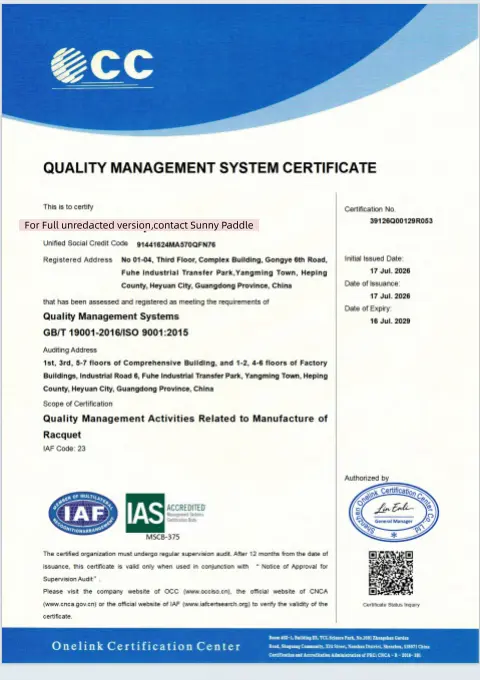
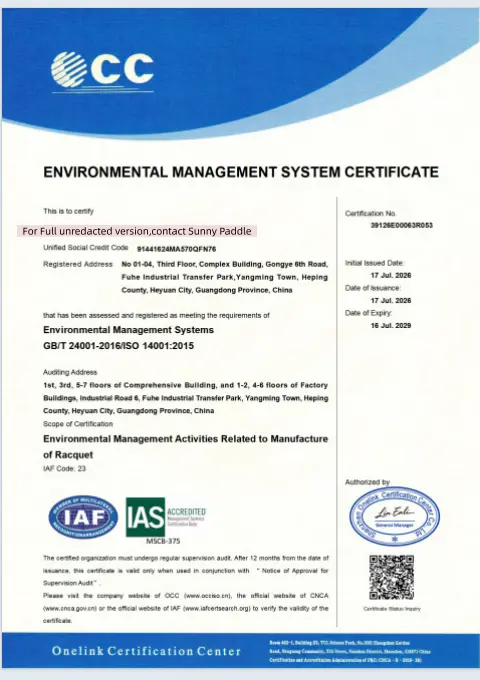
The word “factory” is used loosely in cross-border sourcing. For a buyer evaluating a Round Shape Padel Rackets Manufacturer, the meaningful distinction is not whether the company has a workshop, but whether it controls the processes that determine consistency. In a round-frame padel racket, the critical variables are concentrated in a small number of operations: core pressing, carbon layup, moulding and finishing. When these are controlled in-house, the factory can trace a batch back to its material inputs and process parameters. When they are outsourced, tolerance stack-up becomes invisible until the goods arrive.
Practical evidence can be built into the relationship from the sampling stage onward. Material certificates for the face and core, Shore A test reports, per-unit weight and balance logs during production, and dimensional spot checks against the mould drawing are not unusual requests in a professional OEM project. A factory that treats these requests as normal is signalling that its quality system is already organised around measurement rather than inspection at the end of the line.
For overseas buyers, production transparency matters as much as the physical product. Short process videos from the moulding or finishing line, batch-level weight and balance records attached to the shipment, and a pre-shipment packing check against the approved artwork are simple, low-friction ways for a factory to replace reassurance with documentation. In a relationship where the buyer cannot visit the floor on a weekly basis, that documentation becomes the shared language.
Managing the relationship after the sample is approved
The sample approval is often treated as the finish line. In practice, it is the point where the relationship either becomes a supply partnership or reverts to a series of transactional negotiations. Three practices make the difference.
Change control that is agreed before it is needed
A round-shape padel racket programme rarely stays frozen for an entire season. A distributor may ask for a softer core for a comfort-oriented club line; a brand may shift from 3K to 12K carbon on the face to reposition the product upward. If the factory and buyer have not agreed on how changes are priced, sampled and scheduled, every adjustment becomes a new negotiation. A simple written change-control note—covering what triggers a new sample, what triggers a MOQ adjustment, and who bears the tooling or artwork cost—prevents most of the friction that erodes otherwise workable relationships.
Lead-time communication that includes the buyer’s launch date
Mass production lead times for padel rackets commonly fall in the 25–60 day range after sample approval, depending on order size and factory schedule. That window is manageable when it is mapped against the buyer’s retail or club-season calendar from the beginning. It becomes a problem when the factory treats the order date as the starting point and the buyer treats the required delivery date as a fixed external constraint. A source factory that asks for the target launch or event date in the RFQ, rather than only the quantity, is positioning the conversation around the buyer’s commercial reality.
After-sales responsibility that is specific rather than generic
Defects in padel rackets tend to cluster around a few areas: weight or balance drift from the approved sample, surface print adhesion, edge finishing and grip bonding. A factory that can define its after-sales position in relation to those specific failure modes—what it will replace, what evidence it needs, and how it will feed the issue back into process control—is easier to work with than one that offers a general “quality guarantee.” For the buyer, that specificity is often a stronger trust signal than a lower unit price.
Frequently asked questions from overseas round-racket buyers
What is the minimum order for custom Round Shape Padel Rackets?
OEM projects start at 100 pieces per model. ODM projects, where the factory provides the round-shape platform and the buyer adapts branding and specifications, start at 200 pieces per model. Mixed-design orders can be assessed on a case-by-case basis, but the quantity per artwork or model is the figure that determines feasibility.
Can the round shape be combined with different face and core materials?
Yes. Round geometry is independent of the face and core specification. A buyer can pair a round mould with fibreglass for a softer entry-level frame, 3K carbon for a balanced club spec, or 12K and 18K carbon for a stiffer, more power-oriented product. The round shape controls the sweet-spot location and balance behaviour; the material stack controls stiffness, feel and cost.
How long does sampling take for a round-shape OEM project?
A functional prototype with the intended layup and core typically takes 7–21 days, depending on complexity and whether tooling adjustments are required. Artwork and packaging proofs can run in parallel. Buyers who provide a complete RFQ—shape, target weight and balance, core hardness range, artwork files and packaging spec—receive a faster and more accurate sample than those who begin with a photograph and a price request.
What certifications and compliance documents can be supported?
For European and UK distribution, CE and REACH documentation are the baseline requirements for padel equipment. Material datasheets for the face and core, Shore A test records and packaging labelling information can be prepared alongside the production batch. Buyers should specify the destination market and the required documents in the RFQ so that compliance is planned into the order rather than retrofitted before shipment.
Choosing a Round Shape Padel Rackets Manufacturer as a long-term partner
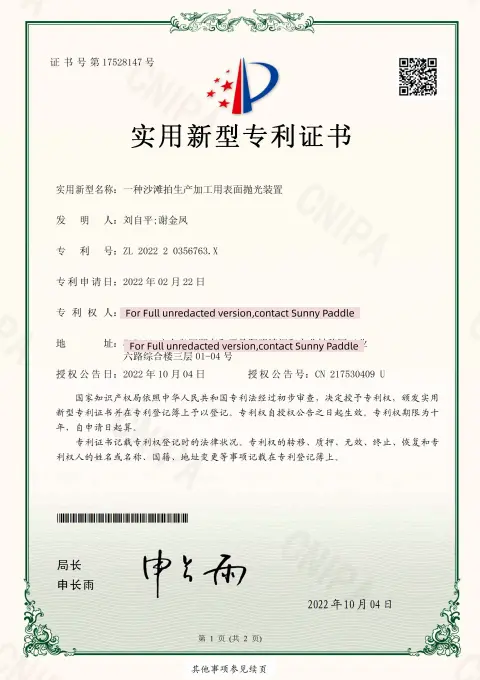
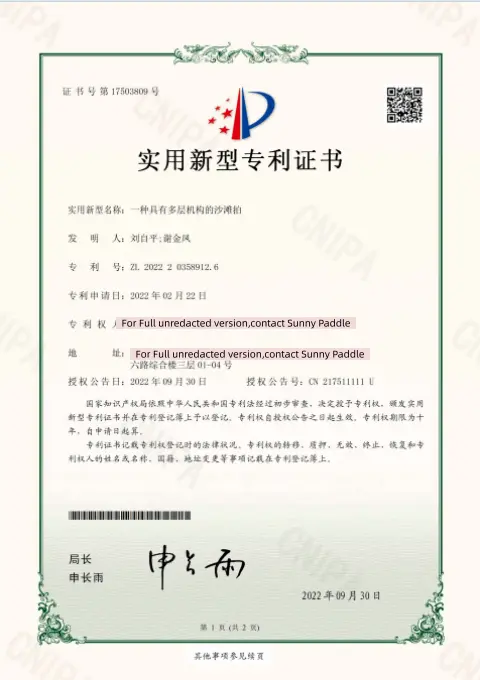
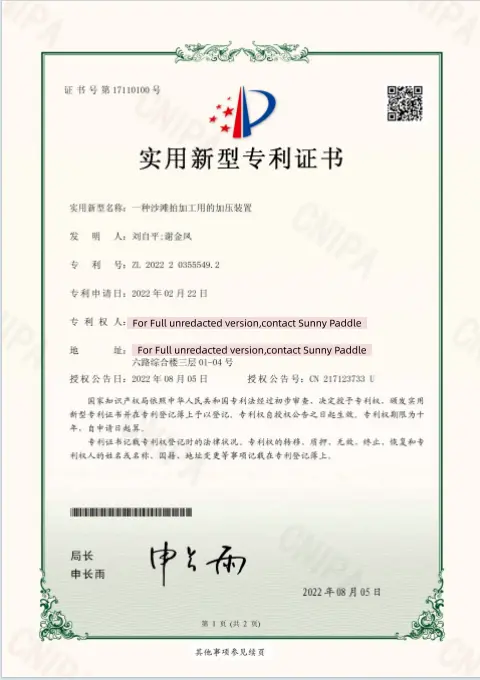
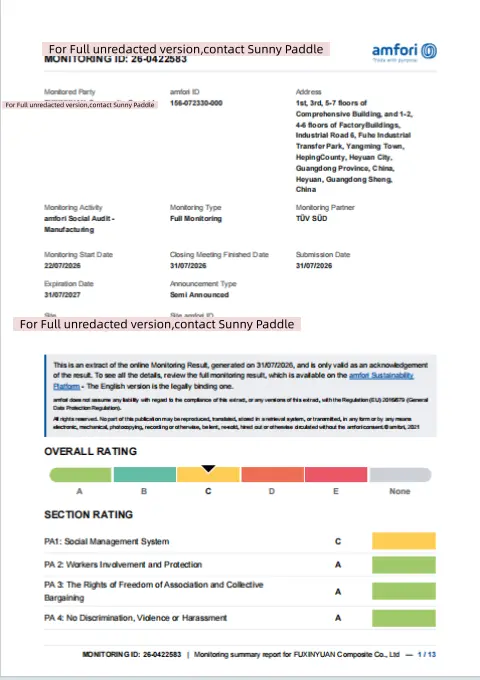
The strongest sourcing relationships in this category are not built on the lowest quotation. They are built on a factory’s willingness to make its specifications legible, its processes observable and its commitments specific. Sunny Paddle operates as a China-based source factory for pickleball paddles, beach tennis rackets and padel rackets. For overseas brands, distributors and club programmes, the relevant question is not whether we can produce a round frame—it is whether we can document the weight tolerance, the core hardness, the balance measurement method and the batch checks in a way that makes your product decision safer.
If you are evaluating Round Shape Padel Rackets for an upcoming season or launch, start with the specification categories in this article and send them as an RFQ. A factory that can answer them in writing, with tolerances and process notes rather than adjectives, is the one worth building the next product cycle around. You can review our manufacturing scope and submit a project brief at sunnypaddle.com.
Sunny Paddle – OEM/ODM source factory for padel rackets, pickleball paddles and beach tennis rackets.
OEM MOQ: 100 pcs per model. ODM MOQ: 200 pcs per model. Send your round-shape RFQ with target weight, balance, core hardness and artwork requirements to start sampling.