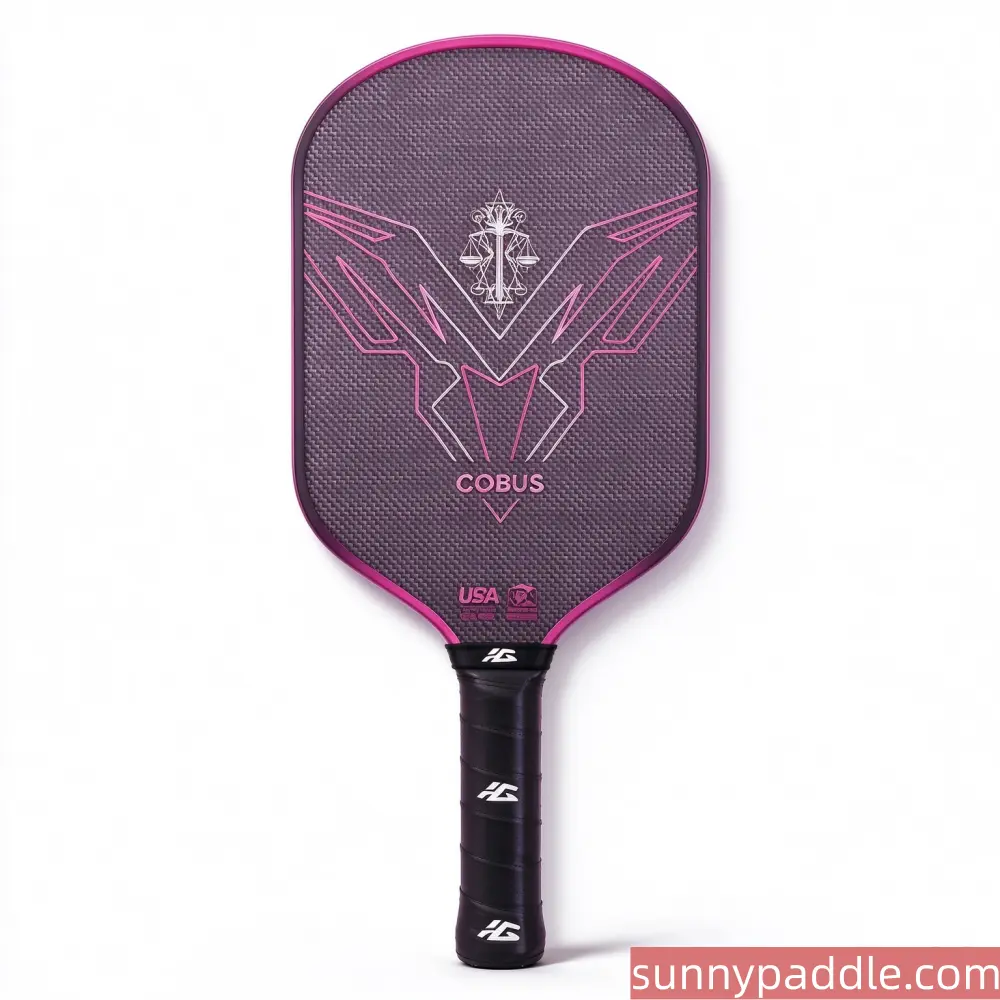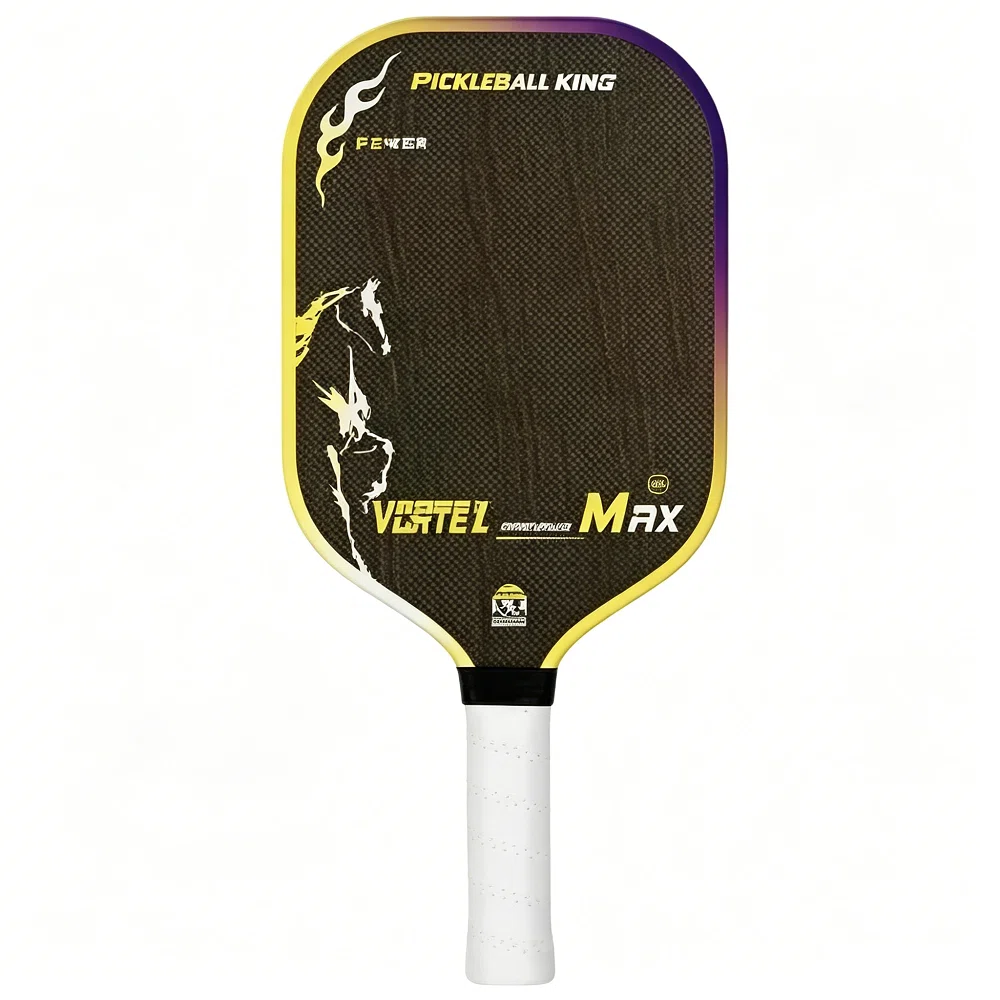
Brand owners and distributors searching for a Titanium Wire Pickleball Paddle Manufacturer are usually solving two problems at once: finding a surface technology that gives players a reason to switch, and finding a factory that can put their logo and packaging on that technology without inflating minimum order quantities or stretching lead times. This page addresses both. It explains what titanium wire construction actually delivers on court, why the category has moved from niche to mainstream, and how a source factory structures OEM and ODM programs around concrete numbers: 50-piece stock MOQ, 100-piece OEM MOQ, 200-piece ODM MOQ, and quality checkpoints that hold a ±0.02 mm thickness tolerance. Every figure below is drawn from production-stage reality rather than a sales brochure, because buyers comparing suppliers need numbers they can hold against a purchase order.
The titanium wire in a Titanium Wire Pickleball Paddle is not a solid metal face. It is a woven or hybridized titanium filament integrated into the paddle face, usually alongside T700 carbon fiber or a fiberglass substrate, and fused to a polypropylene honeycomb core through thermoforming or hot-pressing. The titanium component contributes three measurable performance shifts that buyers consistently ask for in sample testing. Understanding these shifts matters because the surface is often marketed loosely, and a buyer who cannot distinguish a titanium accent from a structural titanium layup will misprice the product and mis-specify the target player.
Titanium weave produces a distinctly rougher face texture than standard raw carbon. In independent paddle reviews, titanium-faced models have scored 9.5/10 on spin, with testers specifically crediting the grit of the titanium weave for executing angled cross-court topspin shots. For brand owners, this translates into a product that can be marketed as spin-friendly without relying on spray-on grit that wears off after a few months of play. The durability of the texture is the commercial point: a surface that retains bite over a full season supports repeat purchase and reduces warranty claims, whereas a sprayed grit surface creates a predictable wave of returns once the coating smooths out.
It is worth being precise about what generates the spin. The titanium filaments create a micro-rough topography across the face that increases friction at contact. That friction converts a flat swing path into ball rotation more efficiently than a smooth composite face. Reviewers have noted that the titanium weave helps players execute angled topspin shots with less swing manipulation, which matters for the intermediate player who is still developing technique. The spin advantage is not a laboratory artifact; it shows up in the shot that recreational and club players actually hit, which is the dipping topspin from the baseline and the angled cross-court forehand from the transition zone.
Pure carbon faces tend to fall into one of two camps: stiff and powerful, or soft and controlled. Titanium hybridization widens that middle ground. The Bread & Butter Shogun, a titanium-woven 16 mm thermoformed paddle, earned 9/10 for power and 8.5/10 for control in the same review cycle, numbers that place it in all-court territory rather than a single-skill niche. Reviewers noted it gives players more control than other comparable raw carbon paddles while retaining enough pop to finish points at the kitchen line. That balance is especially relevant for intermediate-to-advanced players, the largest purchasing segment in most brands' lineups.
From a manufacturing standpoint, this balance is tunable. A titanium-heavy layup produces a different face response than a titanium-accented carbon layup. The ratio of titanium filament to carbon weave, the resin system, and the core thickness together determine where the paddle lands on the power-control spectrum. A factory with in-house layup control can produce both profiles from the same surface family, which means a brand can build a two-SKU lineup, one control-leaning and one power-leaning, without changing its surface story or its packaging system. That is a merchandising advantage that a trading intermediary cannot offer, because the intermediary does not control the layup variables.
Titanium's elastic properties contribute to a slightly more forgiving feel on off-center contact. User feedback on titanium-faced paddles has reported reduced elbow and shoulder discomfort during sessions of 3 to 4 hours per day, alongside improved ball placement. This is not a minor point. Arm fatigue is one of the most common reasons recreational players reduce their playing frequency, and a paddle that reduces vibration at contact has a defensible marketing claim that does not depend on exaggeration.
On the durability side, titanium wire reinforcement improves structural strength and impact resistance while cutting vibration under intense hits. When that face is paired with thermoformed construction rather than cold pressing, the edge seal becomes a fused unibody rather than an adhesive bond. That fused edge is the failure point most associated with delamination and dead spots over time. A cold-pressed paddle can play well on day one and develop a dead spot by month six as the adhesive layer weakens. A thermoformed paddle removes that adhesive interface entirely, which simplifies the long-term durability story and reduces the warranty reserve a brand needs to carry.
| Attribute | Titanium Wire Hybrid Face | Raw Carbon Fiber Face |
|---|---|---|
| Surface texture | Woven titanium filaments create micro-rough topography | Gritty carbon weave, consistent but can be smoother depending on finish |
| Spin character | High friction from titanium weave; reviewed as 9.5/10 in independent testing | High friction; typically 8.5-9.5/10 depending on grit grade |
| Feel at impact | Slightly softer, muted response | Crisper, stiffer response |
| Power profile | Balanced; commonly 8.5-9/10 in reviews | Can be very powerful; stiffness transfers energy efficiently |
| Control | Often 8.5/10; favorable for all-court play | Depends on core thickness; stiff faces favor power over touch |
| Vibration damping | Better; elastic titanium properties absorb shock | Less damping; more feedback and more vibration transfer |
| Durability of texture | Woven filaments resist smoothing; no spray-on coating to wear | Grit can be integral or sprayed; sprayed grit wears faster |
| Positioning | All-court, comfort-oriented, spin-friendly | Power-oriented, crisp-feel, advanced player preference |
Three supply-and-demand shifts moved titanium wire from a novelty surface to a repeatable production category. None of them were driven by marketing alone. Each reflects a structural change in how paddles are bought, built, and priced.
Raw carbon fiber dominated the performance paddle market through 2023 and 2024, but by 2025 buyers were actively looking for surface stories that felt new. Trade data from Global Sources 2025 shows titanium-enhanced paddles drawing particular attention from European and Australian buyers, standing out for explosive power and stability alongside Kevlar and Gen4 surfaces. The surface is no longer experimental. It is a recognized performance line item that buyers ask for by name, which means a brand without a titanium SKU is leaving a search category unaddressed.
There is also a retail shelf dynamic at work. When every brand in a pro shop carries a raw carbon paddle, the surface stops being a differentiator and becomes table stakes. Titanium wire gives a buyer a reason to pick up a second paddle from the same brand or to switch from a competitor. The category shift is not about titanium being objectively better than carbon; it is about titanium being distinct enough to support a separate SKU, a separate marketing claim, and a separate price point.
Titanium wire construction originally appeared in premium reviews at the $159 to $200 suggested retail level, but manufacturing maturity has compressed that gap. The same titanium weave and thermoformed architecture can now be produced at factory-direct cost structures, allowing brands to position a Titanium Wire Pickleball Paddle in the $60 to $110 retail band while retaining healthy margins. This is not a downgrade. It reflects the difference between sourcing from a trading intermediary and working directly with a Titanium Wire Pickleball Paddle Manufacturer that controls layup, pressing, and finishing in-house.
The margin math is straightforward. An intermediary adds a layer of cost between the factory floor and the buyer, and that layer has to be recovered in the retail price. A brand buying through an intermediary either accepts a thinner margin or prices itself out of the volume band. A brand buying from a source factory keeps that layer and can choose to reinvest it in packaging quality, marketing spend, or a lower retail price. In a category where the difference between $79 and $99 determines whether a paddle moves at volume, that layer is often the entire competitive difference.
Titanium wire needs a construction method that locks the face to the core without adhesive failure. Thermoforming, which uses heat and pressure to fuse face, core, and edge into a unibody, provides that. Thermoformed builds deliver 30 to 50 percent higher interlaminar strength than traditional cold-press construction and hold thickness consistency to ±0.02 mm, versus ±0.05 mm for cold-pressed paddles. Without that process, titanium wire would remain a low-volume custom item. With it, titanium wire becomes a repeatable SKU a factory can run at 200-piece and 500-piece batch sizes without variance.
The scale point deserves emphasis because it determines whether a brand can plan a season around the product. A surface that cannot be produced consistently at batch scale is a sample-room curiosity. A surface that holds tolerance across a 500-piece run is a forecastable inventory item. Thermoforming is what moves titanium wire from the first category to the second, and it is the reason a source factory can quote a 200-piece ODM program with confidence rather than treating every order as an engineering experiment.
Global Sources 2025 trade data identifies titanium-enhanced paddles as one of the surfaces drawing active buyer attention from European and Australian markets, alongside Kevlar and Gen4 faces. Independent review cycles have placed titanium-faced paddles in the 8.5 to 9.5 range across power, control, and spin, with spin scoring particularly high. The combination of buyer interest and verified performance data is what moves a surface from trend to category. For a brand building a 2026 lineup, the question is no longer whether titanium wire belongs in the catalog; the question is which SKU position it should occupy and what MOQ the first order should carry.
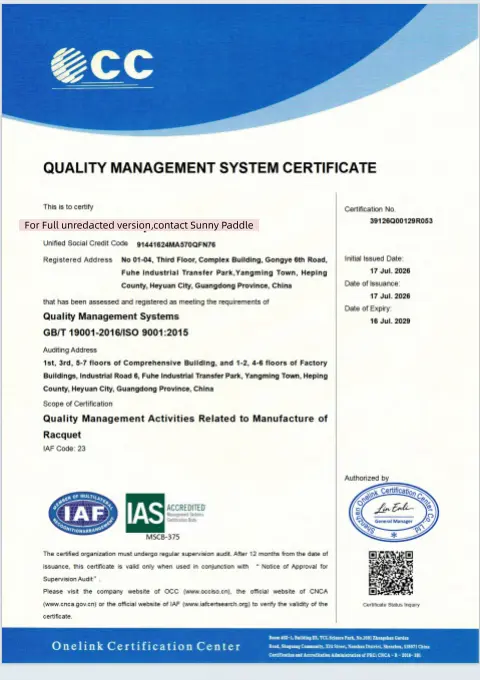
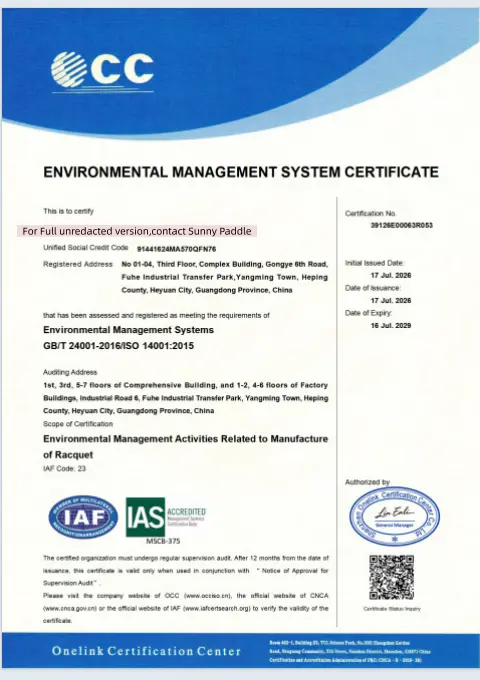
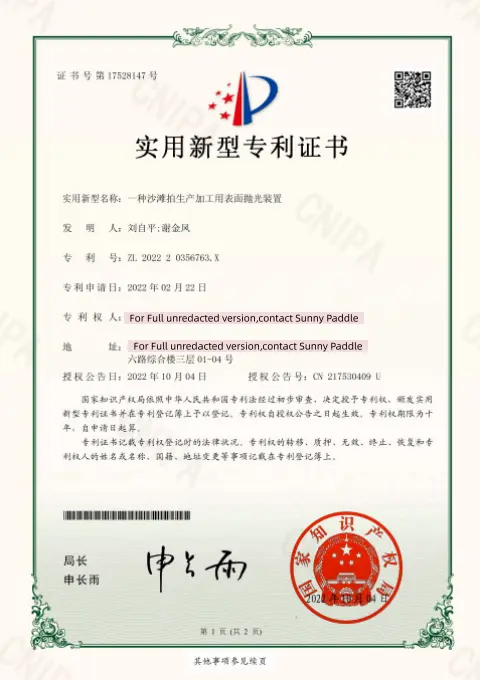
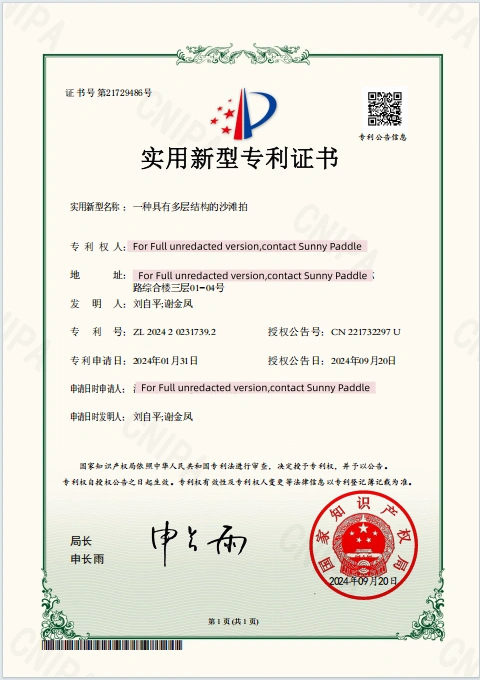
Most titanium wire paddle suppliers online are intermediaries. They quote a price, forward a design file, and rely on a third-party factory for tooling, pressing, and quality control. A source factory compresses that chain. The factory that lays up the titanium weave is the same entity that prints your logo, seals your retail box, and signs the inspection report before the carton leaves the floor. That compression is not cosmetic. It changes who is accountable when a batch arrives with a thickness drift, a print registration error, or a packaging fit problem.
As a China-based source factory producing pickleball paddles, beach tennis rackets, and padel rackets, the operational difference shows up in three places buyers can verify before placing a bulk order: minimum order quantities that match test-market budgets, quality checkpoints tied to physical measurements, and lead times quoted against the actual production calendar rather than a distributor's buffer. Each of these is quantified below.
| Program | MOQ | Best For | Customization Scope |
|---|---|---|---|
| Stock / Ready-to-Ship | 50 pcs | First test order, sample sell-through, club or event order | Logo on paddle and packaging label; existing mold and surface |
| OEM | 100 pcs | Established brand adding a titanium SKU to an existing line | Logo, packaging, grip band, hang tag, face artwork within existing mold |
| ODM | 200 pcs | Brand building a differentiated shape, layup, or performance profile | Structure, mold, layup, thickness, weight distribution, full packaging system |
These thresholds are deliberately staggered. A 50-piece stock order lets a buyer put a Titanium Wire Pickleball Paddle into a sales channel, whether that is an Amazon listing, a club pro shop, or a tournament booth, before committing to tooling. OEM at 100 pieces keeps branding accessible for small brands that already know the construction they want. ODM at 200 pieces opens the structural engineering track for buyers who need a paddle that does not exist in any catalog. A buyer can enter at any tier and move up as sales data justifies the next commitment, which is a materially different commercial path from a supplier that quotes a single high MOQ and leaves no room for a first test order.
The OEM track assumes the paddle architecture is already defined, with a 16 mm polypropylene honeycomb core, a titanium wire and carbon hybrid face, and a standard or elongated shape. The buyer's job is to make that architecture carry their brand. At 100 pieces, the customization depth is commercial and cosmetic, not structural. That boundary is deliberate: it keeps tooling cost out of the order, which is what allows the MOQ to stay at 100 rather than 500.
The OEM process is built for speed. A buyer with print-ready artwork and a defined packaging concept can move from order confirmation to a playable branded sample in 5 to 7 days, and from sample approval to a 100-piece bulk delivery in 15 to 25 days. That timeline is short enough to support a seasonal launch or a tournament deadline, which is often the difference between a brand capturing a sales window and missing it.
The ODM track starts before a mold exists. It is for brands that need a shape, weight distribution, or layup that is not already on a factory shelf, and that want the resulting tooling to remain exclusive. At the 200-piece threshold, the factory's structural engineering input becomes part of the product rather than a constraint on it. The buyer is not selecting from a catalog; the buyer is commissioning a product.
An ODM project typically begins with a product brief covering target market, price band, desired performance profile, and reference products. The factory returns a model and material recommendation, a mold plan, and a playable sample timeline. Bulk production does not begin until the sample is approved in writing, and the approved sample becomes the reference standard for the pre-shipment inspection.
Quality claims are easy to write and difficult to verify. The following checkpoints are the ones that matter for a Titanium Wire Pickleball Paddle, because the failure modes are specific: face-core separation, thickness drift, weight variance, and surface grit inconsistency. Each checkpoint is tied to a measurement rather than an impression.
| Control Point | What Is Measured | Reference Tolerance / Standard |
|---|---|---|
| Incoming face material | Titanium wire weave density, carbon fiber areal weight, resin content | Against approved material specification sheet |
| Core and layup | Honeycomb cell integrity, core thickness, alignment | Pre-press dimensional check |
| Thermoforming / pressing | Thickness consistency across the face, edge seal integrity | ±0.02 mm thickness consistency in thermoformed builds, versus ±0.05 mm cold-pressed |
| Finished paddle | Weight, balance point, grip circumference, surface roughness | Weight tolerance typically ±0.3 oz for production runs; balance and grip measured per SKU spec |
| Logo and packaging | Print registration, color match, box structure, barcode readability | Against approved pre-production sample |
| Pre-shipment | Batch sampling for delamination, edge integrity, label accuracy | Inspection report signed before carton seal |
The structural reason this matters: thermoformed construction eliminates the adhesive layer between face and core, which is the most common failure point in cold-pressed paddles. When adhesive weakens, the paddle develops dead spots and eventually delaminates. A titanium wire face bonded through thermoforming instead of adhesive is not just a performance choice. It is a QC simplification. The factory is not inspecting a glued interface that can degrade unpredictably. It is inspecting a fused structure whose thickness and edge seal were set by the mold, which means the inspection is verifying a known baseline rather than hunting for a hidden defect.
For buyers, the practical takeaway is to ask for the inspection report before carton seal, not after arrival. A factory that signs the report before sealing the carton is a factory that is willing to stop a shipment on its own floor. A factory that only inspects on request, or inspects after the carton is closed, is a factory where the buyer becomes the inspector at their own expense.
Lead time is where many supplier conversations lose credibility, because the quoted number often conflates production with logistics or omits the sample-approval window. The figures below are production-stage figures, not door-to-door estimates. A buyer should treat the sample-approval date, not the bulk-order date, as the critical path milestone.
| Stage | Standard Timeline | What Triggers the Clock |
|---|---|---|
| Stock order (50 pcs) | 3-7 days | Order confirmation and logo/packaging label approval |
| OEM playable sample (100-pc program) | 5-7 days | Print-ready artwork and packaging files received |
| ODM playable sample (200-pc program) | 7-10 days | Approved engineering brief and mold plan |
| OEM bulk (100-500 pcs) | 15-25 days after sample approval | Written sample approval and deposit |
| ODM bulk (200-2,000 pcs) | 25-35 days after sample approval | Written sample approval, mold sign-off, and deposit |
These ranges assume the buyer's artwork and packaging files are production-ready at the sample stage. Custom structural changes, new mold development, or experimental core compositions add time before the sample, not during bulk. A buyer who needs a Titanium Wire Pickleball Paddle for a fixed launch date should work backward from that date through the sample approval, bulk production, and freight stages, and should treat any supplier who quotes a bulk date without asking about the sample gate as a supplier who is not planning the order realistically.
Logo and packaging are not afterthoughts in the OEM and ODM process. They are the buyer's primary points of differentiation on a shelf where the paddle silhouette is similar across brands. Four details matter most.
UV printing produces a sharp, full-color graphic on the face and throat. Heat-transfer graphics are durable and cost-efficient for larger runs. Embossed marking creates a tactile logo that reads as premium and does not wear. The choice depends on the brand's position and the order size: UV printing is the standard for 100-piece OEM orders, heat transfer is the value option for larger runs, and embossed marking suits premium lines.
A retail box, sleeve, or hang tag is designed around the paddle's actual dimensions, not a generic template. The dieline is produced from the measured paddle outline, and a printed sample is approved before bulk. Barcode labels and carton marks are included so the shipment can move through retail distribution without a relabeling step.
Pantone matching is used for logo and packaging colors so the shipped product matches the brand guideline. Without a physical color reference, the factory is matching to a screen image, and the result can drift across a batch. A Pantone reference is the cheapest way to prevent a color dispute after delivery.
Gold, silver, red, and blue titanium wire variants are standard production inputs, so a brand can select a face color that matches its packaging palette without paying a custom material premium. Edge guard color and grip band branding are the secondary color touchpoints, and both can be changed without touching the mold.
The three MOQ tiers are not a ladder that every buyer must climb. They are parallel entry points matched to different commercial situations.
For buyers still specifying the product, the highest-leverage decision is the one made before the first sample: whether the titanium wire is a surface accent on a carbon layup or a structural element of the face system. That choice determines the spin profile, the feel at impact, and the retail story. A Titanium Wire Pickleball Paddle Manufacturer with in-house layup control can produce both. The buyer's job is to define which one the target player will notice, because the surface that reads best in a spec sheet is not always the surface that performs best in the target player's hands.
No. The face is a woven or hybridized titanium filament integrated with carbon fiber or fiberglass and fused to a polypropylene honeycomb core. The titanium contributes surface texture, vibration damping, and structural reinforcement. It is not a solid metal sheet, and a buyer should be skeptical of any supplier that describes it as such.
Stock orders with a logo and packaging label start at 50 pieces. OEM programs with full logo, packaging, grip, and face artwork customization start at 100 pieces. ODM programs with proprietary tooling and structural engineering start at 200 pieces.
A stock order ships in 3 to 7 days. An OEM playable sample takes 5 to 7 days after print-ready artwork and packaging files are received. An ODM playable sample takes 7 to 10 days after an approved engineering brief and mold plan.
Yes. ODM molds are customer-exclusive, sealed, and archived. The shape does not enter the factory's catalog for other buyers. Exclusivity is a contractual commitment in the ODM agreement.
Common production weights for titanium hybrid builds are 7.8 to 8.6 oz. Weight, swing weight, twist weight, and balance point are set at the engineering stage in ODM programs, and specified per SKU in OEM programs. Production weight tolerance is typically ±0.3 oz.
Yes. Dimensional and material choices are reviewed against USA Pickleball equipment standards before tooling is cut in ODM programs, and existing OEM molds are already specified to compliant dimensions. Buyers should confirm the specific model's status on the USA Pickleball approved list before a tournament-oriented launch.
Stock inventory is held at 50 pieces per SKU. OEM programs open at 100 pieces. ODM programs open at 200 pieces with exclusive tooling. Sample files, material specifications, and QC checkpoint sheets are available on request through sunnypaddle.com. For buyers comparing titanium wire against raw carbon or Kevlar, the most efficient next step is a playable sample under the intended logo and packaging, because the surface that reads best in a spec sheet is not always the surface that performs best in the target player's hands. A sample order at the 50-piece tier is the lowest-cost way to put a Titanium Wire Pickleball Paddle into a real selling environment before committing to a branded production run.